
Lithium vs Lead-Acid Battery for Used Forklifts: The Real Cost-Per-Hour Breakdown Nobody Talks About
The demand for electric forklifts continues to climb across warehousing, distribution, construction, and 3PL environments. As operations prioritize efficiency and sustainability, the forklift battery choice directly shapes long-term ROI and daily productivity. Yet most buyers fixate on sticker prices without calculating the true cost-per-hour that includes energy consumption, maintenance labor, downtime, and replacement cycles.
This analysis reveals the hidden operating costs, lifetime performance metrics, safety considerations, and practical forklift fleet management implications that determine whether your electric forklift battery investment pays off or drains profits for years to come.
Why the Forklift Battery Decision Matters More for Used Equipment
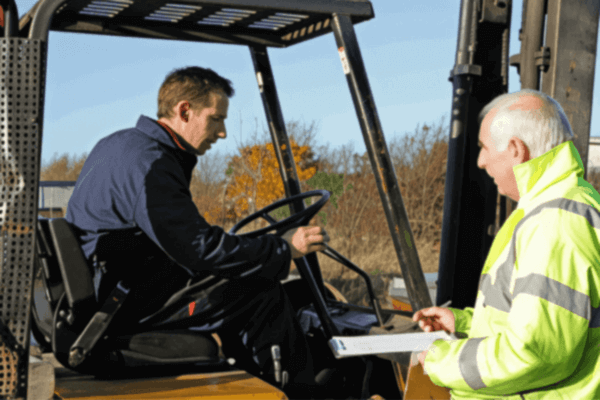
Used forklifts handle critical tasks in high-volume environments where reliability and uptime directly impact revenue. The forklift battery type installed determines whether your equipment operates efficiently or becomes a constant source of frustration and unexpected expenses.
The Battery's Influence on Forklift Fleet Management and Productivity
Battery type fundamentally affects shift planning, task cycles, and workforce deployment. A lithium forklift battery supports opportunity charging during breaks, allowing seamless operation across multiple shifts without swapping. Traditional lead-acid units require dedicated charging windows and complex rotation schedules that complicate forklift fleet management and reduce equipment availability.
Runtime consistency impacts how supervisors assign tasks and deploy operators. When the electric forklift battery performance remains stable throughout discharge, managers can confidently schedule work without accounting for power degradation that slows productivity during the final hours of each shift.
Hidden Liabilities of Aging Electric Forklift Battery Systems
Declining forklift battery performance manifests as shorter runtimes, overheating during charging, and slower lift speeds that frustrate operators. Aging lead-acid units pose serious safety risks from acid spills, hydrogen gas emissions during charging, and corroded terminals that create electrical hazards. Compliance with modern battery safety standards becomes increasingly difficult as electric forklift battery systems age and deteriorate.
Why Nationwide Operations Prioritize Battery Reliability
Multi-location facilities need consistent performance from used forklifts regardless of geographic location. Standardizing on reliable lithium forklift battery technology simplifies training, maintenance protocols, and spare parts inventory across distributed operations. Reduced downtime translates into competitive advantages in logistics environments where delivery speed and throughput determine which providers win contracts and retain customers.
The Hidden Costs of Lead-Acid Batteries (Where Expense Creeps In)
Lead-acid technology appears affordable initially, but the cumulative burden of daily maintenance, energy waste, and frequent replacements quickly erodes those savings. Understanding total forklift battery ownership costs requires looking beyond the purchase invoice to examine every operational expense over the equipment's lifespan.
Energy Consumption and Efficiency Losses
Lead-acid batteries waste substantial energy during charging due to heat loss and chemical inefficiencies. These units typically require 30% more electricity compared to lithium forklift battery alternatives. The charging process converts significant electrical input into waste heat rather than stored energy, meaning operators pay for kilowatt-hours that never contribute to productive work.
Charging Time, Cooling Time, and Battery Swapping
Lead-acid electric forklift battery units require eight hours to charge, plus eight additional hours to cool before reuse. This 16-hour cycle means multi-shift operations need 2–3 batteries per truck, multiplying capital requirements and storage demands. Operators lose 15–20 minutes per swap, translating to thousands in paid labor annually across a busy facility.
Lead Acid Battery Maintenance Requirements
Comprehensive lead-acid battery maintenance protocols demand routine watering, specific gravity checks, terminal scrubbing, corrosion cleanup, and environment monitoring. Each forklift battery requires weekly attention using specialized tools and protective equipment. When maintenance lapses, the unit degrades rapidly through acid stratification, sulfation, and cell imbalances that violate battery safety standards and trigger premature failure.
Dedicated Charging Room Requirements
Meeting battery safety standards for lead-acid charging requires dedicated facilities with explosion-proof lighting, acid-resistant floors, eyewash stations, and ventilation systems. Understanding everything about forklift batteries and chargers helps operators create compliant charging environments that protect workers while maintaining optimal battery performance. These infrastructure investments consume capital and valuable warehouse square footage that could otherwise generate revenue through additional storage capacity.
Downtime and Lost Productivity
Lead-acid trucks must be taken offline for charging, cooling, and battery changes. Performance deteriorates significantly during the final 30% of battery charge as voltage sags, reducing lifting power and travel speed. Operators work less efficiently while the electric forklift battery struggles to maintain adequate power output.
Shorter Lifespan and Multiple Replacements
Lead-acid technology typically delivers 300–500 cycles, lasting 3–5 years before requiring replacement. Over a used forklift's operational life, operators purchase multiple forklift battery units at $4,000–$6,000 each. These recurring capital expenses create budget unpredictability and administrative burden.
Operator Time and Small Task Labor Drain
Frequent small tasks like watering, cleaning, and swapping accumulate into thousands of dollars in hidden labor costs annually. While individual lead-acid battery maintenance activities seem minor, their cumulative impact across a fleet consumes hundreds of labor hours that could be devoted to revenue-generating work.
Lithium Forklift Batteries: The True Long-Term Value
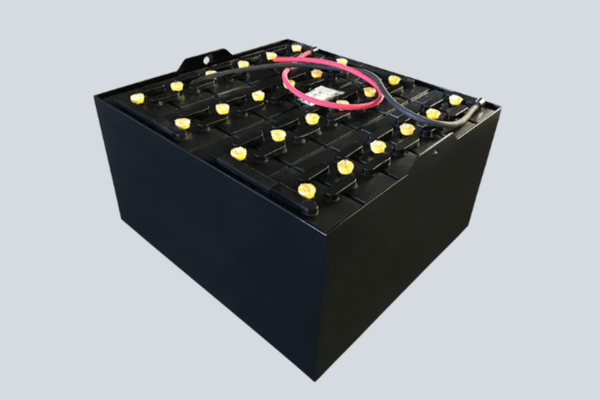
Although lithium forklift battery units cost more upfront, they eliminate nearly all hidden expenses associated with lead-acid technology. The initial premium is offset by eliminating maintenance labor, reducing energy consumption, and extending replacement intervals.
Zero-Maintenance Advantage
Lithium forklift battery technology requires no watering, corrosion cleanup, equalization charges, or spill management. This eliminates the lead acid battery maintenance tasks that consume labor hours and create workplace safety risks. Maintenance teams can focus on productive equipment servicing rather than repetitive battery care.
Energy Efficiency and Rapid Charging
Lithium forklift battery units fully charge in 1–2 hours and support opportunity charging during breaks and loading pauses. Higher energy efficiency converts 95%+ of input electricity into stored energy compared to 70–80% for lead-acid, reducing utility bills month after month. A single electric forklift battery supports continuous operation without the downtime required by traditional technology.
Consistent Power Output
Voltage remains stable throughout the discharge curve with lithium forklift battery technology. Forklifts maintain full speed and lift capacity until the battery is nearly empty, eliminating the performance degradation that plagues lead-acid operations during the final hours of each shift.
Improved Safety and Advanced Battery Safety Standards
Lithium forklift battery units produce no off-gassing, no acid spills, and require no dedicated charging rooms. Advanced thermal management systems monitor temperature, voltage, and current to prevent overheating. These electric forklift battery protections exceed traditional battery safety standards and provide real-time diagnostics.
Long Life and Extended Replacement Cycles
Lithium forklift battery technology delivers 3,000–5,000 cycles, lasting 5–10 years in typical applications. Many units outlast the used forklift itself, eliminating replacement purchases and providing potential salvage value when the truck reaches end-of-life.
The Real Cost-Per-Hour Breakdown: Lithium vs. Lead-Acid
Calculating forklift battery cost-per-hour of actual operation provides the most accurate comparison by capturing every expense from initial purchase through energy consumption, maintenance labor, and replacement cycles.
Example 5-Year Cost Comparison
Lead-Acid (5 years): $28,700 total (~$2.87/hour)
- Initial purchase: $9,500 for primary and spare batteries needed for multi-shift work
- Battery replacements: $5,000 after approximately three years
- Charging labor: $3,125 annually for battery swapping
- Lead acid battery maintenance: $625 annually per unit for watering and cleaning
- Energy consumption: $1,500 annually due to charging inefficiency
- Performance deterioration: $14,000 annually from voltage sag during the final discharge phase
Lithium-Ion (5 years): $21,000 total (~$2.10/hour)
- Initial purchase: $15,000 for a single unit supporting continuous operation
- Battery replacements: $0 during a five-year period
- Charging labor: $0 with opportunity charging
- Maintenance: $0 required
- Energy consumption: $1,050 annually through superior efficiency
- Performance deterioration: $0 with consistent voltage output
Why Lead-Acid's "Low Price" Becomes a False Economy
Multiple forklift battery replacements often exceed the cost of a single lithium forklift battery. Purchasing two or three lead-acid units at $5,000 each totals $10,000–$15,000 over a used forklift's operational life. Labor and downtime represent the biggest hidden cost drivers that buyers consistently underestimate.
Multi-Shift Operations: The Tipping Point
Lithium forklift battery technology becomes exponentially more valuable for operations running two or three shifts daily. Opportunity charging enables 24/7 operation without battery swapping, eliminating the capital costs of maintaining 2–3 electric forklift battery units per truck plus dedicated swap labor.
Operational Recommendations by Industry
Different industries place varying demands on electric forklift battery systems. Effective forklift fleet management requires matching battery technology to specific operational characteristics.
Warehouses and Distribution Centers
Heavy traffic, long shifts, and uptime demands make lithium forklift battery technology optimal for high-volume distribution. Sophisticated forklift fleet management systems maximize advantages through optimized charging schedules and real-time battery monitoring.
Logistics and 3PL Companies
Multi-shift environments amplify labor and downtime savings with lithium forklift battery installations. A single electric forklift battery replaces 2–3 lead-acid units in operations running around the clock.
Construction and Industrial Sites
Harsh outdoor environments benefit from lithium forklift battery durability and steady power output. The technology withstands temperature extremes and vibration while eliminating lead-acid battery maintenance challenges in remote locations.
Small and Medium-Sized Businesses
Lithium forklift battery technology reduces long-term labor and safety burdens for smaller operations lacking dedicated maintenance staff. Simplifying financial planning for expanding businesses is all about predictable budgeting and keeping the total cost of ownership low.
Battery Choice and Its Impact on Trade-In or Resale Value
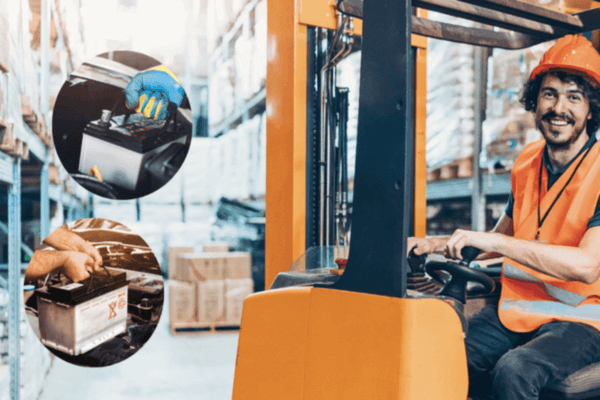
The condition and type of forklift battery significantly influence the used forklift market value. Well-maintained electric forklift battery systems command premium pricing in secondary markets.
How Battery Health Affects Appraisal
A used forklift with a tired lead-acid battery typically loses $2,000–$5,000 in value as buyers factor replacement costs into their offers. The electric forklift battery becomes a major negotiating point during resale transactions.
Preparing a Forklift for Trade-In
Demonstrating consistent forklift battery maintenance through service records proves the unit received appropriate care. Providing electric forklift battery test results and maintenance logs helps appraisers assess the true condition and assign higher values.
Why Lithium-Equipped Forklifts Sell Faster
Used forklifts with lithium forklift battery systems attract more buyer interest and sell at premium prices. An extended service life means buyers face no immediate replacement costs, accelerating transactions and improving resale returns.
Converting a Used Forklift to Lithium
Upgrading from lead-acid to lithium forklift battery technology requires removing the old unit, installing the new pack, and adjusting counterweights to compensate for lighter battery weight.
Fitment, Weight, and Compatibility Considerations
Lithium forklift battery units weigh significantly less than equivalent lead-acid systems, sometimes requiring ballast adjustments to maintain proper truck balance. Most modern chargers include lithium-compatible charging profiles that simplify conversion.
Steps in a Standard Conversion
Technicians carefully disconnect and remove the old forklift battery, then install the new lithium battery. They check the communication between the controller and the battery management system, and finally, they run tests to ensure everything works smoothly under load while adhering to all safety standards for batteries.
Benefits After Conversion
Operators experience immediate downtime reduction, stronger runtime performance, and lower lifetime operating costs after installing a lithium forklift battery in a quality used forklift.
How Much Longer Do Lithium Batteries Actually Last?
Lithium forklift battery units average 3,000–5,000 cycles compared to 300–500 cycles for lead-acid technology. This dramatic lifespan advantage means a single electric forklift battery outlasts multiple lead-acid replacements.
Cycle Life Comparison in Real Operations
High-volume facilities running multiple shifts daily can exhaust a lead-acid forklift battery's 500-cycle life in under two years. The lithium forklift battery's 3,000+ cycle capacity extends service life to 6–8 years in the same demanding environment.
How Performance Decline Impacts Total Cost
Lead-acid forklift battery units struggle to maintain lift speed and voltage as internal resistance increases with age. Lithium forklift battery technology maintains stable performance from installation through thousands of cycles without the gradual degradation that plagues traditional systems.
How We Support Smarter Battery Choices at Value Forklifts
Value Forklifts is a nationwide forklift dealer. We help customers evaluate true lifetime forklift battery costs rather than focusing solely on upfront prices. Our team guides buyers toward optimal solutions based on workload, environment, and budget to maximize ROI through informed forklift fleet management decisions.
We inspect and test every electric forklift battery before equipment leaves our facility, identifying issues that could compromise performance or violate battery safety standards. When customers are ready to upgrade, we offer lithium-ready used forklifts, expert installation, trade-in options, and conversion services tailored to diverse operational needs.
Final Thoughts: The Clear Financial Winner
Lithium forklift battery technology delivers far lower cost-per-hour despite higher upfront costs. Reduced lead acid battery maintenance, faster charging, and longer lifespan offer unmatched ROI for any operation seeking affordable, reliable, and safe performance from used forklifts. The right electric forklift battery choice transforms good equipment into exceptional operational assets that drive profitability year after year.
Ready to optimize your forklift fleet? Contact Value Forklifts today to discuss how lithium forklift battery technology can reduce your operating costs and improve productivity.