
Why Your Electric Forklift Fleet Hits a ‘Dead Zone’ in the Mid-Shift and How the Right Battery Habits Prevent It
It's 1:00 PM on a Tuesday. The lunch rush is past, your warehouse is buzzing like it is swarming, and orders are piling up. Then you realize your electric forklift is not working fast enough. The lifts are slower, the speed of travel is reduced, and what used to take 30 seconds is now taking a whole minute. Your operators are losing their heads, your output is plummeting, and you are asking yourself, "What happened?"
This condition is one of the most prevalent (and most avoidable) issues in warehouses that use electric forklifts, a mid-shift productivity killer. And herein lies the thing: it is usually not your forklift's fault. The real culprit? Battery problems or a worn-out battery that has been overloaded.
The positive thing is that it is possible to determine the causes of the dead zone and then apply the appropriate battery habits to eliminate this issue. Now, we will discuss the reasons why your electric forklift battery experiences a mid-shift wall and how to avoid this issue.
Why the “Dead Zone” Happens
The dead zone does not occur spontaneously. It is a culmination of various battery-related problems, which progress with time and ultimately lead to that aggravating mid-shift slowness. Here are the main culprits:
-
Deep Discharge and Voltage Drop (Lead-Acid)
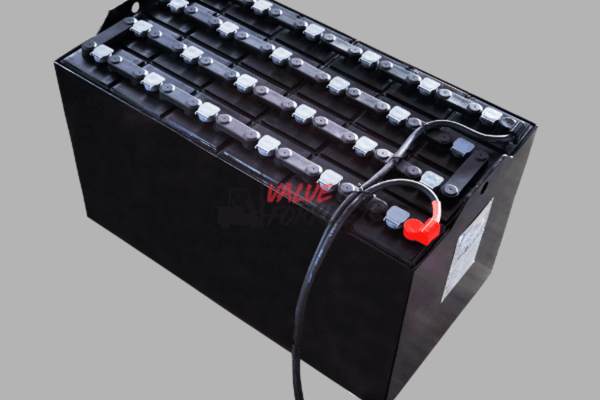
The lead-acid forklift batteries are based on a voltage curve. They have a steady supply of power when they are fully charged. But as they discharge during your shift, the voltage decreases gradually. When you pass that critical point, normally about 20% capacity, the voltage drop is steep and dramatic.
This forklift battery voltage drop does not only imply a reduced power output; it also implies that your electric forklift will not be able to do the simplest of tasks at normal speed. Hydraulic lifts decelerate, and the speed of travel reduces; the performance is worse. This condition is the archetypal electric forklift battery dead zone, and it is especially strong in case you want forklift battery deep discharge to occur regularly.
Each time you deplete a lead-acid battery below 20%, you are damaging it internally and thus making it even less usable. It is a vicious circle that causes the untimely failure of the battery.
-
Improper Charging Habits
Opportunity charging lead-acid batteries in warehouses is one of the greatest mistakes made by warehouse managers. Opportunity charging, charging the battery during breaks in short bursts, may appear convenient, but it is actually killing the lifetime as well as the performance of the battery.
When you participate in opportunity charging lead acid forklift batteries, you will be creating excess heat and eliminating the battery from proper charge cycles. To keep lead-acid batteries in a healthy condition, they should be fully and completely charged. Incomplete charges result in sulfation, stratification, and lowered capacity in the long run.
It is in this area that most operations fail because they treat lead-acid batteries as lithium-ion batteries, which perform well in opportunity charging. However, chemistry with lead-acids is not the same, and it requires other habits.
-
Battery Sulfation
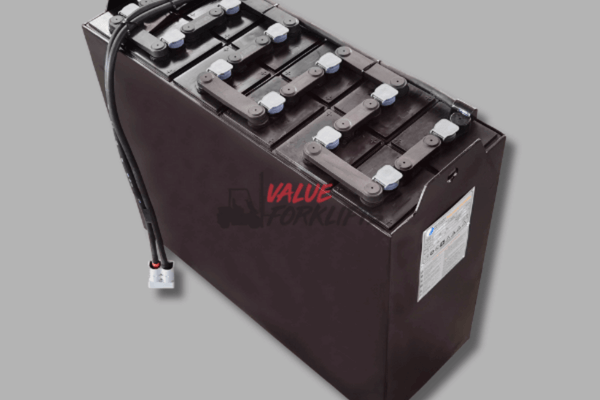
Forklift battery sulfation is a silent killer. As a lead-acid battery is kept in a discharged condition or while it is repeatedly shallow charged, crystals of lead sulphate are deposited on the battery plates. With time, these crystals become solid and permanent, which decreases the battery's ability to retain and release charge.
Sulfation is the primary reason why forklift slows down mid shift even when the battery gauge shows a decent charge remaining. The battery may say it is 40% capacity, but sulfation has actually limited its working capacity a great deal. The result? Your forklift crashes on the dead zone far sooner than anticipated.
-
Inadequate Watering
To ensure that electrolytes are properly maintained in lead-acid batteries, they have to be watered regularly. With low water levels, the battery plates are exposed to air, and this causes permanent damage and affects capacities.
But here's where timing matters: forklift battery watering after charging is crucial. When charging, the electrolyte may spill over as it swells. Water is added once the charge cycle is finished, and the electrolyte levels are made ideal without the risk of overflowing.
Many warehouses either neglect this maintenance procedure or perform it incorrectly, leading to faster battery degradation and significant performance loss during half-shifts.
-
Acid Stratification
The issue of acid stratification forklift battery arise when the sulfuric acid in the electrolyte separates to the bottom of the battery cells, and water separates to the top. This causes unequal distribution of the acid, and the bottom of the cells becomes excessively acidic, and the top excessively weak.
Stratification occurs when the batteries fail to reach full charge cycles or when the batteries are repeatedly. The outcome is unequal discharge rates, lower capacity, and yes, mid-shift dead zones. The battery is virtually becoming unreliable and can no longer provide stable power to your operation.
How Proper Battery Habits Prevent “Dead Zones”
Now that we understand what causes the dead zone, let's talk solutions. Implementing these forklift battery charge cycle best practices will dramatically improve battery performance and eliminate mid-shift slowdowns.
-
Stop "Sipping" Power (Unless It's Lithium)
In case you have lead-acid batteries, switch off opportunity charging. Those rapid 15-minute charges during the breaks are gradually killing your battery capacity and life. Heat is produced by lead-acid batteries during charging, and the cycles are not fully accomplished, so that the chemical reactions can take place.
Short charges result in sulfation, a greater degree of stratification, and a lowered general health of the battery. Use the opportunity charge in the case of lithium-ion batteries, which are particularly adapted to this charging regime.
-
The 8-8-8 Rule
The perfect battery management of the 8-8-8 rule forklift battery is the gold standard of the lead-acid operations: 8 hours of work, 8 hours of charging, and 8 hours of cooling down.
This is to make sure that your battery can have a complete charge cycle, the chemical reaction can stabilize, and the battery can be allowed time to cool after the shift. This religious adherence to the rule will save the battery life by several years and get rid of dead zones.
-
The 20% Red Line
Never allow the electric forklift battery to fall below 20% capacity. This is the critical threshold, where deep discharge damage begins.
Create a rule in your operation that is hard to follow: as soon as the battery is 20%, that forklift is off the floor. If they miss this critical point, train your operators to observe battery levels and change batteries. Deep discharge not only results in instant performance problems, but it also results in irreversible loss of capacity, which is built up over time.
-
Complete the Charge Cycle
A lead-acid battery needs to be fully charged once a lead-acid battery is connected. Do not turn it off at 80% since you are required to take the forklift to do a quick job. Incomplete charge cycles contribute to sulfation and stratification.
New chargers contain equalization cycles, which assist in reversing sulfation and equalize the voltages across cells. Such cycles can only occur in full charges. You are not receiving these very important maintenance functions by interrupting the charge cycle.
-
Water After Charging
Make forklift battery watering a standard operating procedure after charging. Measure electrolyte content upon completion of the charging cycle of the battery and subsequent cooling. These measurements will make sure that you will add just the right amount of water, but not enough to cause it to overflow.
Use distilled water only—tap water contains minerals that can damage battery plates. Maintain a regular watering routine depending on the pattern of use, usually once a week when the operations are heavy.
-
Keep the Tops of Batteries Clean
Battery tops leave dirt, dust, and electrolyte residue, which forms a conductive path through which leakage of current occurs between terminals. This is a kind of “parasitic discharge” that kills your battery when it is not in use.
Wipe battery tops with a baking soda and water solution regularly to remove acid residues. Clean and tight terminals. This process is a simple maintenance procedure that will avoid unnecessary discharge and increase battery life.
Why Value Forklift
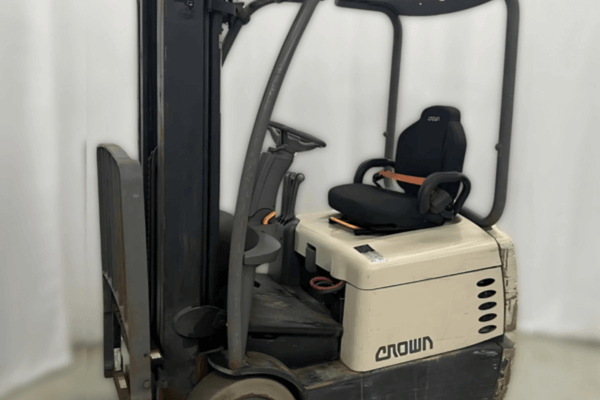
This is one of the facts that many warehouse managers are not aware of: you do not have to get a new $50,000 electric forklift to resolve your dead zone issues. It is not always the forklift; it is usually the battery.
At Value Forklifts, we specialize in helping operations maximize their material handling investments. We also carry "Like New" used forklift batteries and used electric forklifts that have been thoroughly inspected and refurbished.
When your existing batteries are dying after years of bad charging lifestyles and deep discharge defects, changing them over to reconditioned ones will bring your dead zone issues to a halt right after installation. Our used forklift batteries are subjected to intensive tests and reconditioning to make them go back to their optimum performance standards.
Our used electric forklifts can be a good alternative to the high prices of other electric forklifts available in the market since they are as reliable and as effective as the expensive ones, but have an affordable cost. Each unit is properly tested to make sure that it matches our standards of quality, thus ensuring you are sure of what you are buying.
Whether you need a single replacement battery or an entire fleet upgrade, Value Forklifts provides the expertise and inventory to keep your operation running smoothly without the mid-shift dead zones.
Conclusion
The mid-shift dead zone doesn't have to be an inevitable part of running an electric forklift fleet. By implementing correct battery management practices and understanding the causes, such as voltage drop due to deep discharge, improper charging habits, sulfation, insufficient watering, and acid stratification, you can prevent it.
Follow the 8-8-8 rule, never discharge below 20%, complete full charge cycles, water after charging, and keep your batteries clean. These simple habits will extend battery life, maintain consistent performance, and eliminate those frustrating productivity drops when you need your equipment most.
Browse our inventory of industrial batteries and used electric forklifts on our website or contact us today. Our team is ready to help you find the right solution for your operation's specific needs.