
New vs. Used 3-Wheel Electric Forklifts: Which Is Right for Your Business?
Choosing between a new and used 3-wheel electric forklift comes down to how you run your operation, how much downtime you can tolerate, and what you need the truck to do every day. A 3-wheel electric forklift is built for tight indoor work. It shines in narrow aisles, crowded staging zones, and warehouse layouts where turning radius matters.
The tricky part is deciding whether buying new is worth the premium or whether a used 3-wheel electric forklift delivers the smarter return. Both can be the right choice. The best fit depends on forklift duty cycle, battery condition, service support, and how quickly you need the equipment on the floor.
This blog breaks down the practical differences and gives you a decision framework you can actually use.
Why 3-wheel electric forklifts are popular in warehouses
A 3-wheel electric model is usually picked for one reason: maneuverability. The single rear drive/steer assembly allows a very tight turn, which helps in:
- Narrow aisles and racking lanes
- Trailer loading zones with limited space
- Small warehouses where every square foot counts
- Indoor environments with smooth floors
Electric power also brings predictable performance for indoor work. You avoid exhaust concerns, noise is lower than internal combustion models, and daily operating routines are typically simpler. For many facilities, the truck becomes a core part of the workflow, which is why purchase decisions often come back to uptime and electric forklift battery life.
New 3-wheel electric forklifts: when new makes sense
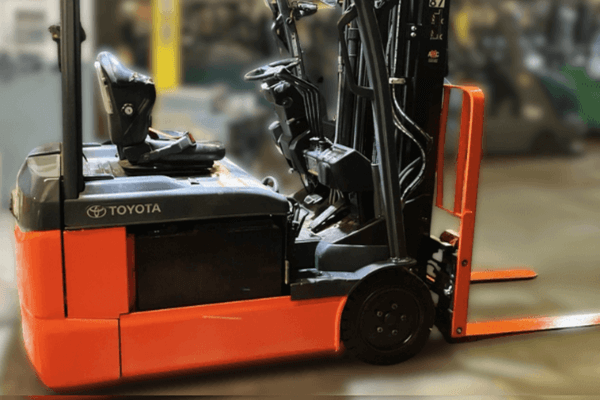
A new forklift usually fits businesses where the truck has a steady workload and downtime creates immediate problems. If the forklift is tied to order fulfillment, production flow, or multi-shift operations, reliability becomes a business requirement, not a preference.
Where new forklifts tend to win
- High-intensity or multi-shift operations
If you run more than one shift, or the truck is moving product most of the day, wear adds up quickly. A new unit gives you fresh components across the board: drive motors, hydraulic systems, wiring, tires, and the battery. - Warranty coverage and predictable ownership
A factory warranty changes the risk profile. Repairs are still possible, but the early ownership period is usually far more stable, which helps with planning and budgeting. - Updated safety and operator features
Newer trucks often include improved stability systems, better visibility, stronger operator presence detection, speed controls, and updated display diagnostics. If your facility has strict safety policies, newer features can be easier to align with internal requirements. - Best performance under constant use
For high-throughput operations, efficiency and consistency matter. A new truck is less likely to suffer from reduced runtime, weak acceleration, or slow lift due to age-related wear.
Trade-offs to expect with new
Higher upfront cost is the obvious hurdle. Depreciation is also steepest early on, which matters if you expect to sell or trade quickly. Lead times can also be longer depending on the brand, configuration, and current availability.
New can be the right decision, but it is usually justified by usage patterns and the cost of downtime.
Used 3-wheel electric forklifts: when used, they are the smarter buy.
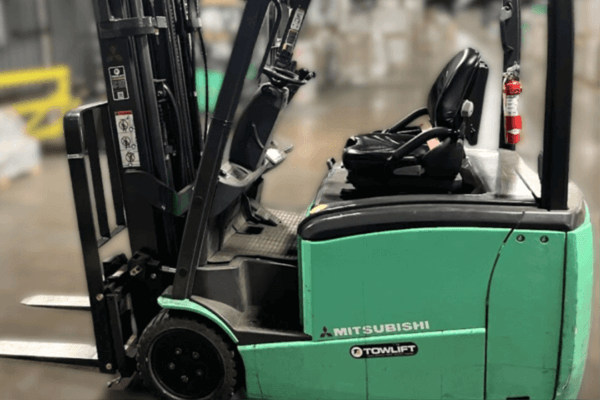
A used 3-wheel electric forklift is often the better fit for cost-conscious operations, lighter duty cycles, or facilities that need a second truck without taking on a large capital expense. In many cases, a used 3-wheel electric forklift can deliver years of solid service when it’s selected carefully and maintained correctly.
Where used forklifts tend to win
- Big cost savings up front
Used equipment commonly costs 30–50% less than new, depending on hours, battery age, brand, and condition. That savings can free up budget for racking, dock improvements, chargers, or additional pallet positions. - Great fit for light-to-medium use
If the forklift runs a single shift, limited hours per day, or handles predictable loads, a used 3-wheel electric forklift is often enough. Many warehouses do not need the top-end performance that new pricing assumes. - Perfect as a backup forklift
Even strong operations get hit with maintenance cycles. Having a second used 3-wheel electric forklift can protect your schedule when your primary unit is down. - Faster path to ownership
Used units are typically available sooner than a factory-ordered truck. If you need equipment quickly, that timing can matter as much as price.
The real risk with used: battery and maintenance history
A used electric forklift can look great and still be a poor buy if the battery is near end-of-life or if the service history is unknown. The battery is a major part of the value in an electric truck. Replacing it can cost enough to erase the original savings, and it directly affects electric forklift battery life in daily operation.
That doesn’t mean used is risky by default. It means selection and inspection matter.
Key decision factors: how to choose the correct option
Instead of starting with price, start with how the forklift will be used. That tells you how much reliability you need and what level of risk is acceptable.
Daily usage and duty cycle
Ask a simple question: How many hours per day will the forklift actually run under load?
- Under ~4 hours/day, single shift, lighter throughput: a used 3-wheel electric forklift often fits well.
- Around 4+ hours/day, consistent movement, or tight production schedules: new becomes easier to justify.
- Multiple shifts or constant runtime: new usually wins on uptime and consistency.
Usage is the clearest indicator because it predicts wear, charging needs, the right forklift duty cycle, and the cost of downtime.
Uptime requirements and the cost of downtime
Some facilities can tolerate a day of downtime. Others can’t tolerate an hour. If your forklift is a bottleneck, then downtime has a real dollar figure attached to it: missed shipments, labor idle time, delayed receiving, or production slowdowns.
If downtime is expensive, paying for reliability can be cheaper than chasing savings.
Budget and financing reality
A new forklift can be the right long-term plan but still fail the short-term budget test. Used allows many businesses to get the equipment they need while keeping cash available for inventory, staffing, or growth.
A helpful approach is to compare:
- Upfront purchase price
- Expected maintenance and wear items
- Battery risk
- How long do you plan to keep the forklift?
The best “deal” is the forklift that meets your workload without forcing costly interruptions, especially when you’re balancing purchase price against long-term electric forklift lifespan.
Your environment (and whether a 3-wheel is the right layout)
3-wheel electric forklifts do best on smooth indoor surfaces with tight aisles. If your operation has uneven outdoor pavement, heavy ramps, or frequent dock plate transitions, a different configuration might fit better. Many buyers still choose 3-wheel models for indoor work and keep a different truck for outdoor handling.
Service support and parts availability
Even the best forklift needs service. Buying a unit that local technicians can support and that has accessible parts keeps ownership simpler. This matters even more with used because you want fast diagnostics and reasonable repair timelines.
What to check before buying a used 3-wheel electric forklift
If you’re leaning used, the goal is simple: confirm you’re buying a forklift with real remaining life, not a truck that’s about to demand expensive repairs.
Here are the checkpoints that matter most:
Battery condition and age
Battery health determines runtime and productivity. Look for:
- Battery age and maintenance records
- Runtime consistency during a real test
- Signs of poor charging habits or neglect
- Connector, cables, and corrosion condition
If the battery is weak, you’ll feel it in shorter shifts, slower performance, and more frequent charging, and that can shorten electric forklift battery life in real-world use.
Hour meter and duty type
Hours matter, but duty type matters too. A forklift with moderate hours in a clean warehouse can be in better shape than one with fewer hours in a harsh environment. This is also where matching the truck to the right forklift duty cycle helps you avoid buying too much forklift, or not enough.
Motors, hydraulics, and lift performance
Test under load if possible. Pay attention to:
- Lift and lower smoothness
- Unusual noises
- Steering response and turning behavior
- Any warning codes or intermittent faults
Tires and chassis condition
Check tires for wear patterns and chunking. Look over the chassis for impacts, bends, or signs of repeated collisions. Small cosmetic marks are normal. Structural damage is not.
Service history
A documented service record reduces uncertainty. It also signals the forklift was part of a maintained fleet, not neglected until something failed, which can extend electric forklift lifespan in practical terms.
Conclusion:
A new 3-wheel electric forklift usually makes sense when uptime is critical and the truck will run hard, especially in multi-shift or high-throughput warehouse operations. A used 3-wheel electric forklift is often the better move when your workload is light-to-medium, you want to control upfront cost, or you need a reliable backup truck without tying up capital.
The best decision comes from matching the forklift to your real forklift duty cycle and choosing a unit with the right remaining life, battery condition, and expected electric forklift lifespan.
If you’re leaning toward used, we can help you choose a forklift that matches your workload, space constraints, and budget. Visit valueforklifts to browse available used forklifts and talk with our team about the right fit for your operation.
FAQ
Which is better: a 3-wheel or 4-wheel electric forklift?
Neither is universally better. A 3-wheel electric forklift is usually picked for tight indoor spaces where turning radius matters. A 4-wheel electric forklift often feels more stable in wider areas or when loads and surfaces create more side-to-side stress. Your aisle width, load type, and floor conditions should drive this decision.
How many hours is good for a used 3-wheel electric forklift?
There’s no single magic number because condition and maintenance matter as much as hours. In general, lower hours are preferred, but a well-maintained used 3-wheel electric forklift with higher hours can still be a solid buy if the battery health is strong and service history is clear. The battery’s condition often tells you more than the hour meter, and it affects both runtime and overall electric forklift lifespan.
What is the lifespan of an electric forklift?
Electric forklifts can last many years with proper maintenance. Lifespan depends on duty cycle, charging habits, environment, and service quality. The battery is typically the first major component to limit productivity, so battery care and replacement planning play a big role in long-term ownership and day-to-day electric forklift battery life.