
How to Choose the Right Forklift Rental for Your Job: Capacity, Lift Height & Fuel Type
Renting a forklift can feel simple until you realize how many options you have to pick from. Capacity, lift height, fuel type, tires, and mast style all affect how smoothly your job runs.
If you’re planning a forklift rental in Ohio, this guide walks you through the decisions that matter most. We’ll cover how to size the truck to your loads, how high you really need to lift, and which fuel type fits your jobsite. Along the way, we’ll also touch on when a used forklift might be a smarter long-term move and why working with a certified forklift provider makes the process easier and safer.
Capacity: Pick a Forklift That Can Handle Your Heaviest Load
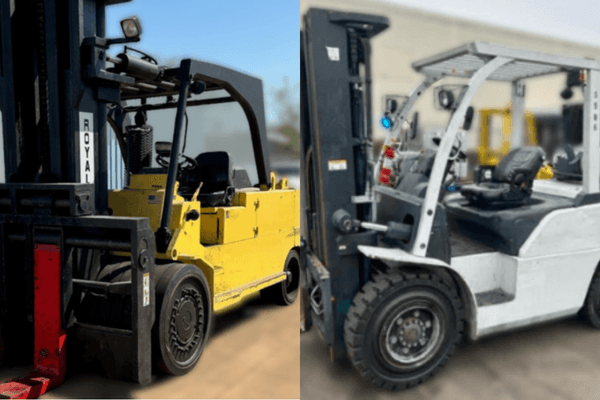
Most rental errors begin in capacity. One can easily guess, rent a regular unit, and go. Capacity is associated with safety, productivity and type of loads that you can move without overloading the machine. The type of forklift rental can be adjusted to the heaviest pallet, the shape of your regular loads and any attachments you might require.
Start with the real maximum load weight.
When you have both the heavy and the light picks in your operation, a forklift rental that is of the heavy size. It prevents stalling, rough driving, and unnecessary breakdowns.
Understand the load center because it changes everything
Forklift capacity ratings assume a specific load center, often 24 inches for a standard pallet. With elongated loads, broad loads, or oddly shaped loads the center of gravity moves forward.
Here are common situations that reduce practical lifting capacity:
- Long loads like pipe, lumber, or oversized skids
- Double-stacked pallets
- Loads that are off-center or not tightly wrapped
- Pallets with weight concentrated toward the front edge
If your loads don’t behave like a standard pallet, talk through the details before booking a forklift rental. A warehouse forklift can feel fine at first, then struggle once you lift higher or turn in tight spaces.
Factor in attachments before you reserve your rental
Attachments add weight, and they push the load forward. Side shifters, clamps, fork positioners and specialty attachments can also decrease your capacity. That is normal but it should be put up front. When you are sure that you will require an attachment then state this before hiring your forklift rental. The correct setting continues to work without any difficulty and does not have the last-minute changes.
Lift Height: Match Your Forklift Rental to Racking, Trailers, and Clearances
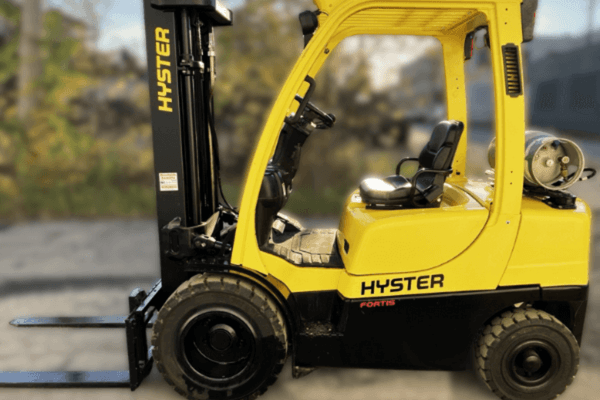
Lift height encompasses more than just your building's tallest rack beam. Selecting the proper lift height enables your operator to operate with assurance and keeps your warehouse forklift stable during the lift.
Measure your highest pick point and add practical clearance
Start by measuring the highest racking level where you need to place or retrieve the product. Many warehouses have land around 15 to 20 feet, though some go higher. You’ll want a little working clearance so you are not scraping beams or fighting for the last inch.
Also, think about your process. Are you storing a pallet and leaving it, or placing product precisely with limited space? Precision tasks benefit from having extra lift capability, so the forklift rental is not operating at its limits all day.
Know the difference between lowered height and raised height
A forklift can lift high and still have a mast that is too tall when lowered. That matters at dock doors, inside trailers, and under overhead obstructions. Enquire about the height of the mast of the unit you are renting out particularly when you are going to drive through the regular doorways or when loading into the enclosed trailers.
Consider telehandlers for outdoor high-reach work
A telehandler might be a better option than a typical warehouse forklift if your work entails hazardous terrain, construction sites, or moving products to high outdoor locations. Telehandlers are made for greater reach and difficult terrain. They are frequently employed when stable outside handling and high positioning are required.
Describe your ground conditions and lift requirements if you're not sure a forklift rental or a telehandler rental would be a better option. Making the proper decision lowers risk and saves time.
Fuel Type and Environment: Electric, Propane, or Diesel
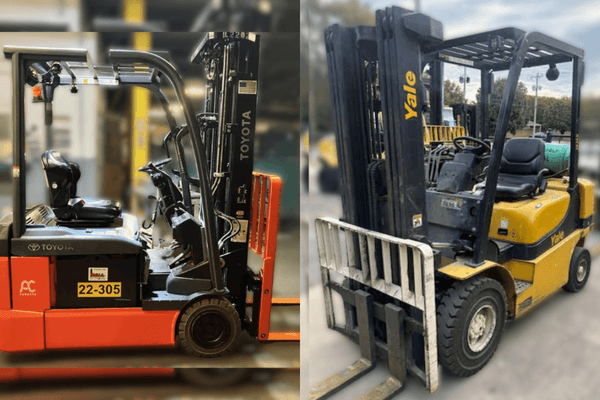
Fuel type affects where you can operate, how quickly you can refuel or recharge, and how comfortable the unit feels during long shifts. For a forklift rental in Ohio, climate and indoor air quality often influence the decision as much as raw power does.
Electric forklift rentals for indoor operations
An electric forklift is a strong choice for most indoor warehouse forklift work. It’s quiet, smooth, and has no exhaust, which keeps indoor air cleaner. Electric units also tend to feel nimble in tight aisles.
Electric forklift rentals are especially popular for:
- Food and beverage storage
- Retail distribution centers
- Facilities with strict indoor air policies
- Tight aisle operations that need smooth control
Electric forklifts do require charging access, and you’ll want to plan for shift length. If your rental will run nonstop, talk through battery needs before delivery.
Propane forklifts for flexible indoor and outdoor work
Propane forklifts are often the first choice for a job that moves between indoor dock areas and outdoor staging. These forklifts offer great performance and fast refueling with tank swaps. Many operation teams like the consistency of the power over a full shift.
Propane forklifts are common for:
- Mixed indoor and outdoor loading
- Busy shipping docks with constant trailer work
- Warehouses that want quick refuel turnaround
- Operations that need steady power with minimal downtime
If you’re comparing propane forklifts to an electric forklift, think about your ventilation, your travel distances, and whether your team prefers battery management or cylinder swapping.
Diesel forklifts for heavy outdoor lifting
Diesel is typically reserved for outdoor, heavy-duty work where traction and power matter. If you’re moving bulky loads across rough yards, gravel, or uneven surfaces, diesel can be the best fit.
Diesel forklifts are often selected for:
- Lumber yards and building materials
- Outdoor storage with uneven ground
- Heavy loads that push capacity requirements
- Job sites where indoor emissions are not a concern
A forklift rental should match your environment first, then your performance needs.
Terrain and Tires: Cushion vs. Pneumatic and Why It Matters
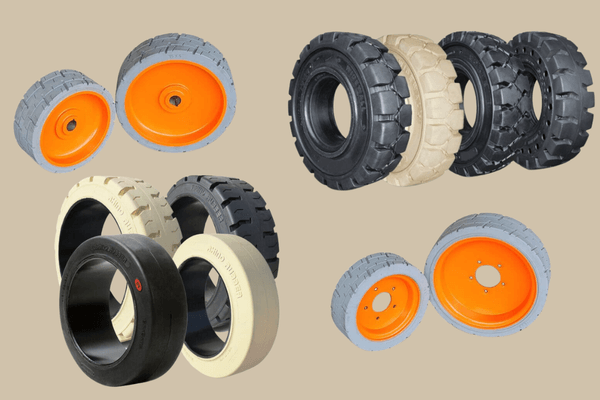
A rental can be silently made or broken by the tires. They have an impact on stability, turning, traction, and riding comfort. The same forklift rental can feel perfect on smooth concrete and miserable on gravel if the tires are wrong.
Cushion tires for smooth warehouse floors
Cushion tires are built for flat, hard surfaces. They’re common on many warehouse forklift models because they turn sharply and work well on finished concrete.
Cushion tires are a good match for:
- Indoor warehouses
- Manufacturing floors
- Smooth dock areas
- Tight turning environments
Pneumatic tires for outdoor yards and uneven surfaces
Pneumatic tires are designed for traction and shock absorption. They’re the better choice for gravel, dirt, broken pavement, and outdoor yards. They also help when you’re dealing with small bumps, uneven transitions, or rough staging areas.
Pneumatic tires are commonly chosen for:
- Outdoor loading zones
- Gravel and dirt yards
- Mixed surfaces where traction changes
- Winter-prone areas where grip matters
Winter weather might be a major factor when a forklift rental in Ohio. Choosing the right tires is especially important if your forklift will be operating outside during the snow or ice season.
Ohio Forklift Rental Considerations: Site Details That Save You Headaches
Jobsites in Ohio have unique challenges, such as shifting weather patterns, a mix of ancient structures and contemporary distribution facilities, and seasonal peaks that call for quick scaling. A little prep before your forklift rental arrives can save hours later.
Do a quick site walk before you rent
You don’t need a complicated survey, but you do need real measurements. Check aisle width, doorway height, trailer conditions, and dock plate transitions. It’s a small step that helps you pick the right warehouse forklift and avoid delivery-day surprises.
Key measurements to gather:
- The narrowest aisle the forklift must travel
- Doorway height and width
- The highest rack beam where you place pallets
- Trailer interior height if you load inside trailers
Plan around Ohio seasonality
Cold weather affects outdoor traction and operator comfort. If your forklift rental will run outside in winter, ask about options like enclosed cabs, heaters, and tire setups that help on slick surfaces.
Renting vs buying a used forklift for ongoing needs
If you rent frequently, it can be worth comparing the long-term cost against purchasing a used forklift. Renting is great for seasonal peaks, short projects, and temporary staffing changes. A used forklift can be a smart move when the work is steady and predictable.
At ValueForklifts, we often see Ohio operations start with a forklift rental, then move toward a used forklift purchase once they confirm the workload and the right truck type. Both paths can work well, depending on how your business runs.
Quick Guide: Match the Job to the Best Forklift Setup
A simple way to narrow your forklift rental choices is to match your environment and surface first, then fine-tune the details like mast and capacity.
Environment, surface, and load style guide
Here’s a practical cheat sheet you can use during planning:
- Indoor, tight aisles: electric forklift and compact warehouse forklift setups
- Outdoor, rough surfaces: diesel or telehandler with pneumatic tires
- Smooth concrete floors: cushion tires for tight turning and easy handling
- Gravel or uneven ground: pneumatic tires for traction and stability
Questions to ask before booking
A few quick questions can confirm you’re selecting the right forklift rental:
- What is my heaviest load, and how often do I lift it?
- What is my highest rack level, and what clearances do I have?
- Will the forklift operate indoors, outdoors, or both?
- What surface will it drive on most of the time?
If you can answer those clearly, you’ll land on the right warehouse forklift setup much faster.
Conclusion
The best forklift rental is the one that fits your loads, your racking, and your jobsite conditions without forcing your team to work around the equipment. Start with capacity and load center, confirm lift height and mast style, then choose fuel type based on where the forklift will run. Choose tires that are appropriate for your surface, particularly if you want to travel outside and in inclement weather.
If you’d like help selecting a certified forklift for your next project, the team at ValueForklifts can walk through your load details and recommend the right forklift rental for your Ohio job. Contact us to schedule your rental and get a setup that keeps your operation moving.
FAQ
How do you choose the right forklift for rent?
Pick the forklift rental that matches capacity, lift height, and fuel type. Electric forklift rentals are often ideal for indoor aisles, propane forklifts work well for indoor and outdoor flexibility, and diesel fits heavy outdoor work.
How to calculate the lifting capacity of a forklift?
Use the rated capacity on the data plate as your starting point, then account for the load center and attachments. If your load is not a standard pallet, share load dimensions and weight when scheduling a forklift rental so the unit is correctly sized.
What is the minimum lifting height for a forklift?
It depends on the job. Some applications only need enough height to clear a pallet and load a trailer, while warehouse forklift operations with racking often require 15 to 20 feet or higher. The right lift height is the height needed to place your pallet safely at your highest pick location with comfortable working clearance.
What is the height of a standard lift?
Many standard forklift setups for warehouse forklift work fall in the 10 to 15 foot range, but it varies by model and mast. When booking a forklift rental, confirm both raised height and lowered mast height to match your doors and racks.