
Reach Truck vs Forklift: Which One Will Save You More Time & Space?
Running a warehouse smoothly often comes down to the choices you make about your equipment. One question that comes up again and again is the comparison of reach truck vs forklift. At first, both machines seem to do the same job. They lift, move, and stack goods. But once you see them in action, the differences quickly become noticeable.
This decision is important in case you are attempting to boost storage capacity and maintain operations without delays. The correct equipment can influence the daily operation of your team. It may assist in better systematizing your area, accelerate processing, and increase overall warehouse efficiency at all shifts. We can go through this step by step in a manner that is practical and easy to implement.
Understanding the Core Differences Between Reach Truck vs Forklift
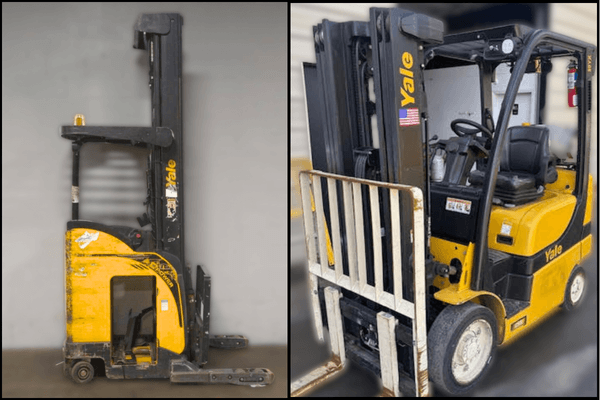
To really understand the reach truck vs forklift discussion, it helps to look at how each machine is built and what it’s meant to do. Even though both fall under material handling equipment, their design tells two very different stories.
A reach truck is designed to operate in an indoor warehouse. Its forks spread outwards and then retract into the body. This type of design enables operators to reach pallets that are deep in the rack without a large turning radius. Due to this, a narrow aisle reach truck is a common thing in warehouses with limited space, and storage is required to be vertical.
Forklifts, on the other hand, are characterized by flexibility. They are suitable both inside and outside the house and can perform a variety of tasks. Forklifts are designed to be versatile: from unloading trucks at the dock to transporting materials across a yard. A narrow aisle forklift is capable of working in a smaller area than that of a normal one but still requires more additional space than a reach truck.
How Their Design Shapes Daily Work
How work is done is directly related to the design of these machines. A narrow aisle reach truck enables operators to navigate with ease through narrow aisles and reduce the amount of unnecessary repositioning. Forklifts will excel where the task is to move loads over a distance or to move heavier materials.
This is why the reach truck vs forklift choice isn’t about picking a universal winner. It comes down to what fits your warehouse layout and daily tasks.
Space Utilization: How Reach Trucks Change the Game
Space is one of the most valuable assets in any warehouse. When looking at reach truck vs forklift, this is often where the biggest difference shows up.
A narrow aisle reach truck can operate in aisles as narrow as 8 to 10 feet. Compare that to a narrow aisle forklift, which generally needs wider aisles to move safely. That gap may seem small at first, but across an entire facility, it can completely change how your space is used.
Narrower aisles allow you to increase the additional racking rows in the same footprint. This eventually results in an observable increase in storage capacity. Reaching up to 35 percent of improvements in many warehouses after changing to reach trucks.
This kind of change has a direct impact on warehouse efficiency. Instead of thinking about expanding your building, you can get better results from the space you already have. For growing operations, that can make a big difference in both planning and costs.
Time Efficiency: Matching Equipment to the Task
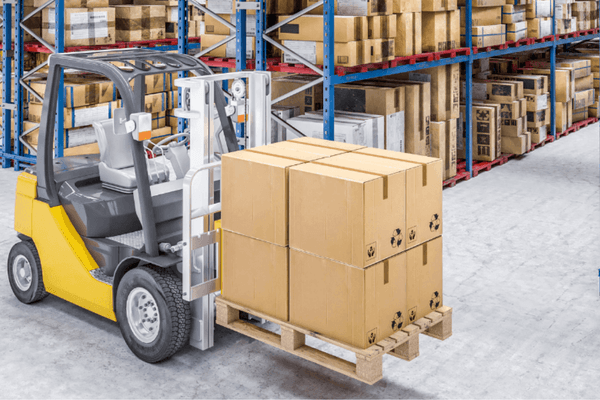
When comparing reach truck vs forklift, time savings depend on the kind of work happening on your floor each day. Both machines are efficient, but they excel in different situations.
A reach truck will be highly efficient in high-rack conditions. It is able to move and lift pallets on higher levels, and this feature makes it suitable for warehouses that use vertical storage.
Forklifts, however, are built for movement across open areas. They handle loading docks efficiently and move goods from one location to another without slowing things down.
Where Each Machine Saves Time
- Reach trucks handle high-level storage and retrieval with speed
- Forklifts move materials across longer distances effectively
- Both support better warehouse efficiency when used for the right tasks
Knowing where each machine performs best helps you reduce delays and keep operations running smoothly.
Maneuverability and Control in Tight Spaces
Busy warehouses demand precision. This is another area where the reach truck vs forklift comparison becomes important. Tight aisles and constant movement require equipment that responds well to operator control.
A narrow aisle reach truck is built for this kind of environment. Its compact design factor allows it to navigate narrow spaces with confidence. Operators can position loads accurately without needing extra room to turn.
A narrow aisle forklift offers some flexibility, but it still requires additional space to maneuver. In high-density setups, this can slow things down.
Better control leads to better results. When operators can move confidently, tasks get done faster, and the risk of damage goes down. Over time, this contributes to stronger warehouse efficiency.
Load Capacity and Versatility: Where Forklifts Stand Strong
While reach trucks are excellent for tight spaces, forklifts bring strength and adaptability into the picture. In the reach truck vs forklift discussion, forklifts stand out when it comes to handling heavier loads.
They can lift a wide range of materials, including bulky and oversized items. They also work well on uneven surfaces, which makes them suitable for outdoor use.
Many businesses turn to used forklifts for this reason. They offer dependable performance while helping manage costs. At Value Forklifts, it’s common for companies to find reliable machines that fit their needs without stretching their budget.
Key Strengths of Forklifts
- Strong lifting power for heavy materials
- Suitable for both indoor and outdoor tasks
- Efficient for transporting goods across larger areas
These qualities make forklifts an essential part of many operations that require flexibility.
Indoor vs Outdoor Use: Choosing Based on Environment
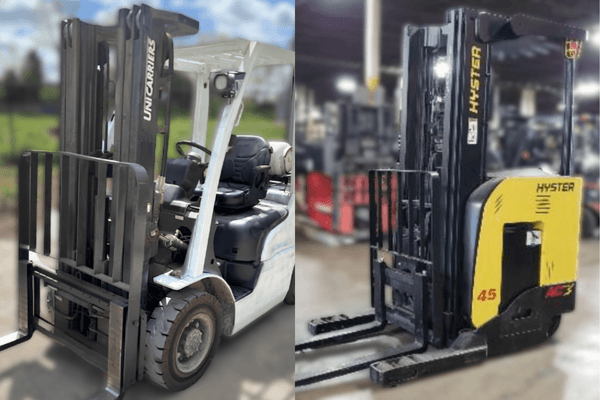
The environment has a significant influence on the reach truck vs forklift decision. The machines are all created under certain conditions.
A reach truck works best in an indoor environment that has smooth flooring and layouts. It is designed in controlled settings where accuracy is important.
Forklifts, on the contrary, are more flexible. They are able to work in the outdoor environment, on irregular surfaces, and perform diverse duties. This renders them a viable option when the operations go outside the walls of the warehouse.
For businesses working in both environments, combining a narrow aisle reach truck with forklifts often leads to better warehouse efficiency. Each piece of equipment handles what it does best, creating a smoother workflow overall.
Cost Considerations and Long-Term Value
When thinking about reach truck vs forklift, cost is always part of the conversation. But looking beyond the initial price gives you a clearer picture.
A reach truck can help reduce storage costs by making better use of available space. This can delay expansion plans and lower long-term expenses.
Forklifts, especially used forklifts, offer a practical option for handling heavy-duty tasks. They provide flexibility without requiring a large upfront investment.
At Value Forklifts, many businesses explore both options before making a decision. Finding the right balance between cost and performance often leads to steady improvements in warehouse efficiency over time.
When a Reach Truck Fits Best
There are situations where a reach truck becomes the obvious choice in the reach truck vs forklift comparison. These are usually environments focused on storage density and space optimization.
A narrow aisle reach truck works well in warehouses with tall racking systems and limited floor space. It allows operators to access high storage areas while maintaining precise control.
Ideal Situations for Reach Trucks
- High-density storage facilities
- Indoor warehouses with tight aisle layouts
- Operations focused on vertical storage
In these settings, a reach truck can reshape how space is used and improve warehouse efficiency significantly.
When a Forklift Is the Better Fit
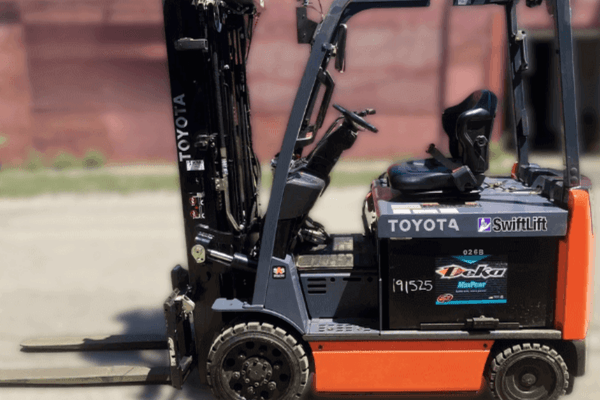
Forklifts are the better option when strength and flexibility are needed. In the reach truck vs forklift comparison, they handle a wider range of tasks with ease.
They are especially useful for loading docks, outdoor work, and transporting goods over longer distances. Many businesses rely on used forklifts to handle these tasks efficiently.
A narrow aisle forklift can still work in certain indoor setups, but it does not offer the same level of space optimization as a reach truck.
Using Both for Better Warehouse Efficiency
In many warehouses, the best solution isn’t choosing one over the other. It’s about using both in a way that plays to their strengths.
A narrow aisle reach truck can manage storage and retrieval within racking systems, while forklifts handle transport and loading operations. This combination creates a balanced workflow.
Businesses working with Value Forklifts often take this approach. By using both machines, they can handle different tasks efficiently while maintaining strong warehouse efficiency across all operations.
Conclusion
The decision between a reach truck vs forklift depends on how your warehouse runs and what you need from your equipment. If your focus is on maximizing storage and working within tight aisles, a narrow aisle reach truck is a strong choice. If your operations involve heavy lifting, outdoor tasks, or fast-moving goods, forklifts offer the flexibility required.
In many cases, using both leads to the best results and helps maintain consistent warehouse efficiency. If you’re exploring equipment options or looking for dependable used forklifts, Value Forklifts can help you find the right fit. Reach out to our team and take the next step toward improving your warehouse operations.
Frequently Asked Questions
What is the main difference between a reach truck and a forklift?
The difference in the reach truck vs forklift comparison comes down to purpose. Reach trucks are built for narrow aisles and vertical storage, while forklifts focus on versatility and handling heavier loads.
Which is better for narrow aisles: a reach truck or a forklift?
A narrow aisle reach truck performs better in tight spaces because it is designed specifically for compact layouts, where a narrow aisle forklift may need extra room.
Do reach trucks really improve warehouse space utilization?
Yes, a reach truck allows for tighter aisle spacing and higher stacking, which improves storage capacity and overall warehouse efficiency.
When should you choose a forklift over a reach truck?
A forklift is a better fit when handling heavy loads, working outdoors, or managing loading dock operations. Many businesses depend on used forklifts for these tasks.
Are reach trucks faster than forklifts for high-rack operations?
Yes, a narrow aisle reach truck works faster in high-rack environments because it is built for efficient lifting and retrieval at height.
[clickitcrm_contact_form]