
Forklift Mismatch: Common Mistakes Warehouses Make When Choosing the Wrong Type for Their Operation
A forklift is not just any car; it is a piece of equipment for your warehouse. All pallets are turned, all racks are filled, and every delivery is ready because this necessary piece of equipment works at its optimum level. However, selecting the wrong forklift is just as bad as attempting to run a marathon in hiking shoes. You may complete the task, but very painfully, inefficiently, and at a much higher cost than it should be.
This is what industry analysts term the 'forklift mismatch,' where the specifications of machines do not match your working environment. It occurs at a greater rate than you would imagine, and the aftermath is much more than mere inconvenience. A mismatched forklift creates hidden costs that silently drain your bottom line: increased safety risks that put your team in danger, damaged products that hurt your reputation, inflated fuel and maintenance expenses, and productivity bottlenecks that slow your entire operation.
The good news? Most of these errors are entirely avoidable. Understanding the most frequent traps in the process of forklift selection in the warehouse can save you thousands of dollars and millions of headaches. Whether you're outfitting a new facility or replacing aging equipment, knowing what to look for and what to avoid makes all the difference between a smooth-running operation and a constant struggle.
Common Mistakes Warehouses Make When Choosing Their Operation

➢ Mistake 1: Ignoring Aisle Widths & Warehouse Layout
When most buyers shop for forklifts, they focus heavily on lifting power and capacity. How much can it lift? How high can it reach? These specifications are important, but there is one factor that is very vital, yet in most cases, people ignore it until it is too late, and this factor is maneuverability.
Imagine this situation: You have just purchased a heavy standard counterbalance forklift of impressive specifications. It gets to your facility, and within an hour, your operators find out that it cannot maneuver through your narrow aisles. It has a huge turning radius, resulting in traffic congestion along the critical pathways. The operators have trouble with the positioning of loads, wasting time in multi-point turns. At worst, the forklift just cannot reach some places in your warehouse whatsoever.
💡The Solution: Before you even begin to browse equipment, determine how wide your right-angle stack is, which is the narrowest aisle the forklift can use to take a pallet out of a rack at a right angle. Include rack depths, pallet sizes, and any pallet barriers, including columns or equipment. With such measurements, you will be in a position to select a forklift that fits in your warehouse plan rather than selecting a forklift that fits outside your warehouse plan, compromising storage density.
➢ Mistake 2: Miscalculating Load Capacity vs. Lifting Requirements
This is one of the facts that many warehouse managers are shocked to learn: It is not merely the amount of lift that is important; it is the amount of lift that you require at the height you need it.
Load capacity ratings are usually provided with the mast in the lowest position (24 inches in front of the fork face). But capacity declines or “derates” with the extension of the mast upwards. A forklift with a rated capacity of 5,000 pounds on the ground may only be used safely when the forks are extended 15 feet into the air with a weight of 3,500 pounds. It is physics at work: the higher the load, the lower the center of gravity, which makes it less stable and less safe to work.
💡 The Solution: Assess your maximum weight at your maximum height. Don't just consider your average load; think about your heaviest products and your highest storage positions. Check the load chart of the forklift (all models must have it) to ensure you have the capacity to do the lift you want to. It's better to have a little more capacity than you believe you need than to find out that you are operating within the margin of safety.
➢ Mistake 3: Choosing the Wrong Fuel Source
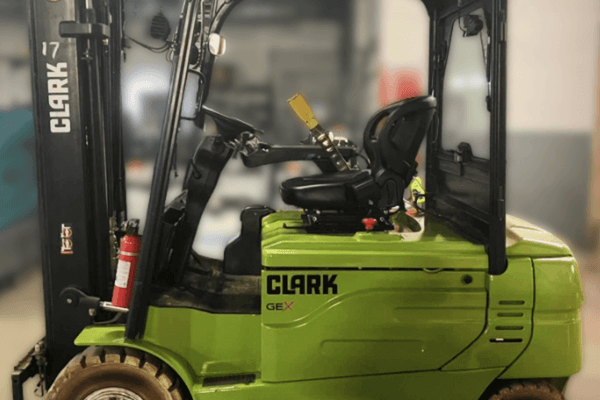
Electric vs IC forklift indoor use debate is not only a matter of preference but also a matter of life and death, a critical safety and efficiency choice that would directly influence your operation and the health of your staff.
Forklifts that have an internal combustion (IC) engine produce exhaust gases, whether it be propane, diesel, or gasoline. When these emissions build up in poorly ventilated indoor surroundings, they produce carbon monoxide and carbon dioxide hazards, which may cause headaches, dizziness, and severe health conditions in your workers. On the other hand, using an electric forklift that should be used on smooth warehouse floors and rough outdoors causes its own complications: the battery will run out faster, tires will wear out, and delicate electrical parts may become damaged.
💡The VFL Advantage: At Value Forklifts, we specialize in helping warehouses identify the perfect power source for their specific needs. Our list of high-quality used electric forklifts gives your business an effective and low-cost solution that safeguards your employees as well as your financial resources in the event of an indoor operation. We also have a full battery inventory so that your electric fleet can maintain optimal performance.
➢ Mistake 4: Overlooking Tire Selection
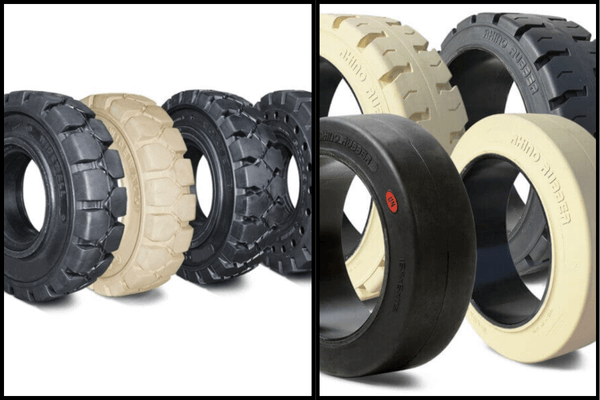
If you think all forklift tires are the same, you're setting yourself up for expensive problems. The forklift tire types are more than most people suggest; that type of tire can ruin your floor, tear off your tires, or even endanger the operators.
There are three main tire types, each designed for specific conditions:
- Cushion tires are solid rubber tires that are used on smooth and concrete surfaces that are indoors. They are excellent at maneuvering in narrow areas and are popular in warehouse forklifts. However, take them to rugged outdoor use, and they will wear out fast and provide a rough ride to the operators.
- Pneumatic tires (both air-filled and solid pneumatic) are built for outdoor use on asphalt, gravel, or uneven terrain. They cushion and give traction to uneven surfaces. But take them indoors, on polished concrete, and they leave an impression and have more aisle space, as they are larger.
- Polyurethane tires provide an intermediate solution in the use of light-duty tires in indoor settings, where the tire has proven to have a longer lifespan than a cushion tire.
💡The VFL Advantage: Understanding tire selection is part of choosing the right forklift for your operation. At Value Forklifts, we not only sell equipment but also assist you in matching each element to your setting, including the appropriate choice of tires. We also carry a full stock of tires to replace and do tire maintenance to keep your fleet on the road.
➢ Mistake 5: Overpaying for "New" When "Used" Fits the Budget
Herein lies what most warehouses commit their biggest mistake to: they spend all of their money on a new forklift, only to find that they cannot afford the attachments, spare batteries, or backup equipment they actually require to operate effectively.
Consider this scenario: You have just invested in a new forklift, which is electric, and you spent $35,000. It is beautiful, but you have no money now to add the side-shift attachment, which will save your operators 15 minutes an hour, nor to add the extra battery pack, which will eliminate charging out of your second shift. In the meantime, a good-quality forklift through a dealer with a good reputation could cost you between $18,000 and $22,000, yet it can perform the same job as you require it and leave you with $13,000 to $17,000 to purchase the accessories and backup equipment that actually help you in the returns.
💡The VFL Difference: Although most dealers are more concerned with the sale of new equipment, we specialize in selling used forklifts for warehouses. Our advantage is that we offer well-inspected second-hand equipment that is well-maintained to perform as if it were new machines at a fraction of the price. This strategy will not only save you in the short-term costs but will also allow you the budget room to invest in forklift attachments and accessories, backup batteries, correct tire choice, and even a second unit during peak times.
It is not a trade-off between quality and used equipment, but a good business choice that will put your capacity to operate to the maximum value of the dollar spent.
Why Select Value Forklift To Avoid Warehouse Mistakes
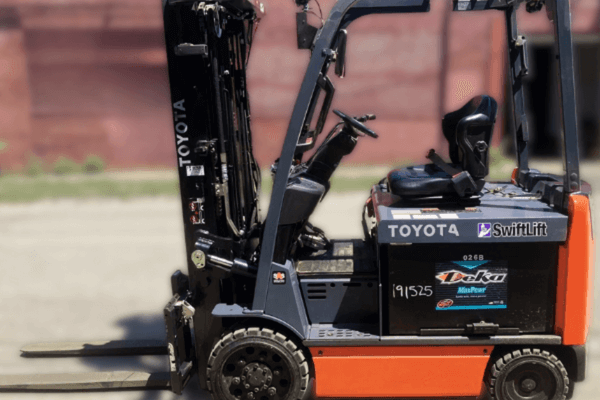
Choosing the right forklift requires more than browsing specifications online. It requires experience, a truthful evaluation of your requirements, and someone with whom you have a mutual interest in your establishment, rather than someone who is merely selling you.
At Value Forklifts, we've built our reputation on helping warehouses avoid the costly mistakes outlined above. Our approach is different:
- We Start With Your Operation: Before we can suggest equipment, we need to know about your warehouse layout, your forklift aisle width requirements, your loads, and your budget constraints. The proper forklift for a small-aisle grocery store does not match what a lumberyard or factory will require.
- We Offer Honest Guidance: In case a used electric forklift will be more useful to you in your indoor operation than a new IC model, we will tell you even when this would only result in a smaller sale on our part. It is our aim that you become successful in the long run, which results in repeat business and trust-based referrals.
- We Provide Complete Solutions: Beyond the forklift itself, we help you consider tire selection, attachments, battery needs, and maintenance requirements. We stock the parts and accessories you'll need to keep your equipment running efficiently.
- We Specialize in Value: Our emphasis on quality used equipment means that you can do more with your budget. Each unit is carefully checked and maintained, and in this way, you are getting good equipment, which has a long lifespan and is in good condition.
Conclusion
The correct forklift is not merely about strength. The strongest forklift may not be the correct one if it does not fit your warehouse plan, load demands, conditions, and budget. Forklift mismatch is costly, hazardous, and entirely preventable through planning and professional advice.
The five mistakes we've covered—ignoring aisle widths, miscalculating capacity needs, choosing the wrong fuel source, overlooking tire selection, and overpaying for new equipment—account for the majority of forklift selection problems warehouses face. All of them can be prevented by a thought-out, rational approach to the equipment choice.
Don't let a forklift mismatch drain your efficiency and budget. Contact Value Forklifts today to consult our team. We'll help you find a machine that matches your specific operation, your space constraints, and your budget, ensuring you get maximum productivity from every dollar invested.