
Transparent Trade-Ins: What Sellers (Business Owners) Should Disclose to Get a Fair Offer
When it comes time to trade in your used forklift, honesty isn't just the best policy; it's the smartest business strategy. Many warehouse managers and business owners worry that disclosing every detail about their equipment will lower their trade-in value. In reality, the opposite is true. Transparent forklift trade-in results in quicker transactions, more precise quotations, and improved relations with dealers who will assist you in your material handling requirements over the next few years.
This blog will take sellers step-by-step in deciding what to reveal to them when you are about to sell used forklift equipment, and you will know how openness directly affects your forklift resale value and why concealments usually reduce, not increase, your final bid.
What Does "Transparent Trade-In" Actually Mean?
A transparent forklift trade-in means providing complete, honest information about your equipment's condition, history, and current state. When forklift dealers and buyers are comparing the used forklifts, they are looking beyond the make and model. They determine the real state of the forklift, its utilization, the surroundings in which it was utilized, and the existence of good documents to show its maintenance history.
Consider it in the following way: professional forklift purchasers have observed thousands of forklifts. They are aware of what to watch out for, and they will find out on inspection that there are some hidden problems. Whenever sellers are trying to hide issues or bypass certain significant information, this evokes a sense of mistrust immediately, and in many cases, much-reduced bids once the truth is revealed. Dealers also take into consideration the risk of not knowing about the problems, and that risk premium comes right out of your pocket.
Comparatively, in the case of full disclosure to the buyer at the beginning, they can make a correct evaluation within a short period. They do not have to cushion their bids with a “surprise contingency” buffer, and you would come out as a partner whom you can depend on to do business with in the future.
Key Information Every Seller Should Disclose Up Front
-
Basic Forklift Details
Start with the fundamentals. Include the make, model, year of manufacture, type of fuel (electric, propane, diesel, or gas), mast height and type, load capacity, and all attachments that may come with the unit. These specifications form the baseline for any used forklift value assessment.
Do not think the dealer will come up with the details on their own. Proper and informative information will speed up the process of evaluation and prove that you have kept good records since you were the owner.
-
Operating Hours and Work Environment
The readings of the hour meter are important in knowing the forklift depreciation curve and its remaining lifespan. Be honest about the accuracy of your hour meter. Has it been changed, or has it been taking it ill? Tell. This can be easily checked by dealers during inspections, and any differences raise a red flag.
It is also important to describe the conditions under which your forklift worked. A machine in a clean warehouse climate controlled inside will have very different wear patterns from one in cold weather or a cold storage warehouse. The extremes of temperature, exposure to moisture, corrosive and non-smooth grounds all affect equipment status. This background allows the buyers to know that particular wear patterns are exhibited on certain components, and they can then make pricing decisions.
-
Maintenance and Service History
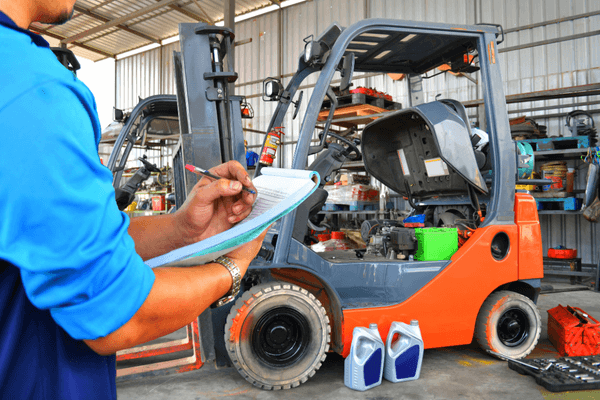
Detailed records of services are your friend in case of a reasonable offer. Record the normal service periods, oil change, the replacement of filters, and any significant replacement of major parts such as hydrostatic pumps, transmission, and electrical systems. State whether maintenance was done by certified staff or was done internally.
The records of professional services by reputable providers are also important, as they show that the forklift was maintained throughout its existence. Attach a copy of inspection reports, especially those mandated by OSHA on annual inspections, as these grant third-party confirmation of the state of the equipment at particular times.
And in case you have changed some key parts, such as batteries, tires, forks, masts, or engines, then record the time of these upgrades and save the invoices. New parts are a good investment that can contribute to your forklift's trade-in value because they would reduce the maintenance expenses to be incurred in the near future by the buyer.
-
Accidents, Damage, and Major Repairs

Transparency is most important in this case. Report any accidents or incidents that involved the forklift, regardless of how minor they may have appeared at that moment. Frame damage, mast damage, or structural repair will be considered a major issue because they affect safety and resale value. It is the immediate problem that professional inspectors will point out.
Describe the damage that occurred, the work that was done, and the person who did the job. In case welding was performed on the frame or mast, give the reason and provide a copy of the repair shop. Repairs to the structure do not automatically rule out trade-in of your forklift; however, covering up is suicidal to your reputation and your deal.
The same is true with component failures and repairs that are major. Record it in case your hydraulic system has been rebuilt, your transmission has been changed, or your electrical system has been rebuilt. The repairs produce a story on how the machine was used and how it was taken care of, and this story influences the price.
-
Current Mechanical and Safety Issues
Do not wait until the inspection shows the issues that you are aware of. Report about existing problems with brakes, hydraulics, steering, mast functions, electronics, or any safety systems. These are horns, lights, back-up alarms, seatbelts, and overhead guards.
By admitting the problems that exist at the very beginning, you enable the dealer to give you an accurate quote that will show the actual cost of repairs. This will help avoid the disappointing task of getting a preliminary estimate, and later it is cut down when it is found that something is amiss that was not disclosed initially.
-
Tires, Battery, and Key Wear Components
Give specific data regarding tire condition, such as tread depth and any damage. In the case of electric forklifts, the age and condition of the battery are important factors in the assessment of the used forklift condition. State age, habits of charging, history of water maintenance, and any performance problems in the battery. Included data on the charger, its age, status, and the fact whether it fits the battery well.
Fork condition is of great importance for safety and value. Record the condition of any wear to the fork blades, whether shortened or repaired. Lightly check and record the chain condition on the mast, since a change of chain is a major cost that the buyers consider when making their offers.
Documentation That Helps You Get a Fair (or Better) Offer

There is detailed documentation between serious sellers and those who are interested in selling problem equipment. Collect all of the service records and invoices and arrange them in order of time to present the history of maintenance. Add operator checklists and inspection logs (daily); if you had them, they would show the culture of proper equipment care.
Documents of ownership, original manuals, and any other leftover warranty information must be gathered and prepared to transfer. In case you have lost the original manual, this is something you should mention at the start of using the device; that is a minor matter, but it should be noted.
The concept of visual documentation is gaining greater relevance in the digital era. Use clear, well-lit pictures on various angles; front, rear, both sides, overhead guard, mast up and down, control panel, hour meter, tires, forks, and any areas of damage or wear. Suggestive videos of the forklift at work-driving, lifting, lowering, and tilting, can be considered as a great way of getting evidence of the mechanical condition that cannot be achieved by a static photo.
How Honest Disclosures Affect Your Trade-In Value
-
What Buyers Look For First
Buyers of forklifts are not keen on what you might say to them; they are keen on what they see. They compare your verbal and written accounts with the physical examination to notice what matches and what does not match. Trust is instilled as soon as your revelation is in tandem with their results.
Buyers also examine the relationship between specifications, maintenance records, and the actual equipment condition. A forklift with 5,000 hours should exhibit some wear pattern. When it appears more battered than it should or is suspiciously clean, questions arise. Full records can answer these trends and prove the existing state of affairs.
-
Red Flags When Sellers Aren't Transparent
Some warning signs make offers go down without delay or make buyers turn off altogether. Lack of maintenance records indicates either inadequate care or concealment of issues. Unexplained damages, i.e., dents, welds, or repairs with no documentation, are of concern about what could have gone wrong. The apparent and mentioned safety concerns in your original disclosure either indicate incompetence or fraud.
When consumers are exposed to such red flags, they guard themselves by significantly reducing their bids or demanding thorough checks before they can make a commitment. Your forklift trade-in disclosure (or failure to disclose the same) is the direct determinant of how the buyers treat your equipment with either confidence or suspicion.
-
How Transparency Builds Trust and Speeds Up the Deal
The dealers will offer quicker quotes to transparent sellers since the dealers do not have to incorporate a margin to cover unforeseen issues. The give-and-take aspect of the negotiation process becomes significantly shorter when the negotiation process is based on the same set of accurate information. Most importantly, open reveals reduce the chance of a decrease in the price after the observation to the minimal extent--the first quote is much closer to the last offer.
This is efficiency that is helpful to all. You get your money sooner, and you will be able to plan your purchase of replacement equipment more easily and create an image of a reliable partner with whom to conduct business in the future.
Working with a Trusted Trade-In Partner
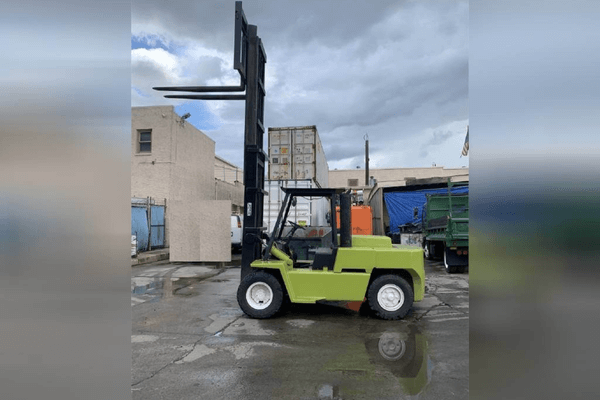
The transparent trade-in process becomes even smoother with the selection of the appropriate dealer. Specialist forklift dealers like Value Forklifts bring expertise in evaluating used equipment, understanding the nuances that affect value, and providing fair market offers based on current demand and condition.
A transparent dealer must also show the same honesty by telling you what they found in their inspections, taking you through their pricing process, and offering you more than just a figure to trade in your vehicle. They are expected to respond to queries regarding the impact of certain matters on value and recommend whether to fix some of the problems before trade-in or take a lower offer in its current form.
Conclusion
Transparent forklift trade-in is not about making everything visible and owning up to all misdemeanors of the slightest details, to appear truthful. They are concerned with delivering full and true information that will enable customers to make justifiable judgments and give reasonable prices on your used forklift.
Be it the process of upgrading fleet, downsizing of operations, or even just a case of replacing your aging equipment, transparency will turn the whole trade-in process, which may have been a negotiation process that is adversarial, into a simple business deal. You are presented with a good offer, the dealer with good equipment that they can easily resell, and both parties form a relationship that aids in the future.
Need an honest, transparent quote for your used forklift? Contact us today to discuss your trade-in options and explore replacement forklifts that can take your material handling operations to the next level. Our team specializes in honest evaluations and fair offers based on complete information because we believe transparency works both ways.