
How to Match Forklift Capacity with Your Warehouse Load Requirements
Choosing the right lift truck begins with a clear look at what your warehouse handles every day. Pallet weight matters, but it is only one part of the decision. Load depth, center of gravity, rack height, aisle width, attachments, and operator conditions all affect how safely a truck can lift and move materials.
That is why forklift capacity should be matched to the real job, not a single number on a brochure. A truck that is too small can create stability risks, slow down handling, and put extra pressure on operators. A truck that is too large can waste money, take up valuable space, and feel awkward in tight aisles.
At Value Forklifts, the goal is simple: help buyers choose equipment that fits the load, the layout, and the pace of the warehouse. This guide explains how to compare forklift load capacity with your daily work.
Start With the Loads Your Warehouse Actually Handles
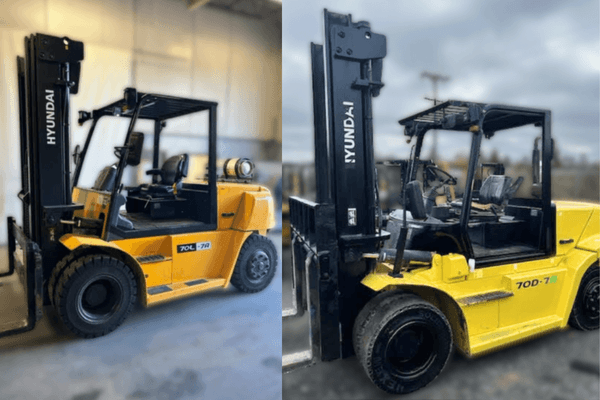
To compare the models of trucks, take time to closely consider the items your team lifts, stacks and transports. It is better to begin at the heaviest realistic load, largest pallet and most awkward object that your team is likely to encounter.
Once your team has been moving a 3,000 lb pallet, but now is getting a 4,800 lb crate, be sure to plan for that larger crate.
Record Weight, Size, and Shape
Create a simple list of the loads that matter most. Include:
- Maximum pallet, crate, or bundle weight
- Load depth from the fork face to the farthest point
- Wide, tall, liquid, fragile, or shifting loads
- Loads that are handled often versus occasionally
- Dock, rack, and staging areas where heavy goods move
This helps define forklift load capacity in a practical way. It also prevents you from choosing a truck that looks fine on paper but struggles on the warehouse floor.
Plan Around the Toughest Safe Lift
Do not size your fleet around the lightest or most common pallet. Plan around the heaviest load that should be handled by that truck. It means choosing forklift capacity that gives your operators a safe working margin.
Understand Load Center Before You Choose Capacity
The load center is one of the most important parts of forklift capacity. A standard truck rating is often based on a 24-inch load center, which means the load’s center of gravity sits 24 inches from the vertical face of the forks.
The center of gravity moves forward if the load is deeper, longer or uneven. The further the truck is from the mast, the less safe it is. Hence a 5000 lb rating does not necessarily indicate the ability of the truck to lift all 5000 lb loads.
Use a Simple Capacity Formula
A helpful estimate is:
Safe Capacity = (Rated Load Center ÷ Actual Load Center) × Rated Capacity
For example, if a truck is rated for 5,000 lbs at a 24-inch load center and the load center shifts to 32 inches, the calculation is:
24 ÷ 32 × 5,000 = 3,750 lbs
In that case, the practical safe rating may drop to about 3,750 lbs. This is why forklift load capacity should always be checked against actual load dimensions.
Watch Oversized and Uneven Loads Closely
Long pallets, machine crates, lumber, pipe, furniture and odd items can shift the center of gravity forward. If your operation has to deal with these loads regularly, it might be more suitable to have a high-capacity forklift instead of a standard capacity one.
Correct forklift capacity supports safer handling and fewer damaged products.
Factor in Lift Height and Rack Layout
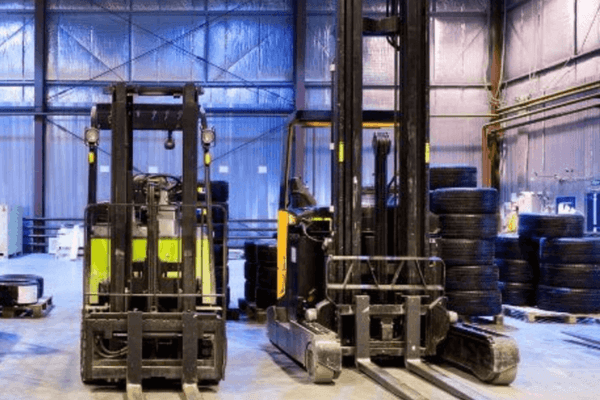
Lifting a pallet a few inches off the floor is very different from placing it on a high rack. As the mast rises, stability changes. The higher the load goes, the greater the need to check the manufacturer’s load chart.
A rating near ground level should never be treated as the same rating as the top beam of your racking.
Check Your Highest Storage Position
Measure your rack system before choosing a warehouse forklift. Note the highest pallet position, the heaviest load stored at height, and the space available for turning and approach.
Useful details to review include:
- Maximum fork height required
- Weight handled on upper rack levels
- Rack aisle width and turning space
- Mast type, visibility, and overhead clearance
- Floor condition and travel path
These details help match forklift capacity to the full warehouse layout instead of relying on guesswork.
Know When Narrow Aisle Equipment Fits Better
A reach truck can be a strong option for narrow aisles and tall racking. It is designed to reach into rack positions while using less turning space than many counterbalance trucks.
Still, the model must be matched to the load. Check the rated chart at the lift height you need. If heavy pallets go high, it should have enough residual capacity for the job.
Account for Attachments and Truck Type
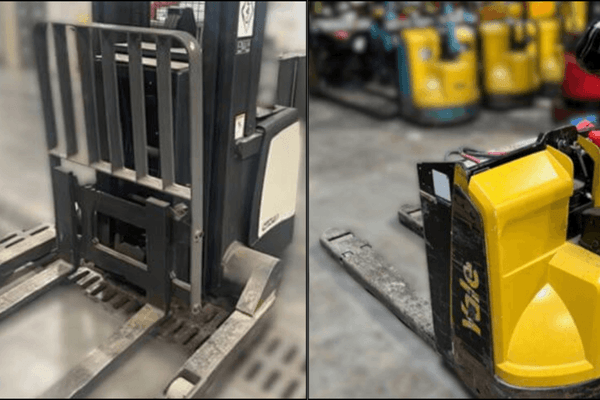
Attachments change the way a truck handles weight. Sideshifters, fork positioners, carton clamps, rotators, paper roll clamps, and fork extensions can add weight to the front of the truck or move the load farther from the mast. Both can lower forklift capacity.
If your warehouse uses attachments often, include them in the decision from the beginning. Adding an attachment later without reviewing the rating can leave the truck underpowered for its work.
Review the Full Handling Setup
The load capacity rating on a forklift should be based on the forklift load capacity, attachment, load center and lift height combined. The data plate should also be the same as the current configuration. The plate should be revised if the attachment changes the rating, and should display the correct safe capacity.
When the attachment reduces the usable rating too much, a high-capacity forklift may be the safer and more productive choice.
Match the Truck to the Workflow
A good fit is related to capacity and movement. Dock, staging and general warehouse tasks are versatile applications for counterbalance trucks. A reach truck can be beneficial to use when the aisles are narrow and racks are tall. For example, electric forklifts might be appropriate for the inside, and combustion trucks might be appropriate for an outside yard.
A warehouse forklift should suit the building, not fight it. If operators need several extra moves to place every pallet, the truck may be too large, too wide, or poorly matched to the aisle plan.
Use Capacity Ranges as a Starting Point
General ranges can help during early planning:
- 3,000 to 4,000 lbs: light warehouse work and dock tasks
- 5,000 to 6,000 lbs: general warehousing and manufacturing
- 8,000 to 10,000 lbs: lumber, steel, stone, and heavy materials
- 12,000 lbs and higher: large industrial loads and machinery
These are only starting points. Final forklift capacity should be checked against the load center, lift height, attachment use, and building layout.
Keep Safety, Compliance, and Growth in Mind
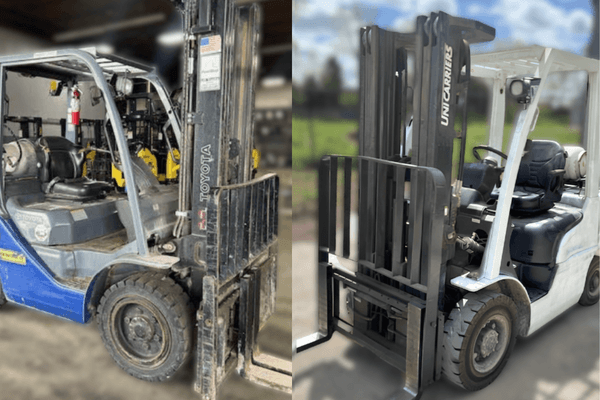
A safe lift begins before the truck is in motion. It starts with proper equipment, easy to read data plate, trained operators and clear handling rules. The rating is not to be guessed or taken from an old sales sheet, but should be followed by the operator.
A little extra forklift capacity can be helpful, especially if product weight or pallet size is changing. Too much extra size can increase cost and reduce maneuverability.
Use the Data Plate as the Authority
The data plate indicates the maximum rated forklift capacity, which occurs under certain conditions. It can contain load center, lift height, attachment information and loading weight of truck. The plate, in case it is missing or damaged, should be reviewed prior to use for the truck.
The displayed rating should match the setup operators are using.
Train Operators With Real Warehouse Examples
Training is more effective if it is relevant to your job situation in your facility. Demonstrate loads that need to be "top heavy" and which pallets should remain "low" and where heavy loads are to be stored, and when to seek assistance.
Successful training reinforces the link between forklift load capacity and daily decisions such as slow turns, low travel height, smooth braking and careful stacking.
Conclusion
The right truck should match the way your warehouse actually runs. Start with real load weights and dimensions, then review load center, rack height, attachment use, aisle space, and future growth. When these details are considered together, forklift capacity becomes a clear safety and productivity decision.
A well-matched truck helps operators work with confidence, protects inventory, and keeps materials moving smoothly. Whether you need a compact warehouse forklift, a reliable reach truck, or a high-capacity forklift for demanding applications, Value Forklifts can help you compare options that fit your operation.
Contact us today to discuss your load requirements and find the right forklift for your warehouse.
Frequently Asked Questions
What does forklift capacity mean?
Forklift capacity is the maximum weight a truck can safely lift under stated conditions. The actual safe rating can change when the load is longer, uneven, lifted higher, or handled with an attachment.
How do I calculate forklift load capacity for a longer pallet?
As a good approximation use the formula of load center / actual load center * rated capacity. Refer to the manufacturer's data plate and load chart for final decisions.
Is a reach truck good for tight warehouse spaces?
Indeed, a reach truck can be a good option for a narrow aisle and a tall rack. It still has to have sufficient "residual" capacity at the desired elevation, so be sure to check the rating before you select a model.
When should I choose a high-capacity forklift?
Choose a high-capacity forklift when heavy, long, dense, or awkward loads push standard trucks close to their limits. It is often useful for steel, lumber, stone, machinery, and heavy manufacturing work.
What is the best warehouse forklift for mixed loads?
The best warehouse forklift depends on load weight, load center, lift height, aisle width, power type, and attachment use. Mixed-load facilities may need different trucks for different tasks.