
Forklift Safety Tips for Warehouse Employees
A warehouse can get busy fast. Pallets move, orders are picked, trucks back into docks, and employees walk between aisles. In that setting, forklift safety has to be part of the everyday routine, not something people remember after a near miss.
Proper forklift safety practices help to prevent injury, damage to products, racks, floors, and equipment. They also ensure that work continues to flow, since all personnel are aware of how to maneuver powered trucks safely. It doesn't matter if your team is operating a sit-down rider, a reach truck, a pallet jack, or a warehouse forklift equipped with special attachments; the fundamentals remain the same: training, inspections, clean rules for traffic, stable loads, good tires, reliable power, and safe attachments.
Value Forklifts supports warehouse teams with forklifts, quality tires, batteries, chargers, and attachments that help daily operations run with confidence. This blog shares practical forklift safety tips employees can use on the floor.
Start Every Shift With Training and Inspection
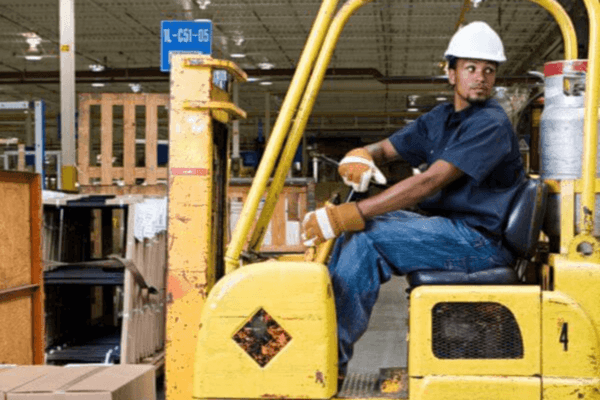
Forklift safety begins before anyone lifts a pallet. A forklift safety focused shift starts with a trained operator, a checked truck, and a team that knows how to report problems quickly.
Use trained and certified operators
Powered industrial trucks should be driven only by a certified forklift operator. Training enables employees to know the controls, load limits, travel rules, blind spots, ramp areas, dock areas, and what to do in emergency situations.
A certified forklift operator should know how to:
- Inspect the truck before use
- Read the capacity plate
- Travel with loaded and empty forks
- Work around pedestrians
- Park and charge the truck safely
Complete a pre-shift check
One of the easiest forklift safety habits to have is to perform daily checks. Inspect tires, forks, and chains, movement of mast, brakes, steering, lights, horn, backup alarm, and mirrors, seatbelt, leaks, and power connections on electric equipment before use.
Report problems right away
Staff should have the confidence to speak up if they think the equipment is not safe to use. If the truck tips to one side, the brakes respond slowly, the charger cord is damaged, or one tire is tearing apart, park the truck and inform a supervisor.
Fast reporting helps maintenance teams plan forklift tire replacement, inspect the forklift battery, repair chargers, or service the truck before the next shift.
Protect Pedestrians Around Moving Equipment
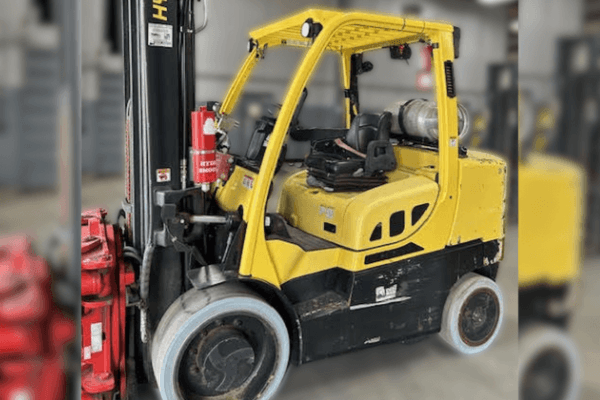
Clear restrictions are needed since pedestrians and forklifts share a building. Knowing what to expect enhances forklift safety for pedestrians and operators.
Use marked walkways
Marked lanes, mirrors, barriers, signs, and bright lighting help guide foot traffic. Pedestrians should stay in assigned paths and cross only at marked points when possible.
Operators should decelerate at packing stations, dock doors, breaks, time clocks, and aisle ends. A warehouse forklift needs space to stop, especially with a hefty load.
Pause at blind corners
Blind corners are common in racking areas. Pedestrians should stop at aisle ends, look both ways, listen for horns, and make eye contact with the operator before crossing.
Operators should use the horn, flashers, and low speeds at corners, doorways, intersections, and blocked views. This routine supports forklift safety without creating confusion.
Reverse when the load blocks the view
A tall or bulky load can hide people, racks, and pallets. If the forward view is blocked, the operator should travel in reverse while looking in the direction of movement.
A warehouse forklift should never move forward blindly just to save time.
Handle Loads With Balance and Control
Many incidents start with load handling. Forklift safety means keeping loads stable, moving smoothly, and respecting the boundaries of the truck.
Keep loads low
Carry loads low to the ground with the mast tilted back slightly. This helps maintain stability and gives the operator better control.
Do not travel with raised forks, even when the truck is empty. Raised forks can hit people, racks, doors, trailers, and products. Low forks are a basic forklift safety habit.
Check capacity before lifting
Every truck has a capacity plate. Operators should read it and understand how load weight, load center, lift height, and attachments affect forklift safety.
A certified forklift operator should never guess with an unusually heavy, long, or unstable load. If weight or balance is unclear, stop and get the right information before lifting.
Turn and brake smoothly
Use extra care on ramps. Travel straight, avoid turning on inclines, and keep the load positioned correctly.
Keep Tires, Batteries, and Chargers in Safe Condition
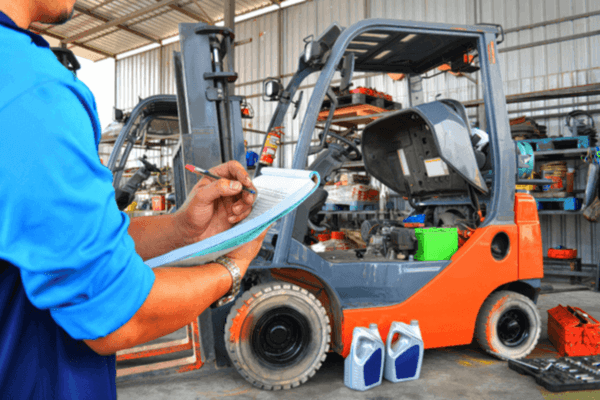
Good forklift safety also depends on the condition of the equipment. Even the finest operator still needs a vehicle that grips, stops, lifts, and powers right.
Inspect tires for wear
Forklift tires carry heavy weights over concrete, dock plates, debris, and uneven areas. Damaged tires can reduce stability, increase vibration, and affect braking.
Watch for:
- Chunking or cracking
- Flat spots
- Uneven wear
- Worn safety lines
- Poor traction
- Excessive vibration
Timely forklift tire replacement helps the truck stay steady and easier to control. Forklift tire replacement can also reduce strain on the operator and the machine.
Care for the battery and charger
A weak forklift battery can slow production and create forklift safety concerns. Electric forklifts need clean connections, correct charging habits, and cables in good condition.
Charging areas should be marked, ventilated, and kept free from clutter. If the battery shows heat, leaking, swelling, corrosion, or poor runtime, it should be inspected before use.
Match products to the job
The right tire, charger, power source, and attachment can improve forklift safety and performance. Indoor concrete work may call for different tires than dock or rougher surface work.
Use Attachments With Extra Care
Attachments can make a truck far more useful, but they can also change how it handles. Attachment training should be part of forklift safety before any attachment is used.
Choose approved attachments
Use attachments built for the truck and the task. Clamps, extensions, rotators, booms, and platforms all have different handling rules.
Forklift Attachments Safety starts with proper fit. The attachment should be locked in place, undamaged, and included in the capacity calculation. Avoid homemade attachments or damaged equipment.
Recheck truck capacity
Attachments can reduce lifting capacity and shift the load center. A certified forklift operator should understand how an attachment affects balance, speed, lift height, and turning.
Forklift Attachments Safety also means using each attachment for its intended purpose. Fork extensions should support the load correctly, clamps should grip safely, and platforms should be secured before anyone is lifted.
Lift people only with approved platforms
Employees should never stand on bare forks. If someone must be elevated, use an approved work platform with guardrails, locking points, and clear operating steps.
This supports forklift safety and reduces the chance of falls or crushing injuries.
Create Clear Traffic and Dock Rules
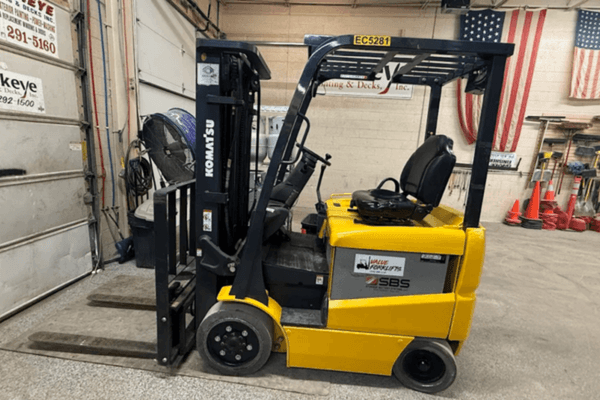
A warehouse becomes safer when movement rules are simple and consistent. Forklift safety should be visible in signs, floor markings, supervisor reminders, and daily behavior.
Set safe speed limits
Speed limits should reflect aisle width, visibility, floor condition, pedestrian traffic, and dock activity. Operators should slow near doors, intersections, ramps, corners, and crowded zones.
A warehouse forklift needs space to stop. Rushing through turns or following another truck too closely raises the risk of a crash.
Secure trailers and dock plates
Dock areas need special attention. Before a forklift enters a trailer, the trailer should be secured, the dock plates should be set correctly, and the trailer floor should be strong enough for the load.
Wear the right protective gear
High-visibility vests, steel-toed shoes, hard hats, gloves, and fitted clothing help reduce injuries. Loose clothing can catch on controls, levers, wheels, and moving parts.
Seatbelts are critical, too. If a forklift tips, the operator should stay in the cab, hold on, brace, and lean away from the fall. Jumping can lead to severe injury.
Maintain Equipment Before Trouble Grows
Maintenance keeps trucks safer and reduces expensive downtime. It also gives employees confidence that the equipment they use is ready for the workload.
Watch for warning signs
Odd noises, slow lifting, weak brakes, steering changes, hydraulic leaks, tire damage, and short runtime should be taken seriously.
A warehouse forklift that feels different from the previous shift may need attention. Early service supports forklift safety and protects loads, racks, and flooring.
Plan tire and battery service
Forklift tire replacement should be planned according to wear, surface conditions, usage and load weight. You can generate instability and unintended downtime if you wait until failure.
The forklift battery should be reviewed during routine maintenance. Weak cells, damaged connectors, or charging trouble can affect both performance and forklift safety.
Keep attachments in good shape
Forks, chains, hoses, lights, alarms, mirrors, seatbelts, and attachments need regular inspection. Forklift Attachments Safety depends on clean, strong, correctly fitted equipment.
Conclusion
Forklift safety is most effective when it becomes a regular practice in the warehouse. These are all components of a training program, inspections, forklift safety awareness, pedestrian safety awareness, controlled driving, stable load handling, good tires, reliable power, safe chargers, and approved attachments, all for the protection of people and property.
For forklifts, forklift tire replacement guidance, forklift battery options, chargers, and attachments that support safer warehouse operations, contact Value Forklifts today.
Frequently Asked Questions
1. Why is forklift training important?
Operators learn how to inspect trucks, how to handle pedestrians, load limitations, truck controls, and hazards. A certified forklift operator is better able to operate safely in actual working situations in a warehouse.
2. How often should a forklift be inspected?
A forklift should be checked before each shift. Daily inspection should include tires, brakes, steering, horn, lights, forks, mast, seatbelt, leaks, and the forklift battery on electric trucks.
3. When is forklift tire replacement needed?
Forklift tire replacement is necessary when tires have chunks, cracks, flat patches, low traction capacity, uneven wear or wear outside the safety line. Worn tire treads can affect stopping power, stability and comfort.
4. Why does Forklift Attachments Safety matter?
Attachments affect capacity, balance, visibility, and handling, and all of these are important Forklift Attachments safety considerations. Operators to use approved attachments and to use the right capacity rating.
5. What should an operator do when a load blocks the view?
The motorist should drive backward, and toward the direction of travel. Use horns, flashers, and slow speeds at intersections and blind corners.