
4-Wheel Electric Forklift vs 3-Wheel Electric Forklift: Which One Do You Need?
The inappropriate forklift may technically be able to lift the weight, but it can still waste aisle space, slow down pallet placement, or have issues with floor conditions. Buyers generally compare material handling equipment on capacity or price alone. Wheel configuration determines turning space, load handling, surface appropriateness & daily productivity. The choice between a 3-wheel electric forklift and a 4-wheel electric forklift depends a lot on your facility layout, stacking height, floor quality, and application.
3-Wheel Electric Forklift: Great for confined indoor settings, frequent turning, and light to medium loads. A 4-wheel electric forklift is excellent for heavier loads, higher lifting, ramps, broader aisles, or mixed indoor/outdoor operations. Two-ton capacities, 2.5 m aisle widths & 4 m lift heights are suggested as general screening criteria, but they are not absolute restrictions. Actual capacity is determined by the truck data plate, load center, attachments, right-angle stacking standard & surface rating.
If you are sourcing pre-owned equipment in the Midwest, Value Forklifts provides a reliable inventory of inspected used material-handling equipment tailored to distinct facility requirements.
Quick Overview
Choosing between a 3-wheel and 4-wheel electric forklift requires a close look at how the truck will be used each day. Three-wheel models provide tighter maneuverability for narrow indoor aisles, while 4-wheel models are often better for heavier loads, higher lifts, ramps, and mixed surfaces. Consider aisle width, load weight, lift height, floor conditions, battery runtime, and attachments before making your final decision.
Should You Choose a 3-Wheel or 4-Wheel Electric Forklift?
If your facility is small, indoors, has smooth concrete floors, tight turns, and moderate loads, a 3-wheel electric forklift is a good choice. Opt for a 4-wheel electric forklift for heavy loads or irregular loads, higher lifts, ramps, uneven surfaces, & combined inside & outdoor use. Check your specific working aisle dimensions & rated capacity on the data plate prior to purchase, as no arrangement is universally optimal.
| Your Main Requirement | Likely Better Fit |
|---|---|
| Tight indoor aisles | 3-wheel electric forklift |
| Frequent sharp turns in tight spaces | 3-wheel electric forklift |
| Smooth, level concrete floors | 3-wheel electric forklift |
| Heavier or irregular loads | 4-wheel electric forklift |
| Higher stacking requirements | 4-wheel electric forklift |
| Ramps, dock plates, or mixed surfaces | 4-wheel electric forklift |
| Indoor and outdoor travel | Properly equipped 4-wheel model |
How Wheel Configuration Changes Forklift Performance
Wheel design changes how a truck maneuvers, balances weight, & transfers power to the floor. Understanding these structural differences clarifies why each configuration excels in specific environments.
How a 3-Wheel Electric Forklift Is Designed
A 3-wheel configuration uses two load-bearing drive wheels at the front and a single centered steer wheel assembly (or dual-wheel steer assembly mounted closely together) at the rear. This rear pivot design allows the truck to turn on its own axis, creating a short turning radius.
The design of the wheel impacts how a vehicle turns, distributes weight, & delivers power to the bottom. This knowledge of structural distinctions accounts for the fact that each configuration is well-suited to particular surroundings.
How a 4-Wheel Electric Forklift Is Designed
A 4-wheel model features two front drive wheels & two widely spaced rear steer wheels. This layout creates a longer or wider footprint depending on the rated capacity and tire setup.
They can accommodate a wider range of capacities and different tire configurations and are therefore common for dock-to-stock operations, bulk storage, manufacturing, and heavy materials handling.
Technical Insight: Even if it has four physical wheels, a forklift nonetheless works within a stability triangle. A 4-wheel forklift has a rear steer axle that is connected to the body via a center pivot point. This gives the balancing base a triangle shape. Proper load center management, controlled speeds, and flat operating surfaces help keep the center of gravity within the triangle, and that is what the stability depends on.
3-Wheel Electric Forklift vs 4-Wheel Electric Forklift: Key Differences
Comparing standard features reveals clear operational trade-offs between the two designs.
| Factor | 3-Wheel Electric Forklift | 4-Wheel Electric Forklift |
|---|---|---|
| Turning ability | Tighter turning radius; turns inside its footprint | Wider turning arc required |
| Aisle suitability | Excellent forklift for narrow aisles and compact spaces | Needs wider aisles for right-angle stacking |
| Typical load profile | Light-to-medium (commonly under 4,000 lbs) | Medium-to-heavy (broad capacity range) |
| High lifting | Suitable within rated capacity limits | Preferred for demanding high-lift work |
| Floor conditions | Smooth, flat, indoor concrete floors | Better suited for ramps, docks, and mixed surfaces |
| Outdoor work | Limited to approved, level, dry surfaces | Outdoor-capable with pneumatic or solid pneumatic tires |
| Operator workflow | Efficient for short runs and frequent turning | Efficient for longer travel runs and heavy transport |
| Used-equipment inspection | Focus on rear steer assembly and battery condition | Focus on steer axle, tires, mast wear, and battery |
Turning radius and right-angle stacking aisle measures are separate values. The aisle width for right-angle stacking includes the length of the load plus the operating clearances required. The weight restrictions are not determined by the number of wheels but depend on the manufacturer. The actual lifting performance is influenced by battery power, mast selection, side shifters & load center ratings.
When Is a 3-Wheel Electric Forklift the Right Choice?
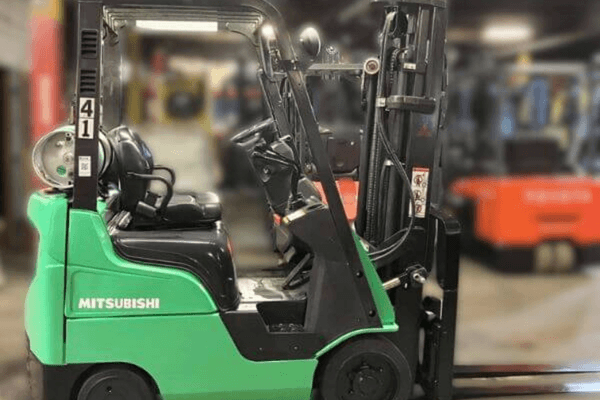
A 3-wheel electric forklift solves space constraints in high-density facilities. It provides high mobility on flat indoor surfaces where aisle width is tight.
- Indoor operations on flat smooth concrete surfaces.
- Frequent rotating around tight racks, staging spaces, or assembly lines.
- Light to medium loads, within normal capacity ranges.
- High-density storage environments that prefer maximizing rack space above handling large weight.
- Trailer loading & unloading where floor space inside the van is restricted.
Real-World Example: Ohio Distribution Center on smooth concrete with regular 2000 lb pallet loads. Inventory storage requires short rack aisles to optimize the number of pallet places. A 3-wheel unit speeds pallet entry & exit, eliminating multi-point turns without hitting uprights.
When Is a 4-Wheel Electric Forklift the Better Choice?
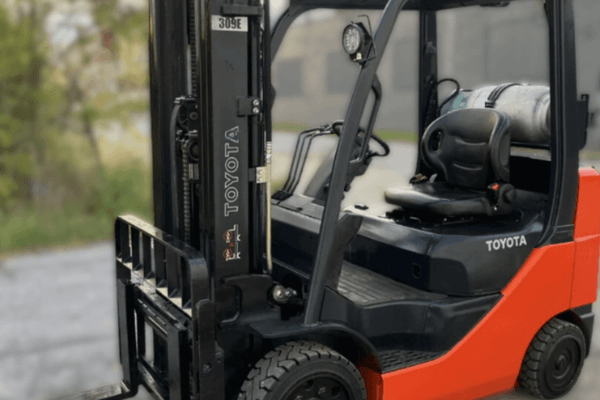
A 4-wheel electric forklift offers heavy load stability, varied tire choices, and traction across dynamic facility routes.
- Heavy, long, or irregular loads that move the load center forward or sideways.
- Frequent stacking at height exceeding 13 feet (4 meters).
- Ramps, dock plates, or thresholds requiring higher ground clearance and traction.
- Indoor and outdoor travel between warehouse bays and outdoor yards.
- Specialized attachments like paper roll clamps, bale clamps, or heavy side shifters.
Real-World Example: A manufacturing plant moves heavy raw materials from an outdoor paved staging area to indoor production lines. Negotiating ramps, outdoor expansion joints, and high stacking racks requires a 4-wheel model with solid pneumatic tires.
Safety Note: Not all 4-wheel electric forklifts are designed for tough terrain. Before taking electric units out on the trail, always check ground clearance, IP ratings, tire type, and manufacturer gradeability limits.
Five Measurements That Should Decide Your Forklift Choice
Skip guesswork by taking five precise site measurements before requesting equipment quotes.
1. Minimum Working Aisle Width
Measure the narrowest working aisle in your layout. Factor in pallet length, load overhang, and at least 6 to 12 inches of maneuvering clearance. Do not confuse the turning radius with the actual right-angle stacking aisle requirements.
2. Maximum Actual Load
Weigh your heaviest real-world load, including the pallet, packaging, and banding. Record load length, width, & shape. Base equipment choices on maximum weights rather than daily averages.
3. Required Lift Height
Measure from the floor to the top rack beam position. Remember that lifting capacity drops as the mast extends upward. Check overhead clear heights like door frames, lights & ductwork against the lowered mast height.
4. Surface and Travel Route
Inspect the full transit route. Document concrete quality, outdoor asphalt sections, steep ramps, dock plates, and transition thresholds. Wet weather and seasonal freezing conditions in Ohio also influence tire choices.
5. Daily Runtime and Charging Window
Calculate operating hours per shift. Match this runtime against your charging infrastructure, battery voltage, battery age, and available opportunity charging periods.
Why Published Capacity Is Not the Whole Story
Data Plate Rule: Safe lifting capacity is not determined by the number of wheels. The safe capacity is read directly from the data plate, based on the load center, lift height, mast type, and attached hydraulic accessories.
Published base capabilities are based on a standard 24" load center without attachments. When loaded 36" deep on the forks, the center of gravity advances forward, and the safe capacity is reduced. Attachments such as side shifters or clamps add dead weight and move the load center forward, further reducing net capacity.
Always verify that the forklift data plate explicitly lists any installed attachments & accounts for your actual lifting height.
What to Inspect When Buying a Used Electric Forklift
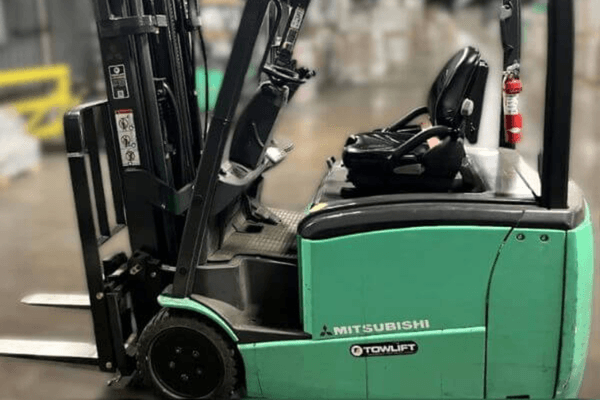
Buying pre-owned preps your fleet at lower capital costs, but careful evaluation remains critical. When searching for used forklifts, evaluate these core components:
- Data Plate: Check that it is legible and accurately matches the mast, chassis, and attached accessories.
- Battery and Charger: Inspect cell voltage, water levels, acid corrosion, & cable condition. Confirm charger compatibility with your shop's electrical panel.
- Steer Assembly: On a used 3-wheel electric forklift, check the rear turn linkage, drive motor wear, and pivot points. On a used 4-wheel electric forklift, inspect the steer axle kingpins, tie rods, and power steering cylinders.
- Mast and Hydraulics: Check carriage play, lift chains, hydraulic hoses, tilt cylinders, & mast rollers for wear or leaks.
- Tire Condition: Look for chunking, flat spots, deep cracking, or uneven wear that alters machine balance.
Working with reputable suppliers like Value Forklifts gives buyers access to pre-owned units with documented service histories and warranty protections.
Which Electric Forklift Fits Your Operation? A Final Decision Checklist
Review this quick checklist to clarify your equipment choice.
A 3-wheel model is the right choice when:
- Most travel occurs inside clean, flat warehouses.
- Aisle space is restricted, & tight turning is critical.
- Loads remain consistently within standard capacity ratings.
- Speed in narrow storage racks drives daily throughput.
A 4-wheel model is the right choice when:
- Loads are heavy, long, or have varying load centers.
- High-bay stacking near top mast limits occurs regularly.
- Travel routes cover ramps, dock boards, or outdoor areas.
- Attachments like clamps or multi-pallet handlers are required.
Conclusion
A 3-wheel electric forklift offers unmatched turning mobility in tight indoor aisles with light-to-medium loads on smooth concrete. A 4-wheel electric forklift provides stability, higher weight capacities, & traction across ramps, outdoor yards, & high-stacking layouts.
Don't choose equipment based on the number of wheels or initial cost. Choose the facility layout, peak load weights, lift heights, and surface conditions to suit the rated requirements of the equipment. Contact us today to discuss reliable electric forklifts, get help with your application, and see available quality forklifts for sale near me in Ohio.
Frequently Asked Questions
What is the main difference between a 3-wheel and 4-wheel electric forklift?
A 3-wheel electric forklift has a tighter turning radius, making it a suitable forklift for narrow aisles & compact indoor spaces. A 4-wheel electric forklift has a wider wheelbase and is generally better suited to heavier loads, higher lifts, ramps, & routes that include changing surfaces.
Which forklift is best for narrow aisles?
A 3-wheel electric forklift is usually the better choice for narrow aisles because its centered rear steering design allows sharper turns. This reduces the space required for right-angle stacking, but buyers should still compare the forklift’s stacking specification with the actual aisle & pallet dimensions.
How much weight can a 3-wheel electric forklift lift?
Many 3-wheel electric forklifts can lift between 3,000 and 4,000 pounds, although capacity varies by model. Lift height, load center, mast configuration, and installed attachments can affect the available capacity, so always check the forklift’s data plate before handling a load.
Can a 4-wheel electric forklift be used outdoors?
Some 4-wheel electric forklifts can operate outdoors when properly equipped. The truck should have suitable tires, adequate ground clearance, weather protection, and enough gradeability for the intended route. Always confirm that the specific model is approved for the outdoor surface and operating conditions.
Is a 4-wheel forklift always more stable?
A 4-wheel forklift is not automatically more stable in every situation. Stability also depends on the load center, mast height, travel speed, surface incline, attachments, and operator handling. Both 3-wheel & 4-wheel forklifts must remain within their rated capacity and stability limits.
What should I check before buying a used electric forklift?
Check the battery’s age, condition, remaining runtime, & charger compatibility. Inspect the mast, lift chains, hydraulics, steering, brakes, tires, and safety systems. Confirm that the data plate matches the installed mast & attachments, & review the operating hours, service records, and warranty coverage.
Is a 3-wheel or 4-wheel electric forklift more expensive?
Pricing depends mainly on the forklift’s capacity, age, condition, mast height, battery type, charger, tires, and attachments. Wheel configuration alone does not determine the cost. Compare trucks with similar specifications and include possible battery replacement, maintenance, and repair expenses in the total budget.