
Best Electric Forklift for Your Warehouse: Capacity, Battery, and Budget Tips
When it comes to electric forklifts, fit is everything. Not just lift capabilities but the whole picture: aisle width, load weight, battery condition, charging arrangement, shift length, floor type, & budget. A truck that appears like a bargain on paper can quickly become a headache if it can’t turn comfortably, get to the top beam, or get through the shift.
For most warehouses, the best electric forklift is the one that matches your heaviest regular load, aisle layout, lift height, battery needs, & daily operating hours. A 3-wheel electric forklift can be a strong choice for tighter indoor areas. A 4-wheel electric forklift is often better for heavier pallets, longer travel paths, & added stability. Electric reach trucks are ideal when your operation depends on narrow aisles & high racking.
Below is a practical buying guide to help you compare capacity, battery, and budget before choosing your next forklift.
What Is the Best Electric Forklift for a Warehouse?
The best electric forklift depends on the warehouse type, aisle width, rack height, load capacity, and daily operations.
Small or Compact Warehouse: Toyota 8FBE15U Three-Wheel Electric Forklift – Ideal for narrow aisles, limited floor space, and tight turning areas.
General Storage Warehouse: Toyota 8FBCU25 Four-Wheel Electric Forklift – Suitable for stable pallet handling, heavier loads, loading, and unloading.
High-Rack Warehouse: Raymond 750-R45TT Reach Truck – Designed for narrow aisles and placing pallets on tall storage racks.
E-Commerce Fulfillment Warehouse: Toyota 8BPU15 Order Picker – Commonly used to retrieve individual products from different rack levels.
Loading and Distribution Warehouse: Toyota 8HBW23 Electric Pallet Jack – Suitable for moving pallets between loading docks, staging areas, and storage zones.
Very-Narrow-Aisle Warehouse: Jungheinrich EKX 410 Turret Truck – Designed for high-density storage facilities with very narrow aisles.
The right electric forklift should match the warehouse’s available space, storage system, load weight, lift height, and operating schedule.
Start With Your Warehouse Application Before Choosing a Forklift
Before looking at models, look at the work. What does the forklift actually need to do every day?
Start with these questions:
- What is the average pallet weight?
- What is the heaviest load the forklift will handle?
- Will it work indoors only, or near outdoor docks too?
- How wide are the aisles?
- What is the highest rack level?
- How many hours does the truck need to run per shift?
- Will it handle staging, loading, racking, order picking, or all of these?
A forklift used for short indoor pallet moves has different needs than one working around trailers, ramps, dock plates & long travel paths. Floor condition matters too. Smooth warehouse floors are easier on electric equipment. Rougher areas, uneven transitions, & frequent dock use may call for a more stable setup.
A simple rule: measure first, shop second. A forklift that doesn’t fit the building is never a bargain.
Electric Forklift Capacity: How Much Lifting Power Do You Need?
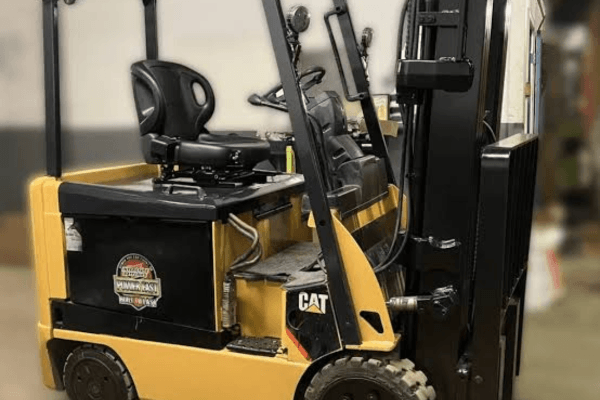
Capacity is one of the first specs buyers check, but it’s easy to misunderstand. A forklift’s rated capacity is usually based on a specific load center. If the load is longer, uneven, raised higher, or used with an attachment, the safe working capacity can change.
Standard Warehouse Loads: 3,000 to 5,000 lbs
Many general warehouses work within the 3,000 to 5,000 lb range. This can cover palletized goods, packaged products, food storage, retail inventory, light manufacturing materials, & distribution center stock.
Still, don’t rely on guesses. Check actual pallet weights. If your normal load is 3,000 lbs but some pallets reach 4,500 lbs, shop for the heavier real-world load. Buying too close to the limit can strain the truck & reduce safe handling margin.
Heavier Loads and Special Handling Requirements
If your warehouse handles machinery, building materials, bulk products, or oversized pallets, you may need a higher-capacity model. In many heavier-use cases, a 4-wheel electric forklift makes sense because it offers a more stable platform & better support for frequent lifting.
Also, check the mast. A forklift may lift a load at a low height but lose usable capacity at higher elevations. This is one of those small details that can create big problems once the truck is already on site.
3-Wheel Electric Forklift vs. 4-Wheel Electric Forklift
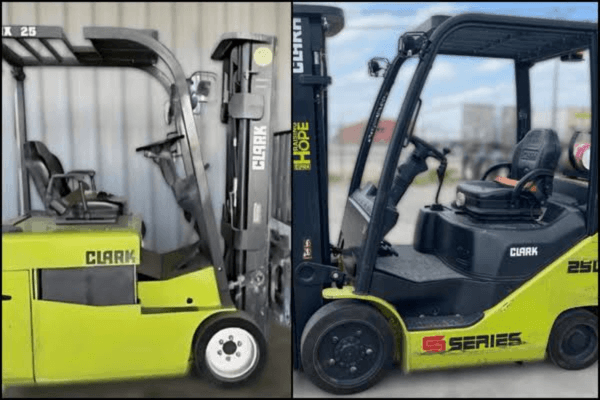
Both options can work well, but they serve different warehouse needs.
| Forklift Type | Best For | Main Advantage | Watch Out For |
|---|---|---|---|
| 3-wheel electric forklift | Tight indoor aisles | Better turning radius | Not ideal for every heavy-load application |
| 4-wheel electric forklift | Heavier warehouse loads | Stability and traction | Needs wider turning space |
| Electric reach trucks | High racking and narrow aisles | Better vertical storage use | Not made for every dock or outdoor task |
When a 3-Wheel Electric Forklift Makes Sense
A 3-wheel electric forklift is a good fit for compact warehouses, tight turning areas, & light to medium-duty pallet handling. The tighter turning radius can make daily movement easier where space is limited.
These forklifts are often useful in retail distribution, storage facilities, food warehouses, and indoor operations where the truck needs to move between aisles, staging areas, & loading points without wasting space.
When a 4-Wheel Electric Forklift Makes Sense
A 4-wheel electric forklift is usually the better option when stability matters. It can be a strong fit for heavier pallets, dock areas, longer travel distances, & warehouses with wider aisles.
If your team often carries entire pallets from receiving to storage, works around dock plates, or wants a sturdier feel under load, a 4-wheel model may be safer in the long run.
Electric Reach Trucks for Narrow Aisles and High-Density Storage
Electric reach trucks are designed for warehouses that need to store pallets higher & work in narrower aisles. They are common in distribution centers, 3PL warehouses, e-commerce facilities, and high-pallet-position storage operations.
A reach truck is different from a standard counterbalance forklift. Instead of being built mainly for general pallet movement, it is designed to reach into racking and lift loads vertically in tight spaces. That makes it excellent for storage density.
Choose electric reach trucks when your warehouse needs narrow-aisle performance, high racking, & better use of vertical space. But don’t force one into the wrong job. Reach trucks are not always the best choice for dock loading, outdoor travel, rough floors, or long horizontal runs.
Forklift Battery Options: Lead-Acid vs. Lithium-Ion
The forklift battery is one of the biggest factors in performance and long-term cost. Two forklifts can look similar, but the battery condition can make one a smart buy & the other a headache.
Lead-Acid Forklift Batteries
Lead-acid batteries are traditional & often cost less up front. They are common in used electric forklifts and can still work well for single-shift or lower-hour operations.
They do require care. Watering, proper charging routines, ventilation, & cooling time may be needed. Some facilities also need a charging area or battery handling equipment. If your warehouse runs one shift and has predictable downtime, lead-acid may be practical.
Lithium-Ion Forklift Batteries
Lithium-ion batteries normally cost more initially, but they charge more quickly, require less frequent maintenance, and provide opportunities to charge during breaks or idle time. This can be handy for warehouses that work on multiple shifts when any downtime is costly.
If you operate your operation hard all day or throughout numerous shifts, lithium-ion may be able to provide improved uptime. The key is not to pick a trend. Pick based on your actual workload, pricing windows & budget.
Battery Questions to Ask Before Buying
Before buying a used electric forklift, ask:
- How old is the battery?
- What voltage is it?
- Is the charger included?
- Is the charger compatible?
- How long does the forklift run per charge?
- Has the battery been tested?
- Are there signs of corrosion, overheating, leakage, or weak run time?
A clean, tested battery with the right charger can add real value. A weak battery can turn a low purchase price into a costly decision.
New vs. Used Electric Forklift: Which Is Better for Your Budget?
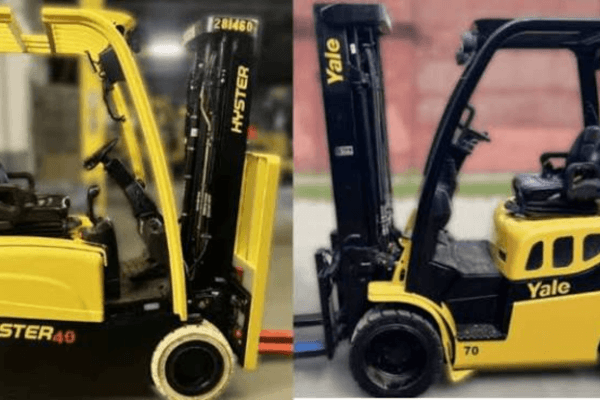
A new forklift gives you the latest technology, predictable condition, and warranty coverage. That can be the right route for companies with strict uptime demands or highly specific equipment needs.
A used electric forklift can make sense when you want to reduce upfront cost, add a backup unit, replace aging equipment, or expand a fleet without overspending. The important part is inspection. Used equipment should be reviewed for battery health, mast condition, hours, tires, forks, hydraulics, controller response, charger match, & service history.
It is here that buyers sometimes get caught. If a secondhand forklift is cheaper but has a poor battery, it may wind up costing the same as a better one if it needs a repair or new battery. The budget is more than just cost.
What to Inspect Before Buying a Used Electric Forklift
A careful inspection can protect your budget & reduce downtime.
Mechanical and Structural Checks
Look at the mast rails, chains, forks, tires, brakes, steering, overhead guard, and frame. Check for hydraulic leaks and listen for unusual noises during lift and lower movement. Fork wear matters, especially around the heel. Small signs of abuse can point to rough prior use.
Electrical and Battery Checks
Check battery age, cable condition, connectors, charger match, warning lights, and controller response. Check how the truck performs loaded, not just when it’s empty. A forklift can look OK in a brief test but not perform well in a real warehouse.
Fit-for-Warehouse Checks
Check the lift height, the lowered mast height, the aisle width, the load center, the fork length, the tire type, and the dock use. Easy to forget is door clearance. So is turning space at the end of the aisles. These elements determine whether the forklift feels productive or weird on day one.
Budget Tips: How to Calculate the Real Cost of an Electric Forklift
The real cost of an electric forklift includes the purchase price, battery condition, charger, maintenance, tires, forks, delivery, downtime risk, & service support.
Use this quick decision guide:
| Warehouse Need | Strong Option |
|---|---|
| Lowest upfront cost | Used electric forklift with tested lead-acid battery |
| Multi-shift uptime | Lithium-ion electric forklift |
| Tight indoor areas | 3-wheel electric forklift |
| Stable daily lifting | 4-wheel electric forklift |
| Narrow aisles and tall racking | Electric reach trucks |
Also consider operator training, warranty coverage, and how quickly parts or support are available. A forklift that is slightly cheaper but harder to service may not be the better value.
Choosing the Right Electric Forklift by Warehouse Type
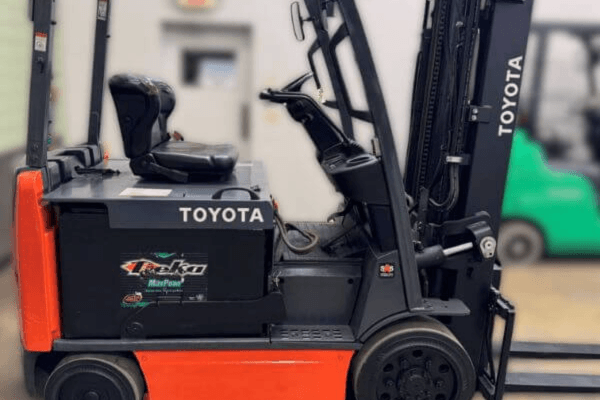
Different warehouses need different equipment setups.
A small warehouse may benefit from a used 3-wheel electric forklift because space is limited and loads are lighter. A distribution center may need a 4-wheel electric forklift for frequent pallet movement & steady dock activity. An e-commerce warehouse may use a mix of electric pallet jacks, reach trucks, and compact electric forklifts.
A 3PL warehouse may use electric reach trucks for racking, but counterbalance forklifts can do dock and staging work. Depending on the weight of the material, manufacturing facilities may need higher-capacity models. Cold storage & food warehouses frequently like electric equipment because it performs well indoors & keeps operations cleaner.
Match the forklift to the job: counterbalance forklifts for dock and pallet handling, reach trucks for racking, and 3-wheel models for tight movement.
Common Mistakes to Avoid When Buying an Electric Forklift
A few buying mistakes show up again and again:
- Buying based only on price
- Ignoring the forklift battery condition
- Choosing the wrong capacity
- Forgetting aisle width and turning radius
- Missing mast height or lowered height requirements
- Buying a reach truck when a counterbalance forklift is needed
- Choosing lead-acid for multi-shift work without charging time
- Not confirming charger compatibility
- Skipping service history
The best buying process is practical. Confirm the work, inspect the truck, and check the battery, then compare the price.
Key Takeaways
Key Takeaways Before You Buy
The right forklift should fit the warehouse, not the other way around. A 3-wheel electric forklift is best for tight indoor aisles. A 4-wheel electric forklift is better when heavier loads and stability matter. Electric reach trucks are useful for narrow aisles and tall racking.
Battery condition deserves serious attention, especially when buying used equipment. Lead-acid may work well for lower-hour use, while lithium-ion can support faster charging and longer operating windows in busy facilities.
If you’re comparing forklifts, look beyond the asking price. Capacity, battery, charger, lift height, and service condition all shape the real value.
Conclusion
The best electric forklift for your warehouse is the one that supports your daily workload without creating hidden problems. Capacity, aisle space, battery type, charger compatibility, & budget all need to work together.
Value Forklifts helps buyers compare practical equipment options, including used electric forklifts, electric reach trucks, 3-wheel electric forklift models, and 4-wheel electric forklift options. If you’re reviewing used electric forklifts for sale, our team can help you look at the details that matter before you buy.
Explore available electric forklifts at Value Forklifts or contact our team to find the right forklift for your warehouse capacity, battery, and budget needs.
Frequently Asked Questions
What is the best electric forklift for a warehouse?
The best electric forklift depends on load weight, aisle width, lift height, run time, & battery needs. A 3-wheel model works well in tight spaces, a 4-wheel model is better for stability, & a reach truck is ideal for narrow-aisle racking.
Should I buy a new or used electric forklift?
A used electric forklift can be a smart choice if the battery, charger, mast, tires, forks, and service history are in good condition. New forklifts may be better when warranty coverage & exact specifications are top priorities.
What should I check before buying a used electric forklift?
Check the forklift battery, charger compatibility, hours, mast, forks, tires, hydraulics, brakes, steering, service records, lift height, and capacity rating.
How important is the forklift battery when buying used equipment?
The forklift battery is one of the most important parts of a used electric forklift. A weak battery can reduce run time, slow operations, and increase ownership costs.
What capacity electric forklift do most warehouses need?
Many standard warehouses use electric forklifts in the 3,000 to 5,000 lb range. The right capacity depends on actual load weight, load center, mast height, attachments, and handling conditions.