
Electric Pallet Jacks: A Smart Choice for Faster Warehouse Material Handling
Move the same pallet by hand fifty times a shift, & you'll feel it in your shoulders by lunch. That's the reality for a lot of warehouse crews still relying on manual pallet jacks for routine transport work. Electric pallet jacks solve that problem directly: they use a battery-powered drive motor and hydraulic lift system to move palletized loads with a push of a lever instead of repeated pumping and pulling.
Here's the short version. An electric pallet jack is powered equipment built to raise a pallet slightly off the ground & transport it horizontally, without the operator supplying the muscle. It sits between a manual hand jack and a full-size forklift on the equipment spectrum, and for a lot of Ohio warehouses, that middle spot is exactly where the daily work actually happens.
This blog covers the real benefits, the walkie versus rider decision, how a pallet jack compares to a stacker or forklift, what actually matters when choosing a model, and whether new or used equipment makes more financial sense for your operation.
How electric pallet jacks improve warehouse material handling
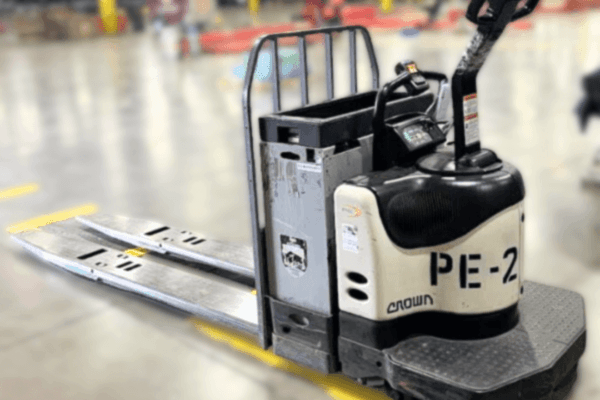
An electric pallet truck runs on a rechargeable battery & combines a drive motor, hydraulic lifting mechanism, tiller controls, wheels, and brakes into one compact unit. The operator steers with the tiller arm, engages powered travel, and lifts or lowers the forks electrically instead of manually pumping a handle.
You'll see this equipment doing the same handful of jobs across most facilities:
- Loading and unloading trailers at the dock
- Moving pallets from receiving into staging
- Replenishing floor stock from bulk storage
- Feeding materials to production lines
- Getting finished orders to the shipping area
Faster pallet movement, higher throughput
Powered forward and reverse travel cuts the time spent on repetitive transport runs. Loading, unloading, & staging all move quicker when the equipment does the pushing. One thing worth noting: raw travel speed matters less than most people assume. Pallets moved per shift is the number that actually reflects productivity since it accounts for loading time, turning, and dock congestion, not just top speed on an open floor.
Less physical strain on operators
Manual pumping and constant pushing wear people down over a full shift, even when the loads aren't especially heavy. Powered lifting & lowering removes most of that strain, and the equipment performs consistently late in a shift the way a tired operator can't. Used correctly, that translates into fewer fatigue-related slowdowns & a lower injury risk over time.
Better use of tight warehouse space
Electric pallet jacks keep a compact footprint & a smaller turning radius than most sit-down forklifts, which makes them practical in narrow aisles, inside trailers, and in cramped retail stockrooms. Dimensions vary by model, though, so it's worth checking the exact turning radius and width before assuming a unit will fit your tightest aisle.
Electric pallet jacks speed up warehouse operations by combining powered travel and lifting, cutting manual effort, and working in spaces where a full forklift isn’t practical.
Walkie vs. rider electric pallet jacks
Both configurations move pallets horizontally, but they're built for different jobs.
Walkie electric pallet jacks have the operator walking behind or beside the unit. They're compact, maneuverable, and suited to shorter runs in tight spaces, docks, trailers, and retail stockrooms.
Rider electric pallet jacks give the operator a standing platform, which cuts down on walking during high-volume shifts. These fit longer, repeated routes across bigger distribution centers.
| Factor | Walkie Model | Rider Model |
|---|---|---|
| Operator Position | Walks behind the machine | Stands on a platform |
| Travel Distance | Short | Medium to long |
| Space Requirement | Lower | Higher |
| Best Application | Tight warehouse spaces | High-volume operations |
If most of your trips are under a hundred feet, a walkie-talkie unit usually covers it. Once travel distances stretch across a large facility and pallet counts climb, the rider model starts paying for itself in reduced operator fatigue.
Electric pallet jack, stacker, or forklift?
These three get lumped together often, but they solve different problems.
| Equipment | Primary Purpose | Best Application |
|---|---|---|
| Electric Pallet Jack | Ground-level transportation | Loading, staging, and replenishment |
| Electric Pallet Stacker | Transport and vertical stacking | Low- to medium-level racking |
| Warehouse Forklift | Lifting and moving varied loads | Racking, loading, and production |
| Electric Forklift | Indoor transport and elevated lifting | High-volume warehouse operations |
Pick a pallet jack for ground-level transport, a stacker when you need vertical placement, or a forklift when lifting height and load variety become more complex.
How to choose the right electric pallet jack
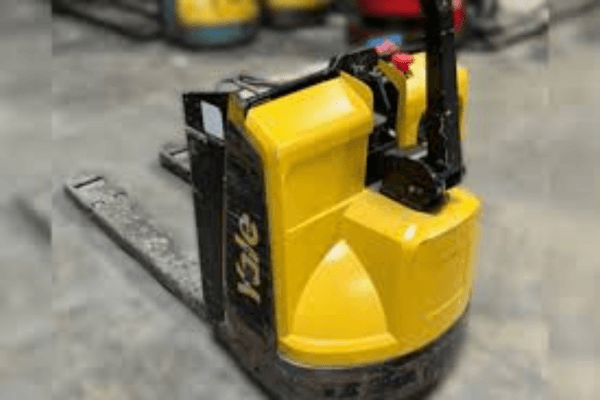
Load capacity and fork dimensions
Start with your heaviest routine load, not the average one. Check the machine's rated capacity against that number & match fork length & width to your standard pallet size. Nonstandard pallets or uneven loads deserve extra attention here since they can shift a unit's effective capacity.
Travel distance and warehouse layout
Count roughly how many pallet trips your team runs per shift. Shorter, frequent trips lean toward walkie-talkie. Longer, repeated routes for lean riders. Measure your aisles, doorways, trailer openings, & turning areas before ordering, & account for ramps, thresholds, & dock plates that can affect maneuverability.
Battery, controls, and maintenance
Battery type, voltage, & capacity all affect operating time, and so do load weight, temperature, & travel distance. There isn't one standard runtime or charge time that applies across every model, so it's worth asking a supplier for specifics tied to your actual usage pattern rather than a generic figure. Also check charger compatibility, emergency reverse & braking controls, parts availability, & warranty terms before buying.
Should you buy new or used electric pallet jacks?
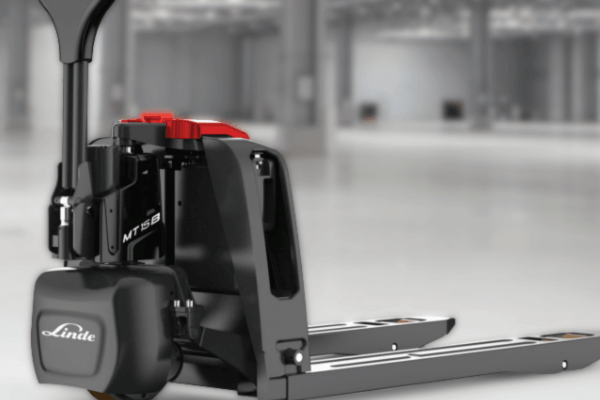
New electric pallet jacks
New units come with current battery and control technology, a longer expected service life, and full warranty coverage. The tradeoff is a higher upfront cost, which makes more sense for frequent, long-term use.
Used electric pallet jacks
Used equipment costs less up front and works well for cost-controlled fleet expansion. Before buying, inspect the forks and wheels, drive & steering systems, brakes and controls, hydraulic lift, and the battery & charger. Ask for operating hours and service history too. Review warranty terms, parts availability, & after-sales support, and weigh the purchase price against expected maintenance and battery replacement costs down the road.
Used electric pallet jacks can offer solid value when the battery, hydraulics, drive system, forks, wheels, and controls have all been properly inspected first.
Electric pallet jack options from Value Forklifts
Value Forklifts carries a range of equipment built for Ohio warehouses of different sizes & workloads, including compact walkie pallet jacks for tight spaces, standard walkie units for general transport, rider pallet jacks for longer routes, electric pallet stackers for vertical placement, used electric pallet jacks for budget-conscious buyers, and compatible batteries and chargers.
Conclusion
Electric pallet jacks can make daily warehouse transport faster, easier on operators, & better suited to tight working areas. Walkie models work well for short routes, while rider units support longer and more frequent trips. The right choice depends on load capacity, pallet dimensions, travel distance, warehouse layout, battery requirements, & expected daily use.
New equipment may suit long-term, high-frequency operations, while properly inspected used equipment can offer dependable performance at a lower initial cost. If you need help choosing the right model, explore the electric pallet jacks available from Value Forklifts or contact our team to compare equipment based on your facility, workload, & budget.
Frequently Asked Questions
What are electric pallet jacks used for?
Electric Pallet Jacks (Lift & Move Palletized Loads) Used in warehouses & other facilities. They support tasks such as unloading trailers, staging incoming inventory, & replenishing stock. They can also deliver materials to production areas and move completed orders to shipping zones.
How much weight does an electric pallet jack carry?
The carrying capacity of an electric pallet jack varies by model & configuration. Buyers should check the rated capacity on the equipment data plate and compare it with their heaviest routine load. Pallet dimensions, condition, and load distribution should also be considered before operation.
Is an electric pallet jack better than a manual pallet jack?
An electric pallet jack is generally better for frequent, heavy, or longer-distance pallet movement. Its powered travel & lifting functions reduce the manual effort required from operators. A manual pallet jack may still be practical for lighter loads, occasional use, and short trips.
What’s the difference between an electric pallet jack and a stacker?
An electric pallet jack is mainly designed to transport pallets horizontally at floor level. A pallet stacker includes a mast that raises loads to greater heights. Stackers are better suited to vertical placement, while pallet jacks are used for loading, staging, & transportation.
Are used electric pallet jacks worth buying?
Used electric pallet jacks can provide dependable performance at a lower initial cost. Before purchasing, inspect the battery, hydraulics, drive system, forks, wheels, brakes, & controls. Buyers should also review operating hours, service history, warranty coverage, & possible battery replacement costs.