
How to Choose the Right Used Forklift Battery for Sale
A used forklift battery can be a practical way to lower replacement costs, but the lowest-priced battery is not automatically the right choice. The battery still needs to match your forklift's electrical system, compartment, connector, charger, workload, & weight requirements.
Before buying a used forklift battery for sale, verify the battery specifications first and its condition second. A healthy battery with the wrong voltage or dimensions will not solve your problem. Likewise, a compatible battery with weak cells may give you much less runtime than your operation needs.
This blog explains the checks we recommend making before choosing a battery for your electric forklift.
Quick Answer: What Should You Check Before Buying a Used Forklift Battery?
Before purchasing a used forklift battery, confirm these points:
Start With Your Forklift Specifications, Not the Battery Price
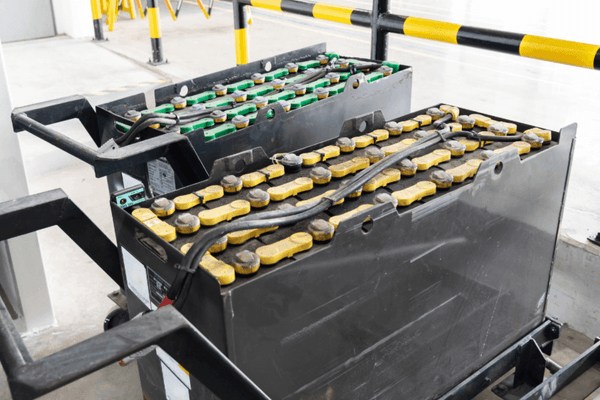
The easiest buying mistake is finding an inexpensive battery first and then trying to make it work with your forklift.
Instead, start with the truck.
Record the manufacturer, model, serial number, system voltage, recommended battery capacity, battery compartment measurements, and required battery weight. If possible, also photograph the truck data plate, existing battery nameplate, cable routing, and connector.
Battery weight deserves particular attention. On many electric forklifts, the battery forms part of the truck's counterweight system. The replacement battery therefore needs to satisfy the truck manufacturer's specifications rather than simply fit inside the compartment.
If you are also evaluating the lift truck itself, our guide to choosing the right electric forklift model can help you match equipment to the application before investing in the battery.
Match the Forklift Battery Voltage Exactly
The first electrical specification to check is forklift battery voltage.
Forklift batteries are available in several voltage configurations, including batteries used in smaller warehouse equipment as well as larger electric sit-down forklifts. The correct voltage depends on the electrical system designed into the truck.
Do not assume that a battery will work because its physical size looks similar.
Check:
- Truck voltage
- Existing battery voltage
- Charger output voltage
- Battery data plate
- Manufacturer specifications
OSHA explains that an industrial battery's voltage is determined by its number of cells, reinforcing why the electrical configuration of the battery matters.
Changing to a different voltage is an equipment modification issue, not a routine battery replacement. If your existing truck uses a specific voltage, replacement should normally stay within that specification unless an appropriately qualified party & the equipment manufacturer approve another configuration.
Check Forklift Battery Amp Hours and Required Runtime
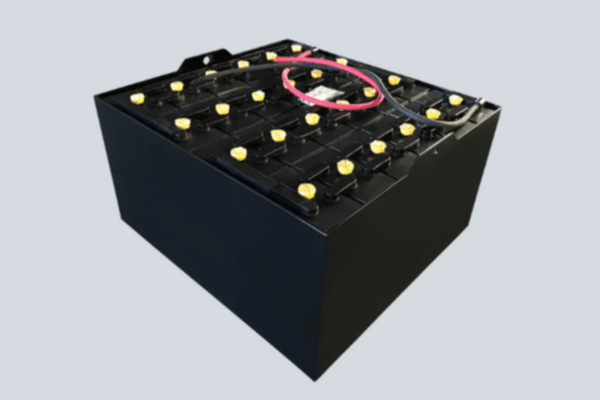
Voltage determines whether the battery matches the electrical system. Forklift battery amp hours help describe how much capacity the battery is designed to provide.
Two batteries can have the same voltage while offering different capacity ratings.
The right forklift battery capacity depends on factors such as:
- Hours worked per shift
- Number of shifts per day
- Frequency of travel
- Average load weight
- Amount of lifting performed
- Attachments in use
- Operating temperature
- Opportunity to recharge between tasks
A warehouse using a forklift occasionally has different power demands from a distribution operation that keeps the same truck moving throughout an entire shift.
This is where buyers should look beyond the battery nameplate. Ask the seller what testing has been completed to establish the battery's present usable capacity. Age alone does not tell you exactly how much productive runtime remains.
OSHA notes that excessive discharge can permanently damage lead-acid forklift batteries and shorten service life, which makes previous use and maintenance important when evaluating a used unit.
For a deeper look at battery care after purchase, see our forklift battery maintenance guide.
Measure the Battery Compartment Carefully
Never order an industrial forklift battery based on voltage and capacity alone.
You also need the correct forklift battery dimensions.
Measure the available:
| Measurement | Why It Matters |
|---|---|
| Length | Battery must sit correctly within the compartment |
| Width | Prevents poor fit and unwanted movement |
| Height | Must allow proper clearance and cover closure |
| Cable location | Determines whether the cable reaches safely |
| Connector position | Helps prevent awkward or unsafe routing |
| Battery weight | May affect counterbalance and truck specifications |
A battery that is slightly too tall, wide, or long may be unusable even when its electrical rating is correct.
OSHA regulations also require reinstalled batteries to be properly positioned and secured in powered industrial trucks.
Do not modify the truck, tray, restraints, or battery simply to force a mismatched battery into the compartment.
Confirm Connector, Cable, and Charger Compatibility
Next, compare the electrical connections.
Forklift battery charger compatibility involves more than matching the plug shape. You should know whether the charger is intended for the battery's voltage, chemistry, and charging requirements.
Check:
- Connector manufacturer and type
- Connector color or coding, where applicable
- Cable length
- Cable position
- Connector orientation
- Polarity
- Charger voltage
- Charger output
- Battery chemistry
- Facility electrical supply
Using the wrong charger can cause improper charging and may damage the battery.
If your existing charger is being reused, give the battery seller its model and specification information before purchasing.
Value Forklifts also carries industrial batteries and chargers and separate forklift battery charger options for operations replacing or matching charging equipment.
Evaluate the Actual Forklift Battery Condition
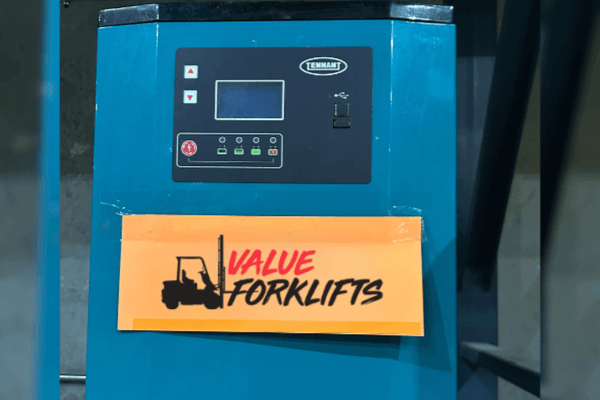
Once compatibility checks pass, evaluate the forklift battery condition.
A clean case does not prove that a battery can still deliver useful runtime. A proper evaluation should look at physical condition, maintenance history, individual cells, and available test results.
Inspect the Battery Case
Look for:
- Cracks
- Bulging
- Significant corrosion
- Evidence of leakage
- Damaged tray sections
- Signs of impact
- Heavy buildup around cells
Damage to the case or tray can make an otherwise inexpensive battery a poor purchase.
Inspect Cables and Connectors
Look for:
- Cut insulation
- Heat damage
- Loose cable connections
- Burned or pitted connector contacts
- Improvised repairs
- Corrosion
OSHA specifically recommends checking battery cables & connectors regularly and removing equipment from service when damaged insulation or pitted connector contacts require repair.
Check Cell Condition
For a conventional lead-acid battery, ask whether the seller has evaluated individual cell performance rather than relying on a single overall voltage reading.
A battery can appear acceptable at rest while still experiencing poor runtime under load.
Ask for Capacity or Discharge Test Results
The best question you can ask yourself when comparing a used forklift battery for sale is simple:
How was its remaining capacity tested?
A controlled capacity or discharge test gives you more meaningful information than appearance alone.
Ask for documentation that identifies:
- Battery voltage
- Rated amp-hour capacity
- Battery age
- Test procedure
- Test date
- Starting condition
- Performance during the test
- Measured remaining capacity, when available
- Any weak or replaced cells
You should also ask whether the battery was tested before or after repairs.
This creates a more useful comparison between two used batteries. One may cost less initially but have substantially less productive capacity remaining.
Check the Manufacturing Date and Maintenance History
Battery age matters, but it should not be considered by itself.
A younger battery that was repeatedly over-discharged, poorly watered, or improperly charged may perform worse than an older battery that received consistent maintenance.
Ask about:
- Manufacturing date
- Original application
- Estimated shifts or usage
- Watering records
- Charging practices
- Repair history
- Cell replacements
- Storage conditions
- Reason the battery was removed from service
OSHA states that under normal operating conditions, industrial lead-acid forklift batteries may remain in service for around 2,000 work shifts or charge/discharge cycles, while also emphasizing that maintenance practices affect battery life.
That makes maintenance records useful evidence when evaluating a second-hand battery.
Our article on whether used forklift batteries are worth the risk and savings covers this cost-versus-condition question in greater detail.
Understand Used, Remanufactured, and New Battery Options
Not every lower-cost battery is sold in the same condition.
Used Forklift Battery
A used forklift battery has previously been in service and may be inspected, tested, or repaired before resale. Ask exactly what preparation and testing were completed.
Remanufactured Forklift Battery
A remanufactured forklift battery has generally undergone a more extensive reconditioning or rebuilding process than a battery sold simply as used.
However, terminology can vary between sellers. Ask for a written description of what "remanufactured" means for the specific battery you are considering.
Our lists remanufactured forklift batteries separately so buyers can compare available battery options.
New Forklift Battery
A new battery normally carries the highest upfront purchase price but may make sense for operations where predictable runtime and a longer warranty period outweigh initial savings.
You can compare available new forklift batteries with used and remanufactured options before deciding.
Compare Total Cost, Not Purchase Price Alone
Imagine two compatible batteries:
Battery A may be cheaper at checkout, while Battery B may offer better value per productive hour.
Consider:
- Purchase price
- Shipping
- Charger requirement
- Installation
- Remaining capacity
- Warranty
- Expected runtime
- Maintenance
- Potential downtime
- Future replacement timing
When a forklift stops midway through a busy shift, the cost is not limited to the battery. You may also lose operator time and equipment availability.
Review the Warranty Before Buying
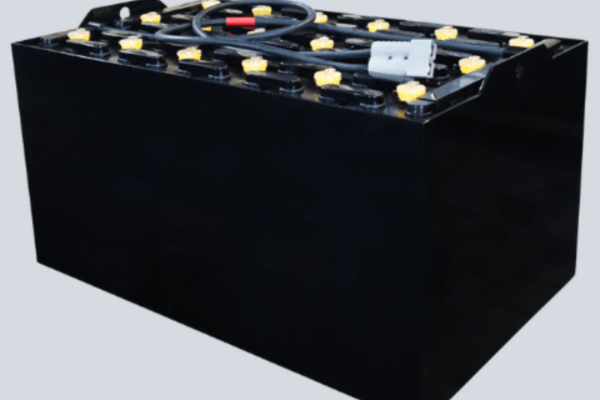
A warranty can help distinguish one used forklift battery from another, but only when you understand the terms.
Ask:
- How long is the warranty?
- Is it full replacement or prorated?
- What battery failures are covered?
- Are cables and connectors included?
- Does coverage depend on maintenance records?
- Who pays shipping or service costs?
- Is the charger covered separately?
- What conditions void the warranty?
Get the terms in writing before purchasing.
A slightly higher-priced battery with documented testing and clear warranty coverage may be a safer commercial decision than an untested battery sold as-is.
Plan for Safe Battery Charging and Handling
Buying the right electric forklift battery also means confirming that your facility can safely charge and handle it.
OSHA requires battery charging installations to be located in designated areas and includes requirements relating to ventilation, spilled electrolyte, fire protection, ignition sources, battery handling, and charging procedures.
Its powered industrial truck guidance also highlights hazards associated with battery weight, sulfuric acid, electrical shorts, and hydrogen produced during charging.
Facilities using large commercial forklift batteries may also have chemical reporting considerations. The U.S. Environmental Protection Agency explains that commercial forklift batteries are not covered by the household-product exemption discussed under EPCRA sections 311 and 312.
Used Forklift Battery Buying Checklist
Before approving your forklift battery replacement, confirm every item below.
| Check | What to Verify |
|---|---|
| Forklift model | Exact make and model |
| Voltage | Matches truck specification |
| Capacity | Appropriate Ah rating and runtime |
| Dimensions | Fits battery compartment |
| Weight | Meets truck requirements |
| Connector | Correct type and orientation |
| Cable | Correct length and position |
| Charger | Compatible voltage and charging profile |
| Battery age | Manufacturing date confirmed |
| Condition | Case, cells, terminals and cables inspected |
| Test results | Capacity or discharge test available |
| Maintenance | Watering and charging history reviewed |
| Warranty | Written terms confirmed |
| Shipping | Freight and handling requirements understood |
If any major specification is unknown, confirm it before placing the order.
Why Choose Value Forklifts for Forklift Batteries?
Choosing the right used forklift battery is easier when you can compare battery options alongside the equipment they are designed to power. At Value Forklifts, we help businesses find batteries, chargers, forklifts, and related warehouse equipment in one place.
Our battery selection includes new and remanufactured options for different forklift applications. Buyers can compare voltage, capacity, dimensions, and other important specifications before choosing a battery for their equipment.
We also understand that compatibility matters as much as price. Our team can use your forklift make, model, battery compartment measurements, voltage, and charger information to help narrow down suitable options.
Whether you are replacing an aging electric forklift battery, planning a full forklift battery replacement, or comparing battery and charger combinations, we can help you make a more informed buying decision.
Browse our industrial batteries and chargers or request a quote for help finding an option that matches your equipment and operating needs.
Conclusion
A Used Forklift Battery for a great price can be replaced when it matches your forklift and still has enough usable capacity for your workload. The key is to look beyond the purchase price and verify the specifications that directly affect performance.
Check the voltage, amp-hour capacity, dimensions, weight, connector, charger compatibility, battery condition, testing history, and warranty before making your decision. These checks can help you steer clear of buying a battery that does not fit properly or cannot deliver the runtime your operation requires.
If you are comparing a used forklift battery for sale, start with your forklift specifications and use them to narrow down compatible choices. From there, compare condition, remaining capacity, warranty coverage, and total cost.
We offer forklift batteries and chargers for a range of warehouse equipment. If you need help finding the right match, contact our team or request a quote with your forklift and battery details.
Frequently Asked Questions
Is buying a used forklift battery worth it?
A used forklift battery can provide good value when it matches the truck correctly and has documented remaining capacity. The purchase should be based on compatibility, testing, condition, warranty, and expected runtime rather than price alone.
How do I know what forklift battery I need?
Start with your forklift's model, forklift battery voltage, recommended forklift battery amp hours, forklift battery dimensions, battery weight range, connector, and charger specifications. The existing battery nameplate and forklift data plate are useful starting points.
How can I test a used forklift battery before buying it?
Ask for documented capacity or discharge testing and information about individual cell condition. A resting voltage reading alone gives a limited picture of how the battery will perform during an operating shift.
Does a forklift battery have to be the same weight as the original?
Battery weight can affect truck counterbalance and safe operation. Use the forklift manufacturer's required battery weight specifications rather than assuming any battery that physically fits is acceptable.
Can I use my existing charger with a replacement battery?
Only when forklift battery charger compatibility has been confirmed. Check battery voltage, chemistry, charging requirements, charger specifications, connectors, and facility power before reuse.
What is the difference between a used and remanufactured forklift battery?
A used battery has previously been operated and may be inspected or repaired before resale. A remanufactured forklift battery generally receives more extensive reconditioning, but processes vary between sellers. Ask for written details about testing, repairs, replaced components, and warranty coverage.