
How to Measure Forklift Utilization in Your Warehouse
When work starts backing up in your warehouse, buying another forklift can seem like the obvious answer. But before you add to the fleet, check how the trucks you already own spend their day. One may be waiting for a load while another is tied up on a long route.
Forklift utilization helps you measure how much scheduled time goes toward material-handling work. Tracking it alongside completed tasks and downtime can help you spot delays, balance assignments, and decide whether another truck is needed. Here's how to calculate it and make sense of the results.
In this blog, we'll show you exactly how to measure forklift utilization, which data to collect, how to calculate your forklift utilization rate, and what to do with the result. We work with warehouses of every size at Value Forklifts, and the same pattern shows up again and again: fleets are rarely the size they should be. By the end, you'll have a repeatable method to find out whether yours is too big, too small, or just right.
What Is Forklift Utilization?
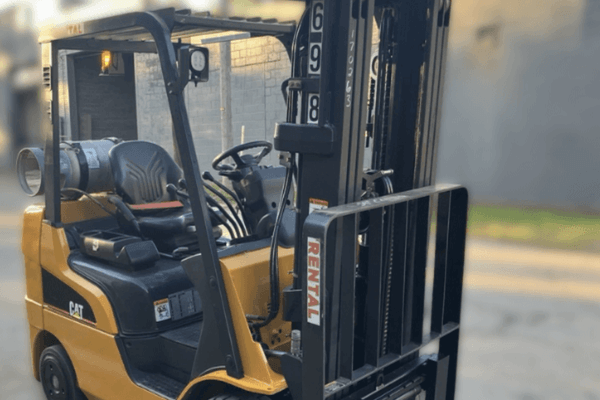
Forklift utilization is a measure of how much of the time a forklift is actually being used compared with the time it is available to be used. Expressed as a percentage, it shows how hard each truck, and your forklift fleet as a whole, is working.
A simple definition for quick reference: forklift utilization rate = productive operating hours ÷ available hours × 100.
The number matters because it connects directly to money. Low utilization means you may be paying to own, charge, insure, and service trucks you don't need. Very high utilization means little room for breakdowns, inspections, or peak season surges.
The Three Lenses of Forklift Utilization
Most guides give you one formula and stop. In practice, we find it's more useful to look at utilization through three lenses. Each answers a different question.
| Lens | Question it answers | What you measure |
|---|---|---|
| Fleet utilization | Do I own the right number of trucks? | How many trucks are in use at the same time compared with how many you own |
| Truck-level (time) utilization | Is each truck earning its keep? | Operating hours compared with scheduled hours, per truck |
| Productive utilization | Is the running time actually useful? | Time spent moving loads compared with idling, waiting, or traveling empty. |
A truck can look busy on an hour meter and still be underused if the operator is idling while waiting for a dock. That's why the third lens matters, and why only measuring hours can mislead you.
Why Measuring Forklift Utilization Pays Off
Before we get into the how, here's the why. Warehouses that track forklift utilization data typically gain in four areas:
- Smarter purchases: You buy or rent only what demand actually requires.
- Lower cost per hour: Fewer idle assets spread fixed costs over more productive hours. If you haven't calculated this, our walkthrough on how to calculate the true hourly cost of a used forklift is a good companion to this guide.
- Better maintenance planning: Hours of use drive service intervals, and even wear across the fleet extends useful life.
- Safer operations: Overworked trucks and rushed operators raise risk.
The Forklift Utilization Formula
Here are the formulas you'll use. Start with the first, then add the others as your data improves.
- Truck-level utilization rate
Utilization % = (Actual operating hours ÷ Scheduled hours) × 100
- Fleet utilization (peak concurrency method)
Fleet utilization % = (Average trucks in use at the same time ÷ Total trucks owned) × 100
- Productive utilization
Productive % = (Hours moving, lifting, or loading ÷ Total hours the truck was on) × 100
A Worked Example
Imagine a distribution warehouse with 12 forklifts running two 8-hour shifts, five days a week.
- Scheduled hours per truck: 16 hours × 5 days = 80 hours/week
- Total available fleet hours: 12 × 80 = 960 hours/week
- Total hour-meter hours logged across the fleet in one week: 480 hours
Truck-level utilization = 480 ÷ 960 = 50%.
Now, the manager checks the concurrency data and finds that no more than 8 trucks were ever running at the same moment, even in the busiest hour. That suggests the warehouse could reasonably operate on 9 or 10 trucks and keep the rest as backup or sell them. These numbers are illustrative, but the logic holds for any facility.
How to Measure Forklift Utilization: A 7-Step Process

Step 1: Define Your Measurement Window
Choose a period that represents normal operations. Two to four weeks is a good starting point. Avoid measuring only a holiday week or a slow week, or you'll get a distorted picture. If you have seasonal swings, plan to measure once in a peak period and once in a quiet period.
Step 2: Create a Truck Inventory
List every truck by unit number, type (sit-down, stand-up, reach truck, order picker, pallet jack), power source (electric, propane, diesel), capacity, and assigned area or shift. This inventory becomes the denominator for every calculation that follows.
Step 3: Choose How You'll Capture the Data
You have four practical options. Many warehouses combine two of them.
| Method | Best for | Pros | Limitations |
|---|---|---|---|
| Hour meter readings | Small fleets, a quick baseline | Free and already on most trucks | Shows running time, not whether the time was productive; check how each meter is configured (key-on vs. travel/lift time) |
| Telematics/fleet management systems | Mid-size and large fleets | Real-time data on operating time, idle time, impacts, and operator IDs | Hardware and subscription cost |
| Shift check sheets | Facilities already doing pre-shift inspections | Low-cost, can be added to existing paperwork | Depends on operator discipline. |
| Direct observation (time studies) | Finding bottlenecks | Reveals waiting, congestion, and routing issues | Labor-intensive; only a snapshot. |
If your operators already complete pre-shift inspections, you can piggyback hour-meter logging onto that routine. OSHA's powered industrial truck standard, 29 CFR 1910.178, requires trucks to be examined before being placed in service, so the checklist is already part of the day. Our guide on how often you should inspect a forklift covers how to build that habit.
Step 4: Record Hours at the Start and End of Each Shift
Log the hour-meter reading when a truck is picked up and when it's returned, along with the date, shift, and operator. Consistency matters more than precision. Subtract start from end to get daily operating hours per truck.
Step 5: Calculate Utilization Per Truck and Across the Fleet
Apply the formulas above. Build a simple spreadsheet with one row per truck and columns for scheduled hours, actual hours, and utilization percentage. Then add a fleet-wide row.
Be careful with electric trucks. Charging time is a scheduling reality, not wasted time. If you run lead-acid batteries, trucks need to come off the floor for charging or swapping, which is why battery charging best practices belong in any utilization conversation. Count charging time as unavailable time, not as idle time, or you'll understate your real capacity.
Step 6: Add the Productive Utilization Layer
If you have telematics, pull idle-time reports. If you don't, run a short observation study: pick three trucks, watch them for a full shift, and note how long they spend lifting, traveling loaded, traveling empty, waiting, and parked with the key on. Even one shift of observation tends to surface surprises, such as trucks waiting in line at a single dock door or operators driving the long way around a blocked aisle.
Step 7: Chart Demand by Hour
Plot how many trucks are in use during each hour of the day. This is the most revealing view for right-sizing. You'll often see a clear peak, maybe mid-morning or right before outbound trucks leave, and long stretches where half the fleet is parked. That peak, not the daily average, is what your fleet must be sized to handle.
What Is a Good Forklift Utilization Rate?
There's no single number that fits every warehouse, and be skeptical of anyone who gives you one without asking about your operation. What counts as healthy depends on shift patterns, how spiky demand is, how much backup capacity you need, and whether trucks are shared or assigned to specific operators.
Here's a practical way to read your results:
| Truck-level utilization | What it often signals | What to consider |
|---|---|---|
| Very low (well under half of scheduled hours) | Likely excess trucks or poorly assigned equipment | Consolidate, sell, or redeploy surplus units. |
| Moderate | Normal for operations that need a cushion for peaks, breakdowns, and charging |
Check peak concurrency before cutting anything |
| High and steady | Efficient, but with little margin | Plan for backups and review maintenance intervals |
| Consistently at or above scheduled capacity | Undersized fleet or heavy dependence on a few trucks | Add capacity, rotate usage, or rent for peaks. |
Common Mistakes When Tracking Forklift Utilization
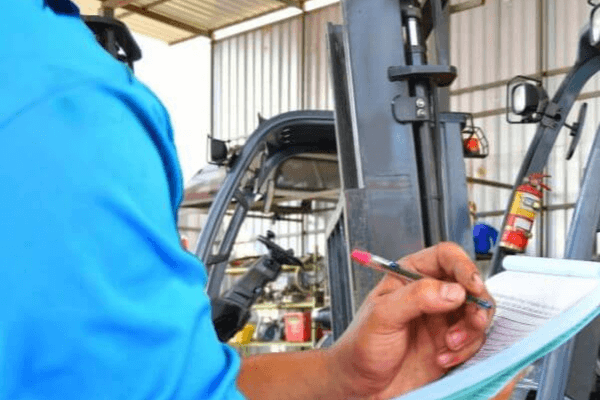
These are the errors we see most often, and the fixes for each.
- Treating hour-meter time as productive time. An idling truck still racks up hours. Pair hours with idle data or an observation study.
- Measuring a single unusual week. Capture at least a few weeks, and measure peak and off-peak separately.
- Ignoring the operator effect. A few operators may do most of the driving on certain trucks, which skews wear and makes averages misleading. Track by operator or assignment where you can.
- Averaging across different truck types. A reach truck in narrow aisles and a heavy-capacity pneumatic truck in the yard do different jobs. Calculate utilization by truck class, not just fleet-wide.
- Forgetting downtime. A truck that was in the shop for a week will look underused. Log downtime separately so you can tell "not needed" from "not available." If breakdowns are frequent, see how much downtime an old forklift is actually costing you.
- Collecting data and never acting on it. Set a review rhythm, monthly or quarterly, and assign someone to own it.
What to Do With Your Forklift Utilization Data
Once you know your numbers, decisions get much easier.
If Utilization Is Low
- Right-size the fleet. Identify the units used least and consider selling, trading in, or redeploying them. Our guide to forklift cost comparison: buy, rent, or lease can help you decide how to replace or reduce capacity.
- Fix the workflow first. If trucks are idling because of congestion, dock scheduling, or poor slotting, a smaller fleet won't solve that. Process changes might.
- Pool trucks across shifts. Shared trucks with clear check-out routines often raise utilization without new equipment.
If Utilization Is High
- Add capacity before you hit a wall. Chronic overuse leads to breakdowns and rushed maintenance.
- Rotate trucks. Spreading hours evenly extends life. If you're deciding between older units, our explainer on used forklift hours: 8,000 vs. 4,500 shows how to read hours in context.
- Consider flexible capacity for peaks. If you only need extra trucks a few weeks a year, compare renting vs. buying a used forklift.
If Utilization Is Uneven
Uneven use is common and often the easiest win. One or two trucks do most of the work while others sit. Rebalance assignments, and check whether operators avoid certain trucks because of comfort, visibility, or reliability problems.
Safety and Compliance: Don't Let Utilization Push the Limits
Chasing high utilization shouldn't mean cutting corners. The CDC's NIOSH forklift safety resources highlight that operator training, truck condition, and safe workplace practices are central to preventing injuries. Keep these guardrails in place:
- Don't skip pre-shift inspections to squeeze in more working time.
- Keep operator training and evaluations current, as required under OSHA's powered industrial truck rules.
- Build downtime for maintenance and charging into your schedule.
- Treat unusually high utilization on a single truck as a maintenance and safety flag, not a badge of honor.
Conclusion
Measuring forklift utilization helps you understand why one truck sits unused while another struggles to keep up. Track working hours, completed tasks, and delays over a representative period. Review the busiest shifts before deciding to repair, reassign, or replace equipment.
If your records show a need for another truck, choose one that fits your loads, aisles, and lifting requirements. Browse used forklifts at Value Forklifts or contact us to discuss suitable equipment for your warehouse.
Frequently Asked Questions
What is the formula for forklift utilization?
The basic formula is actual operating hours divided by scheduled hours, multiplied by 100. For example, a truck that ran 40 hours during a week with 80 scheduled hours has a 50% utilization rate. For fleet-level decisions, also compare the average number of trucks in use at one time with the number you own.
How do I track forklift utilization without telematics?
Use hour-meter readings logged at the start and end of each shift, and add a short observation study to understand idle time. A spreadsheet with one row per truck is enough to get started.
Is a low forklift utilization rate always bad?
No. Some low-average fleets are correctly sized because they need every truck during a short daily peak or want backup units for charging and breakdowns. Check peak concurrency before deciding to cut trucks.
How many forklifts do I need?
Start from your peak concurrent demand, the most trucks in use at the same time, and then add a reasonable cushion for charging, maintenance, and breakdowns. Measure by truck type, since a reach truck can't always substitute for a sit-down unit.
How often should I measure forklift utilization?
Do a baseline measurement over two to four weeks, then review monthly or quarterly. Re-measure after any major change in volume, layout, shift pattern, or fleet mix.
What's the difference between utilization and productivity?
Utilization is about how much a truck is used. Productivity is about how much useful work gets done during that use. A truck can have high utilization and low productivity if it spends hours idling or traveling empty.