
How to Choose the Right Forklift Battery Voltage: 24V, 36V, 48V, 72V & 80V Explained
A forklift battery does a lot more than just keep the truck running. It determines your lifting power, travel speed, shift length, & how safely your equipment runs day to day. Get the voltage wrong, and you’re not just sacrificing performance. You are risking harm to expensive electrical components & eventually, an unexpected replacement bill.
Here's the thing most buyers get wrong: a higher-voltage battery isn't automatically the better one. The right choice comes down to what your forklift was built to run on, how hard you're working it, where it operates, & what kind of energy demand your shifts actually create.
This guide walks through 24V, 36V, 48V, 72V, and 80V forklift battery systems, explains where each one fits, & gives you a practical framework for choosing the correct battery voltage for your equipment. We'll also cover capacity, physical fit, connectors, and when used forklift batteries or remanufactured forklift batteries make sense as a replacement option.
Before buying anything, check your forklift's data plate. It's the single most reliable source for the correct voltage, and skipping this step is where most buying mistakes start.
What does forklift battery voltage mean, and why does it matter?
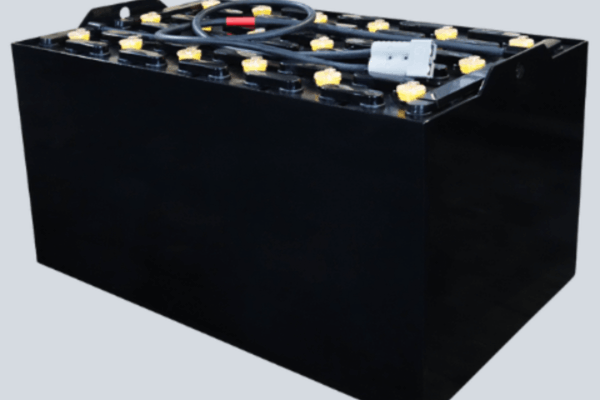
Voltage is the power rating in electrical terms, and it shows you how much energy the battery system can give to the truck. This is not simply a number on a spec sheet; it directly affects motor power, travel speed, lifting capability, run time, and overall energy efficiency.
Each forklift is designed around a given voltage range. The motor, controller, and charging system are all designed to operate within that range. This is also why you can't just crank up the voltage for a bit more power.
The golden rule: always match your forklift’s required voltage.
If there's one rule that matters more than any other in this guide, it's this one. Find your required voltage before you do anything else. You can locate it in three places:
- The forklift's data plate (usually near the operator's seat or on the counterweight)
- The operator manual
- The manufacturer's official specifications
A common misconception is that jumping to a higher voltage will give you more power or a longer shift. It doesn't work that way. Mismatched voltage tends to create problems rather than solve them, including:
- Controller damage from excess or insufficient voltage
- Electrical system failures that show up weeks or months later
- Shortened equipment lifespan across the whole truck, not just the battery
- Increased safety risk for operators & anyone nearby
What to check before buying a forklift battery
- Required voltage (from the data plate, not a guess)
- Battery compartment size
- Required amp-hour (Ah) capacity
- Battery weight requirements
- Connector type
- Charging system compatibility
Skip any one of these, and you'll likely end up reordering.
Forklift battery voltage options explained: 24V vs 36V vs 48V vs 72V vs 80V
Here's a quick comparison to help you narrow things down before reading the detailed breakdowns below.
| Battery Voltage | Common Applications | Best For | Typical Equipment |
|---|---|---|---|
| 24V | Light-duty operations | Small loads, short shifts | Pallet jacks, walkie stackers |
| 36V | Medium warehouse operations | Moderate lifting and travel | Narrow aisle trucks, order pickers |
| 48V | Standard industrial use | Multi-shift warehouse operations | Reach trucks, counterbalance forklifts |
| 72V | Heavy-duty applications | Higher loads, demanding environments | Large electric forklifts |
| 80V | Maximum power requirements | Heavy industrial workloads | High-capacity forklifts |
Understanding 24V forklift batteries
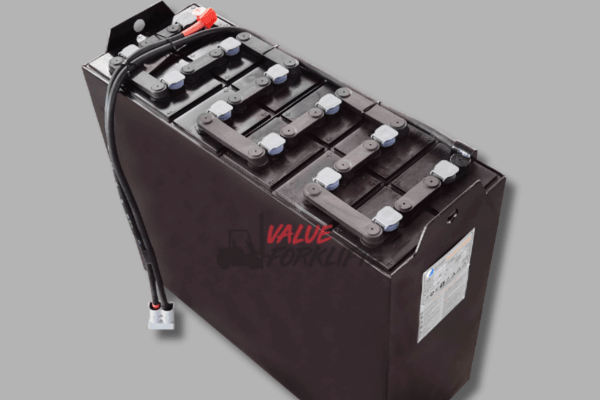
24V systems are built for lighter tasks: electric pallet jacks, walkie stackers, & other small warehouse equipment. They suit shorter travel distances and lower workload environments where you're not pushing the truck for hours at a stretch.
The upside here is practical. A 24v forklift battery typically costs less to replace, needs simpler maintenance, and runs efficiently on smaller machines that were never designed to handle more.
When a 36V forklift battery is the right choice
36V sits in the middle ground, & honestly, it's an underrated option for operations that have outgrown light-duty equipment but don't need full industrial power yet.
You'll see 36V forklift battery systems in order pickers, narrow-aisle forklifts, and mid-sized warehouse trucks. Compared to 24V, they offer noticeably better acceleration and improved runtime for moderate workloads. Distribution centers and medium-volume warehouses tend to land here.
Why 48V forklift batteries are common in industrial warehouses
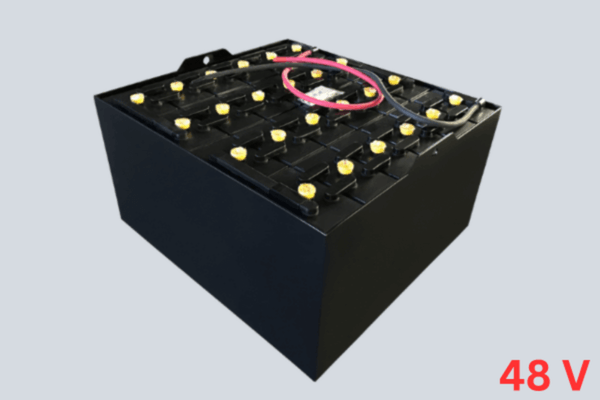
48V is arguably the workhorse of the industry, and there's a reason it shows up so often in sit-down electric forklifts, reach trucks, and general material handling equipment.
A 48v forklift battery strikes a strong balance between power & efficiency. It supports longer operating periods & holds up across multiple shifts without excessive strain on the system. For businesses running standard daily warehouse operations, this is often the default, and for good reason.
72V and 80V forklift batteries for heavy-duty operations
Now we get into the high-voltage territory. A 72v forklift battery or 80v forklift battery is built for heavy-duty electric forklifts, large industrial operations, and outdoor material handling where the workload doesn't let up.
These systems can provide better torque and more robust performance under heavy loads, along with a longer operating capability between charges. What is often forgotten is that at this level, battery weight also contributes to forklift stability & counterbalance, which is more important than people realize when lifting near maximum capacity.
Higher voltage isn't a universal upgrade, though. If your equipment and workload don't call for it, you're paying for capability you'll never use.
How to choose the right forklift battery voltage for your operation
Step 1: Confirm the required voltage.
Start with manufacturer specifications, not a wish list of desired improvements. Voltage is fixed by design.
Step 2: Evaluate your daily workload
Consider operating hours, number of shifts, load weight, travel distance, & lifting frequency. A single-shift light warehouse and a three-shift distribution center have very different needs, even with similar trucks.
Step 3: Match battery capacity with runtime needs
Amp-hour (Ah) & kWh ratings determine how long the battery runs before it needs charging. Higher capacity generally means longer operating time & less frequent charging, which directly affects productivity.
Step 4: Check battery size and weight requirements
Physical fit matters as much as electrical specs. Battery compartment dimensions and proper weight distribution keep the forklift stable & balanced.
Step 5: Verify connectors and charging compatibility
Confirm connector type, cable placement, charger compatibility, & any communication systems between the battery and charger. Mismatched connectors are a small detail that causes big delays.
New, used, or remanufactured forklift batteries: which option fits your needs?
Once you know your required voltage, the next question is what condition of battery makes sense. There are generally three paths:
- New forklift batteries
- Used forklift batteries
- Remanufactured forklift batteries
Each comes with different trade-offs around budget, expected lifespan, and how the battery will hold up against your actual usage.
When used or remanufactured, forklift batteries make sense.
Industrial forklift batteries represent a meaningful investment, so it's worth exploring cost-effective alternatives when the situation allows. Used forklift batteries & remanufactured forklift batteries can be a smart move for businesses managing tighter budgets or lower-intensity operations, provided you evaluate battery condition, remaining performance capacity, and compatibility with your specific forklift model first.
Common mistakes to avoid when buying a forklift battery
- Choosing a higher voltage without confirming compatibility
- Ignoring battery weight requirements
- Buying based on price alone
- Selecting the wrong capacity for actual workload
- Overlooking charger compatibility
- Not planning for future operating demands
Key Takeaways: Selecting the Right Forklift Battery Voltage
- Match voltage to your forklift's specifications, always.
- Choose capacity based on real workload, not guesswork.
- Factor in equipment type, runtime needs, and operating environment.
- Weigh used & remanufactured options against condition and compatibility.
- The best forklift battery is simply the one that fits your equipment and your operation.
Why choose Value Forklifts when buying a forklift battery?
Picking the right forklift battery takes more than matching a voltage number. It requires understanding forklift compatibility, real operating demands, and equipment requirements specific to your fleet.
We help customers work through that process based on:
- Forklift model and manufacturer specifications
- Required voltage (24V, 36V, 48V, 72V, or 80V)
- Workload and operating environment
- Budget and performance expectations
We offer forklift batteries suited to a range of equipment needs, along with used forklift batteries for cost-conscious buyers and remanufactured forklift batteries as a practical replacement option. Working with an experienced forklift supplier reduces the risk of ending up with an incompatible battery, helps you land on the correct specifications the first time, and supports better uptime across your operation.
The right forklift battery should deliver reliable performance, fit your equipment correctly, & keep your daily operations running without surprises.
Conclusion
Selecting the right forklift battery voltage is an important step in maintaining efficient and reliable material handling operations. The best battery is not always the one with the highest voltage. It is the one that matches your forklift’s design, workload, and operating requirements.
Before you buy forklift battery options, review your equipment specifications, check voltage compatibility, & consider factors such as capacity, size, weight, and charging needs.
Whether your operation requires a 24V, 36V, 48V, 72V, or 80V system, choosing the correct battery helps protect your equipment and improve productivity.
We can help businesses find the right battery solution based on their forklift requirements & operational goals.
Ready to find the right forklift battery for your equipment? Contact us today to explore reliable battery options that fit your forklift and workload.
Frequently Asked Questions
What voltage forklift battery do I need?
Check your forklift's data plate or operator manual. The required voltage is set by the manufacturer and isn't something you can choose based on preference.
Can I replace a 48V forklift battery with an 80V battery?
No. Installing a battery outside your forklift's designed voltage range can damage the controller & electrical system, and it creates safety risks. Always match the manufacturer's required voltage.
What is the difference between 24V and 48V forklift batteries?
24V batteries suit light-duty equipment like pallet jacks & walkie stackers over short distances. 48V batteries handle standard industrial use, including reach trucks & counterbalance forklifts across multiple shifts.
Are remanufactured forklift batteries reliable?
Remanufactured forklift batteries can be a reliable, cost-effective option when the battery's condition, remaining performance, and compatibility with your forklift model are properly evaluated first.
How long does a forklift battery typically last?
Lifespan depends on voltage, capacity, workload, & maintenance habits, but many industrial forklift batteries last several years with proper charging and care.
What should I check before I buy a forklift battery?
Before buying, check the voltage, compartment size, amp-hour capacity, weight requirements, connector type, and charging system compatibility you require.