
Reach Truck vs. Order Picker: Which Should You Buy for Your Warehouse?
Buy the wrong narrow-aisle truck, & you end up paying for lift capacity nobody uses, or worse, forcing a pallet-handling machine to do a picking job it was never built for. It happens more often than warehouse managers like to admit.
Reach trucks & order pickers frequently work in the same aisles, sometimes even the same racking system, but they are not interchangeable. One moves full pallets. The other lifts a person to the product. Getting this wrong affects throughput, safety, & your bottom line for years, not months.
So what do you really need? Reach truck or order picker? For high-density racking of entire pallets, a reach truck is usually the best choice for storage and retrieval. An order picker is available to lift the operator to individual products or cases. Frankly, some operations need both.
This blog breaks down the real differences: workflow, racking and aisle requirements, safety, buying scenarios, what to check on used equipment, & ownership costs. One thing worth saying upfront: the maximum lift height printed on a spec sheet tells you almost nothing on its own. You need usable capacity at that height, your actual load dimensions, aisle clearance, & battery runtime that matches your shift length.
Reach truck vs. order picker at a glance.
Choose a reach truck when your warehouse mainly moves full pallets into & out of high racking. Choose an order picker when staff needs to pull individual products or cases off elevated shelves. If both jobs make up a meaningful share of daily work, a mixed fleet often outperforms trying to make one machine do everything.
| Decision factor | Reach truck | Order picker |
|---|---|---|
| Primary job | Full-pallet put-away and retrieval | Individual-item and case picking |
| What rises | Forks and pallet | Operator platform and picked products |
| Operator position | Stays in the truck compartment | Rises to the pick location |
| Typical environment | High-density pallet racking | Fulfillment and SKU-dense storage |
| Main productivity metric | Pallet moves per hour | Lines or cases picked per hour |
| Main safety focus | Load stability, tip-over prevention | Elevated-operator and fall protection |
| Buy when | Pallet handling dominates | Piece or case picking dominates |
What does each truck actually do?
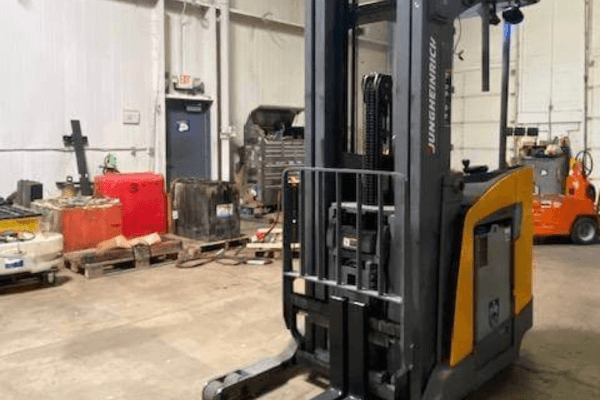
How a narrow-aisle reach truck works
A reach truck is a Class II electric narrow-aisle truck built for high-tier pallet storage. The forks extend forward via a pantograph or reach mechanism, while outriggers straddle the pallet for stability. The operator stays in the compartment at floor level the entire time, even when forks are 30 feet in the air.
Some models handle single-reach applications, others double-reach into deeper lanes. Don't assume every narrow-aisle reach truck does both.
Common uses:
- Pallet put-away
- Full-pallet retrieval
- Reserve inventory storage
- Forward-pick replenishment
- High-density racking systems
How an order-picker forklift works
An order-picker forklift raises the operator, not just the load, so they can retrieve products directly from a storage location. Picked items land on a pallet, platform, cage, or load deck riding alongside the operator. This is piece & case picking, not full-pallet handling.
Common uses:
- E-commerce fulfillment
- Retail distribution
- Parts warehouses
- Split-case picking
- Inventory counting & cycle counts
You'll also hear order pickers called stock pickers or order-selection clerks. Same equipment, different names depending on who's talking.
The differences that actually determine which truck fits
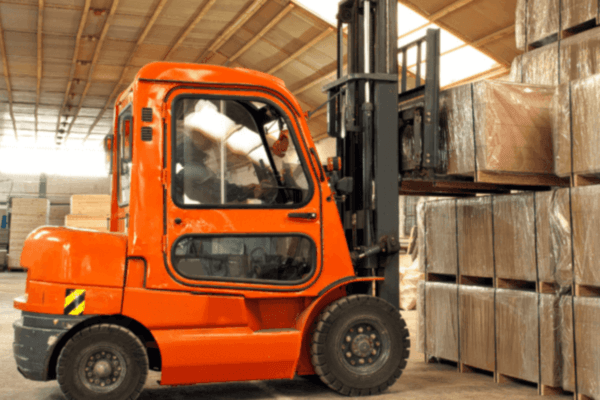
Load type and warehouse workflow
Full pallets or individual products, cartons, or containers. Active pick faces and reserve storage. Order lines picked per hour and pallet transfers per hour. You can technically get to your rack height with a reach truck, but it doesn’t mean you should pick one. Instead, think about the smallest unit your team regularly handles. Pallet, layer, case, or each. That one question usually decides the whole argument.
Aisle, racking, and load requirements
The clear aisle width is more important than the nominal rack-to-rack spacing. Truck head length, turning radius, pallet depth & load overhang all factor in collectively, not separately. Verify max rack beam height, overhead clearances, pallet weight & dimensions, load center & remaining capacity at elevation. The single-deep and double-deep racking also affect the equation, as well as floor flatness, thresholds & ramps.
Not all order pickers or reach trucks require the same aisle width. Here manufacturers differ greatly, so check against your actual layout, not a general spec.
Operator position, visibility, and safety
A reach truck driver keeps it on the ground. The order-picker operator rises with the platform, visibility varying during travel and picking. The biggest issues with reach trucks are load stability and risk of tipping over. Order pickers present fall risk; hence, well-fitted fall protection is not optional. Each machine requires its own training, authorization & pre-shift inspection procedure. Cross-training on both machines is worth the time invested.
Which should you buy? Match the truck to the work.
Buy a reach truck when pallet handling dominates.
Most inventory arrives, moves, & ships on full pallets. Storage sits above what a standard counterbalance forklift can reach. High-density storage matters more than direct item access, and the truck will also replenish lower picking locations. An Ohio food or beverage distributor moving reserve pallets through high-bay racking is a textbook case.
Buy an order picker when piece picking dominates.
Orders are picked from multiple SKUs at scattered locations; workers grab individual products or cases, and product is stored above safe ground-level reach. The measures that count are pick accuracy & lines chosen per hour. Picture automotive parts distributors, shop backrooms, or e-commerce fulfillment centers.
Consider both for a mixed warehouse.
The reach truck stores reserve pallets & replenishes active pick locations. The order picker handles elevated piece and case work. A simple four-step flow: pallets arrive and get put away by reach truck, the reach truck replenishes forward pick locations, the order picker pulls individual items for orders, and orders are consolidated and shipped. Trying to force one machine through all four steps usually costs more in lost productivity than owning two specialized trucks.
Decision shortcut:
- Mostly pallets: reach truck
- Mostly cases or individuals SKUs: order picker
- Meaningful volume in both: mixed fleet
- Uncertain or seasonal demand: consider a monthly rental before committing to a purchase
Use this six-point warehouse fit test before requesting quotes.
- Aisle measurement: Measure the narrowest clear working aisle, not the official distance between racks.
- Vertical measurement: Take the highest required pallet position or operator platform height.
- Load profile: Document max weight, dimensions, load center & pallet type.
- Work profile: Estimate pallets moved or order lines picked per shift.
- Operating environment: Floor condition, ramps, dock transitions, temperature, dust, pedestrian traffic.
- Power requirements: Battery voltage, charger compatibility, available electrical service, and required shift runtime.
Bring these numbers when you contact Value Forklifts. It cuts the back-and-forth considerably.
What to check when buying a used reach truck or order picker:
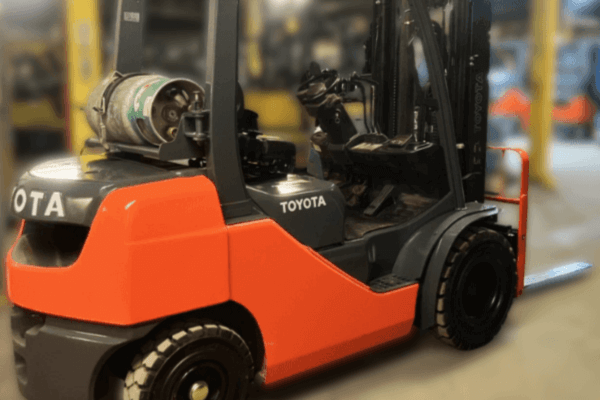
Mechanical and operational inspection
Make sure that the data plate is readable & matches the rated capacity you were quoted. Compare use history to operational hours. Check mast channels and rollers, chains, and hydraulics for wear. Look at the fork condition, movement of the carriage, and especially the reach mechanism. Test brakes, steering, trip controls, alarms, and emergency descent. Check on an order picker (closely) platform gates, rails & anchor points; these are safety-critical. Look for signs of rack strikes, structural damage, unauthorized welding, or other alterations & ask for maintenance records.
Battery, charger, and ownership costs
The age, condition, voltage, and remaining run time of the batteries will tell you more about the real value of a used truck than the sale price will. Ensure it comes with a charger and that it's compatible. Additional cost for replacing the battery. Check tire or load-wheel condition, and factor in freight to your Ohio warehouse, plus training, expected downtime, parts availability & warranty coverage. The cheapest unit up front is not necessarily the cheapest per shift, not even close occasionally.
Key takeaways for warehouse buyers
- The core decision comes down to pallet handling versus item or case picking.
- Required lift height only matters alongside usable capacity at that height.
- Aisle suitability depends on the full truck-and-load combination, not the aisle alone.
- Operator position drives different safety and training obligations.
- Battery and charger condition can swing a used truck's value significantly.
- A mixed fleet is often justified when pallet storage and piece picking are both core to your operation.
If you're weighing a used order picker for sale against a narrow-aisle reach truck, or you're just not sure which fits your Ohio warehouse, Value Forklifts can walk through your aisle widths, load profile, and daily workflow with you and point you toward the right equipment, new, used, or rental.
Conclusion
The reach truck vs. order picker decision is about what your team handles the most. Reach trucks are designed for the storage, retrieval, and replenishment of complete pallets; order pickers provide the operator with direct access to individual goods and cases. If you need to run both workflows, a mixed fleet will usually give you better productivity than trying to make one machine do all the jobs.
Before you buy, check your clear aisle width, needed lift height, load dimensions, residual capacity, battery run time, & operating circumstances. When purchasing used equipment, consider more than simply price & hours. Inspect the truck’s safety features, structural components, maintenance history, battery & charger.
Value Forklifts can help evaluate your Ohio warehouse layout, workload & budget to identify the right reach truck, order picker, or mixed-fleet solution. Contact our team to compare available new, used, and rental options before you commit.
Frequently Asked Questions
What is the main difference between a reach truck and an order picker?
The main difference is the operator’s position: an order picker raises the operator on a platform to hand-pick individual items from elevated shelves, while a reach truck keeps the operator inside the cab as the forks lift and place full pallets in storage racks.
Can an order picker move a full pallet?
An order picker can lift a pallet or load platform within the rated capacity of the truck while products are being picked. However, it is meant for piece & case selection, not for general use of full pallet storage & retrieval. Repeated handling of pallets is often better suited for a reach truck.
Can a reach truck be used for order picking?
Yes, a reach truck can technically support order picking, but it isn’t designed for efficient piece-level picking. It keeps the operator in a ground-level cabin & moves pallets with its forks, while an order picker raises the operator to retrieve individual items directly from elevated shelves.
Which truck is better for narrow aisles?
Neither truck is automatically better for every narrow aisle. Both are designed for narrow-aisle work, but the best fit depends on the specific model & load. Truck dimensions, pallet overhang, and turning radius all affect maneuverability. Measure your narrowest clear aisle before choosing a truck.
Which truck has a higher lifting capacity?
Neither category always has a higher lifting capacity because ratings vary by model and configuration. The more important figure is the truck’s usable capacity at your required lift height. Load weight, dimensions, & load center can affect that capacity. Check the data plate against your actual loads and highest rack position.
Do order-picker operators need fall protection?
Yes. Order-picker operators should wear properly fitted fall-protection equipment when working on an elevated platform and receive training in its correct use. The truck’s gates, guardrails, anchor points, and fall-protection system should also be inspected before operation.
What should I inspect before buying a used order picker?
Check the data plate and rated capacity, operating hours, platform gates & rails, mast and hydraulic condition, battery health, & maintenance history before buying.
Is it better to buy, rent, or lease a warehouse truck?
It depends on how certain your volume is. Steady, ongoing pallet or picking needs usually favor buying. Seasonal spikes or uncertain demand often make renting or leasing the smarter short-term move.