
Forklift Fleet TCO: How to Calculate the True Cost of Ownership
A forklift fleet can look affordable on paper while creating unexpected expenses across daily warehouse operations. Fuel, maintenance, repairs, downtime, & equipment replacement costs can gradually increase the amount your business spends on material handling.
Calculating forklift fleet TCO (total cost of ownership) helps warehouse managers understand these expenses over the entire ownership period. Instead of focusing on purchase prices alone, businesses can evaluate how much each forklift costs to operate & how efficiently the fleet supports daily workloads.
With accurate cost records, you can identify underused equipment, compare different forklift models, and make informed decisions about repairs, replacements, and future purchases.
What Is Forklift Fleet TCO?
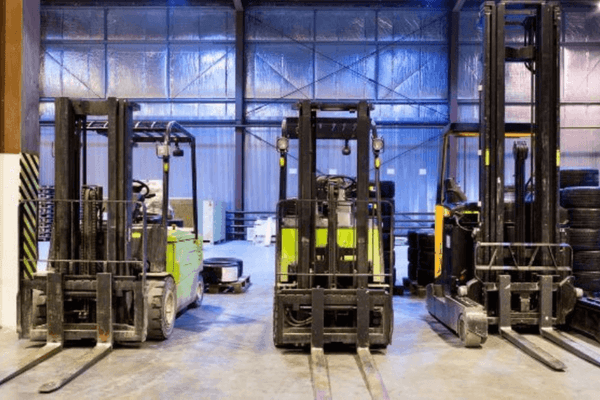
Forklift fleet TCO is the combined cost of acquiring, operating, maintaining, and eventually replacing or disposing of forklifts within a fleet, minus their estimated residual value.
It includes direct expenses such as equipment purchases and fuel, along with indirect costs such as unplanned downtime, operator training, and additional labor caused by equipment problems.
Unlike a basic equipment budget, a forklift total cost of ownership calculation examines expenses throughout a defined period, typically several years.
For businesses operating multiple forklifts, this approach also helps determine whether equipment is being used efficiently across different shifts and warehouse departments.
What Costs Should Be Included in Forklift Fleet TCO?
An accurate forklift fleet TCO calculation requires several cost categories. Each contributes to the total amount spent on equipment throughout its operating life.
1. Forklift Purchase and Financing Costs
The initial investment includes the equipment purchase price, freight, delivery, applicable taxes, & any necessary attachments or modifications.
If you finance equipment, include the relevant financing charges. If you lease forklifts, use the applicable lease payments instead of treating the equipment as an outright purchase.
Businesses evaluating new versus used forklift costs should compare both the upfront investment & expected future expenses.
Used forklifts may require less initial capital, but their maintenance history & remaining useful life can affect long-term ownership costs.
2. Fuel and Energy Expenses
Fuel and electricity are recurring forklift operating costs that depend on equipment type, operating hours, & workload.
Common energy expenses include:
- Electricity used for charging electric forklifts
- Propane or diesel purchased for internal combustion forklifts
- Battery maintenance & replacement
- Charger servicing and charging infrastructure
For electric models, electricity costs should be calculated using actual energy consumption and utility rates, including applicable demand charges.
Our guide on the hidden costs of propane, diesel, and electric forklifts provides additional information for comparing power sources.
3. Forklift Maintenance and Repair Costs
Forklift maintenance costs include scheduled servicing, replacement parts, labor, and unexpected mechanical repairs.
Common expenses include tire replacement, brake servicing, hydraulic repairs, battery maintenance, and fluid changes.
A fleet manager should record these expenses separately for each forklift. Doing so helps identify equipment that requires frequent repairs or costs significantly more to maintain than comparable units.
Following an appropriate routine forklift maintenance schedule also supports equipment reliability.
4. Downtime and Lost Productivity
An unavailable forklift can affect loading schedules, inventory movement, & warehouse productivity.
Downtime-related expenses may include:
- Temporary forklift rental
- Overtime required to complete delayed work
- Additional handling or transportation
- Documented shipment delays
- Repair-related equipment unavailability
Avoid calculating downtime losses twice. For example, if overtime expenses already represent the cost of delayed work, they should not be duplicated as a separate productivity loss.
Reviewing how much downtime an old forklift is costing your business can help identify hidden operational expenses.
5. Insurance, Training, and Other Fleet Expenses
Fleet ownership also involves expenses that may not appear in routine equipment maintenance reports.
These can include insurance, operator training, safety supplies, fleet management software, & equipment storage.
Where a cost supports the entire fleet, allocate it consistently across forklifts or operating hours.
OSHA's powered industrial truck operator training guidance explains the training subjects relevant to forklift operation, inspection, and maintenance.
How to Calculate Forklift Fleet TCO Step by Step
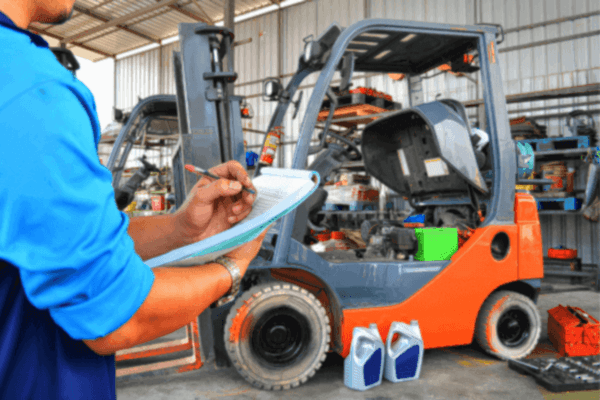
The simplest approach is to select a consistent ownership period, estimate all relevant expenses, & subtract the fleet's expected resale or trade-in value.
= Acquisition + Operating + Other Costs
− Resale Value
Operating and other costs include energy, maintenance,
repairs, downtime, financing where applicable, training,
and allocated fleet overhead. Count each expense only once.
Step 1: Identify Every Forklift in Your Fleet
Create an equipment register containing the model, year, purchase price, power source, recorded operating hours, & maintenance history.
Include units used occasionally or kept as backup equipment.
Step 2: Choose a Calculation Period
Select a period that reflects your equipment planning cycle, such as three or five years.
Use the same period for every forklift you compare. This makes it easier to evaluate different models without distorting the results.
Step 3: Calculate Direct and Indirect Expenses
Gather purchase invoices, fuel records, electricity bills, service reports, insurance costs, & documented downtime expenses.
Separate one-time costs from recurring expenses to avoid omissions & double counting.
Step 4: Estimate Resale or Trade-In Value
Determine the expected remaining value of each forklift at the end of the calculation period.
Equipment condition, usage, age, maintenance records, and market demand can influence this estimate.
Step 5: Calculate Cost per Operating Hour
Once you know the total ownership cost, divide it by the fleet's operating hours over the same period.
Fleet Cost per Hour
=
Fleet TCO
Total Fleet Hours
Track productive operating hours separately when possible. This can reveal inefficient equipment utilization that ordinary hour-meter readings may not show.
Example: Forklift Fleet TCO Calculation for Five Forklifts
Consider a warehouse operating five forklifts over five years.
The following figures are illustrative estimates, not actual values for forklift pricing or industry benchmarks.
| Cost category | Five-year fleet cost |
|---|---|
| Forklift purchases | $100,000 |
| Fuel and electricity | $50,000 |
| Maintenance and repairs | $30,000 |
| Downtime expenses | $15,000 |
| Insurance, training, and overhead | $10,000 |
| Estimated resale value | −$25,000 |
| Total fleet TCO | $180,000 |
If the five forklifts accumulate a combined 30,000 operating hours:
$18,000/$3000 = $6.00
This calculation provides a fleet-wide average. Individual forklifts may cost considerably more or less depending on their condition, operating hours, and maintenance requirements.
For a detailed single-equipment calculation, read our guide on calculating the true hourly cost of a used forklift.
How to Reduce Forklift Fleet TCO Without Affecting Productivity
Reducing forklift fleet TCO starts with understanding which expenses can be controlled without compromising equipment safety or performance.
Improve Forklift Utilization
A forklift that sits unused for extended periods still creates ownership costs through depreciation, insurance, and storage.
Review operating hours across the fleet to identify equipment that is regularly underused. Where practical, redistribute workloads or reassign forklifts between departments.
However, maintain sufficient backup capacity for peak demand and unexpected equipment failures.
Use Preventive Maintenance Records
Scheduled inspections and maintenance help fleet managers identify mechanical problems before they cause extended downtime.
Track service dates, repair expenses, component replacements, and recurring faults for every forklift.
These records support better budgeting and help determine when older equipment should be replaced.
Match Forklift Types to Warehouse Tasks
Using an oversized forklift for routine light-load movement can create unnecessary equipment expenses.
For example, an electric pallet jack may be suitable for short-distance pallet transportation, while a reach truck may be necessary for high-rack storage.
The right equipment mix depends on load capacity, aisle dimensions, travel distances, and warehouse activity.
Our guide to building a used forklift fleet for e-commerce and 3PL warehouses explains how to select equipment based on different warehouse tasks.
Review Equipment Replacement Costs
Continuing to repair an aging forklift may eventually cost more than replacing it.
Compare projected repair bills, energy consumption, downtime expenses, & remaining resale value against the expected ownership costs of a replacement.
Learn more about when to retire or trade in your forklift before making a major fleet investment.
Common Mistakes That Increase Forklift Total Cost of Ownership
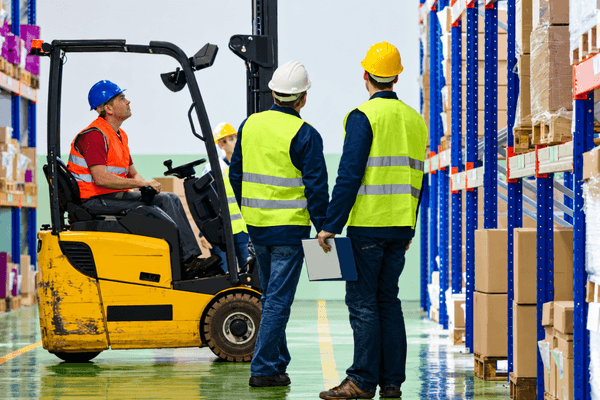
Even businesses that track equipment expenses can overlook factors that affect fleet profitability.
Common mistakes include:
- Focusing only on purchase price: Lower-cost equipment may require expensive repairs or replacement components.
- Ignoring underused forklifts: Equipment that operates infrequently can increase the average ownership cost per productive hour.
- Overlooking downtime: Repair invoices may exclude the labor and operational expenses caused by equipment unavailability.
- Using inconsistent cost periods: Comparing three-year expenses for one forklift with five-year expenses for another produces misleading results.
- Overestimating resale value: Unrealistic trade-in estimates can make ownership projections appear lower than they are.
- Counting costs twice: Including financing principal alongside the full purchase price, or duplicating repair-related downtime expenses, can inflate TCO.
Accurate forklift fleet management depends on consistent cost records and realistic assumptions.
When Should You Recalculate Your Forklift Fleet TCO?
Forklift fleet TCO should be reviewed at least annually, with additional evaluations before major equipment purchases or replacements.
A review may also be useful when operating hours change significantly, repair expenses increase, or the warehouse introduces additional shifts.
Fleet managers should monitor the following indicators:
| Performance indicator | What it helps identify |
|---|---|
| Cost per operating hour | Overall equipment cost efficiency |
| Maintenance cost per forklift | High-expense equipment |
| Equipment utilization | Underused or heavily used forklifts |
| Unplanned downtime hours | Equipment reliability issues |
| Energy cost per hour | Differences in operating efficiency |
| Estimated resale value | Potential replacement or trade-in opportunities |
Monitoring these indicators helps businesses identify changes in expenses before they affect future equipment budgets.
How Value Forklifts Can Help You Manage Fleet Ownership Costs
At Value Forklifts, we help businesses compare used material handling equipment based on operating requirements, equipment condition, and available budgets.
Our inventory includes used electric forklifts, propane forklifts, reach trucks, and other warehouse equipment from established manufacturers.
When evaluating equipment for your fleet, consider operating hours, maintenance history, capacity requirements, power source, and expected future usage.
You can explore our available used forklift inventory or contact our team to discuss equipment options for your warehouse.
Conclusion
Forklift fleet TCO provides a practical way to understand the long-term expenses associated with operating multiple forklifts.
By tracking acquisition costs, maintenance, energy usage, downtime, and resale value, businesses can compare equipment more accurately and plan future investments.
Regular cost reviews also help identify opportunities to improve utilization and make better replacement decisions.
Looking to expand or upgrade your forklift fleet? Contact us to explore used equipment options that match your warehouse operations and budget.
Frequently Asked Questions
What Is Forklift Fleet TCO?
Forklift fleet TCO (total cost of ownership) is the combined cost of purchasing, operating, maintaining, and managing forklifts over a specific period, minus their estimated resale value. It helps businesses understand long-term equipment expenses and make informed fleet management decisions.
How Do You Calculate the Total Cost of Ownership of a Forklift Fleet?
Add the fleet's acquisition, fuel, maintenance, repair, downtime, insurance, and other applicable operating expenses. Then subtract the estimated resale value. Divide the resulting TCO by total operating hours to calculate the average cost per operating hour.
What Are the Biggest Factors Affecting Forklift Operating Costs?
Major factors include equipment purchase prices, fuel or electricity consumption, maintenance expenses, repair frequency, downtime, and utilization rates. Forklift age, operating conditions, and workload also influence overall ownership costs.
How Can Businesses Reduce Forklift Fleet TCO?
Businesses can reduce forklift fleet TCO through preventive maintenance, improved equipment utilization, efficient energy management, and timely equipment replacement. Selecting forklifts that match warehouse requirements can also help control unnecessary operating expenses.
Are Used Forklifts More Cost-Effective Than New Forklifts?
Used forklifts generally have lower upfront purchase costs, making them attractive for businesses managing equipment budgets. However, their long-term value depends on maintenance history, operating hours, condition, and expected repair expenses. Comparing total ownership costs provides a better basis for choosing between new and used equipment.
How Often Should Forklift Fleet TCO Be Reviewed?
Businesses should review forklift fleet TCO at least once a year and whenever significant operational changes occur. Regular evaluations help identify rising maintenance expenses, underused equipment, and potential opportunities for fleet replacement or improvement.
What Is the Difference Between Forklift TCO and Cost per Operating Hour?
Forklift TCO represents the total net ownership cost over a defined period. Cost per operating hour divides that amount by the total hours of equipment operation. Both metrics help businesses compare forklift efficiency, assess expenses, and plan future fleet investments.